 지산열린학원지산고2 · 25년 10월 · 38번
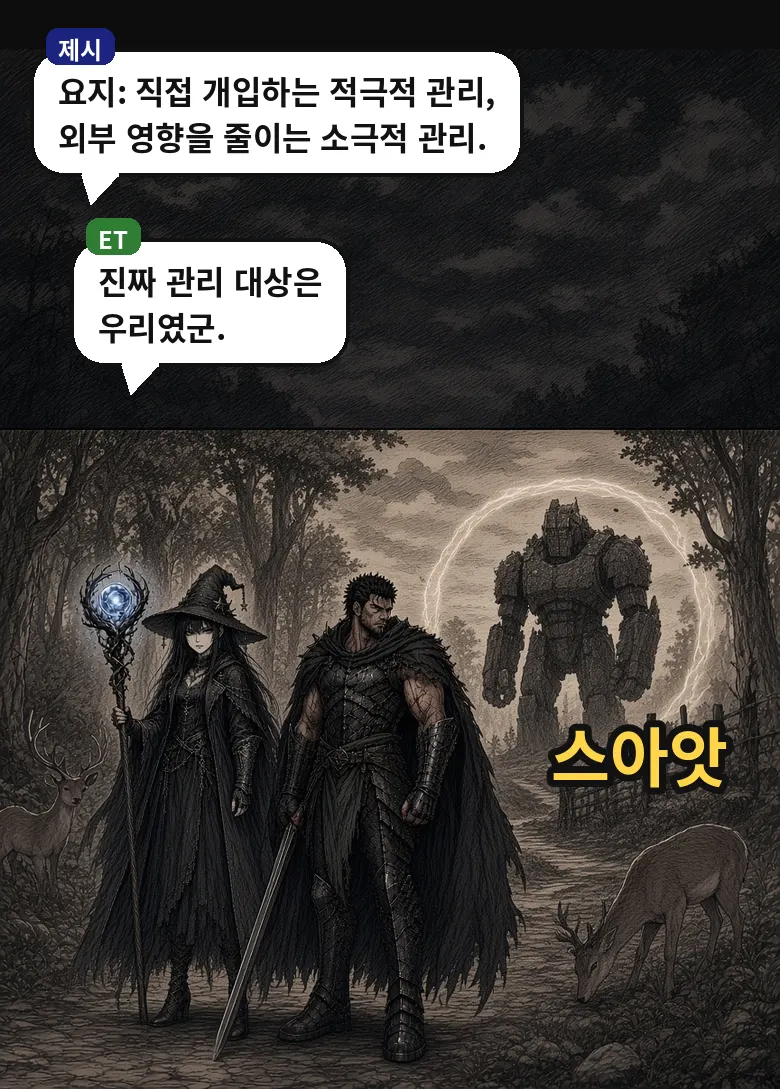
📌 제시의 요지
야생 생물 관리는 개체군에 직접 개입하는 적극적 관리와 외부 영향을 줄이는 소극적 관리로 나뉜다.
Wildlife management is divided into active management that directly intervenes in populations and inactive management that minimizes outside influences.
🌊 정미의 문단 흐름
도입: 야생 생물 관리 = 관리 책임, 적극적 관리와 소극적 관리의 두 범주. (S1) / 전개: 적극적 관리: 이주·사냥으로 개체군 크기 조절, 서식지 변경, 개체 수 부족 시 포식자 통제·서식지 개선. (S2~S5) / 결론: [주어진 문장] 국립 공원처럼 적극적으로 관리하지 않는 경우 → 외부 영향 최소화 = 동물이 아닌 인간을 관리(소극적 관리). (S6~S7)
☠ 수남의 하수인: 울타리 감시자


🧚 산이의 어휘
| 단어 | 뜻 | 동의어 / 반의어 |
|---|---|---|
| numerous | 수많은 | = many ↔ few |
| imply | 의미하다, 암시하다 | = suggest |
| stewardship | 관리 책임 | — |
| classify | 분류하다 | = categorize |
| inactive | 소극적인 | = passive ↔ active |
| population | 개체군 | — |
📖 본문 보기
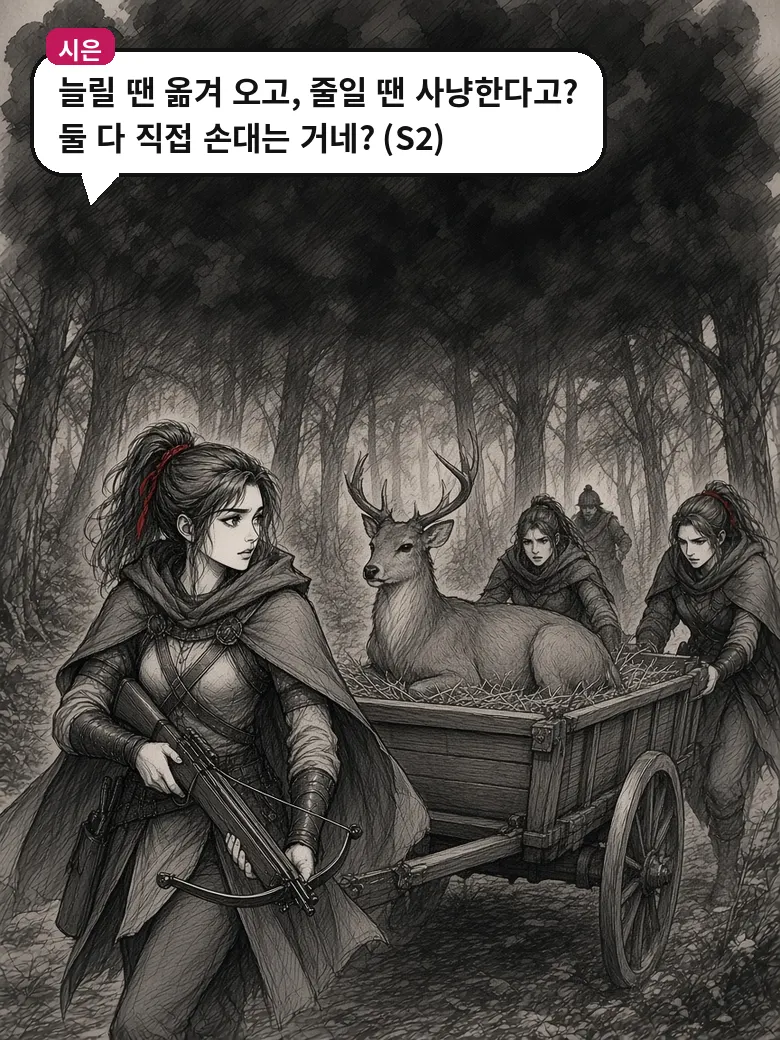
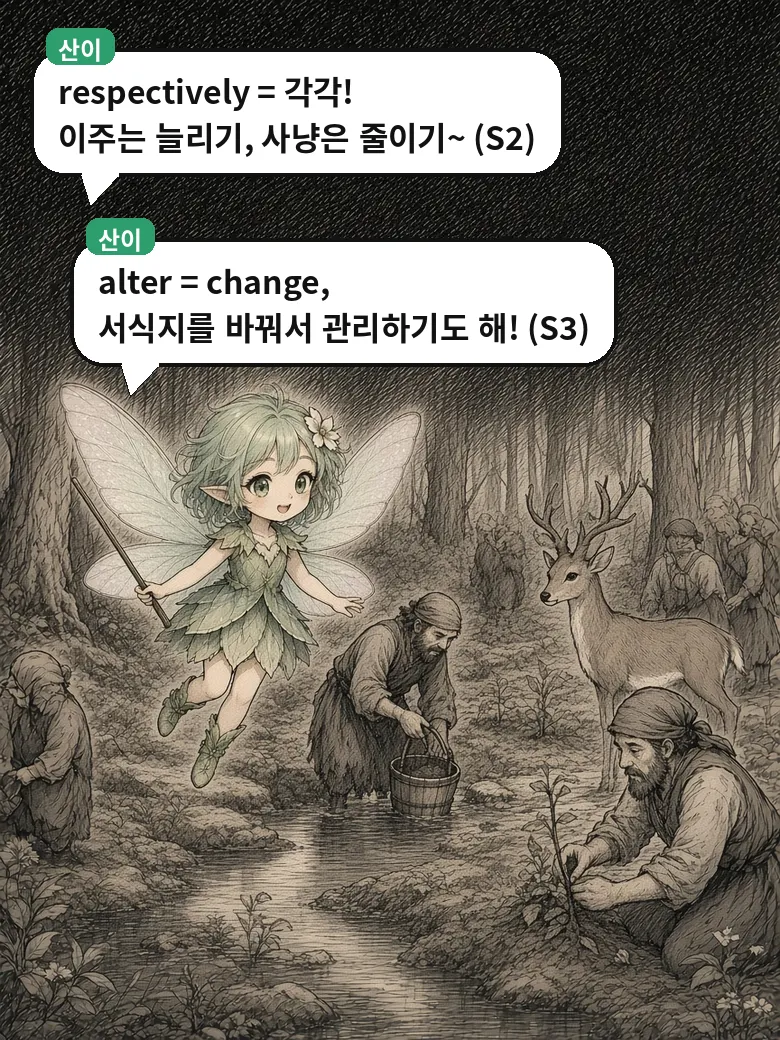
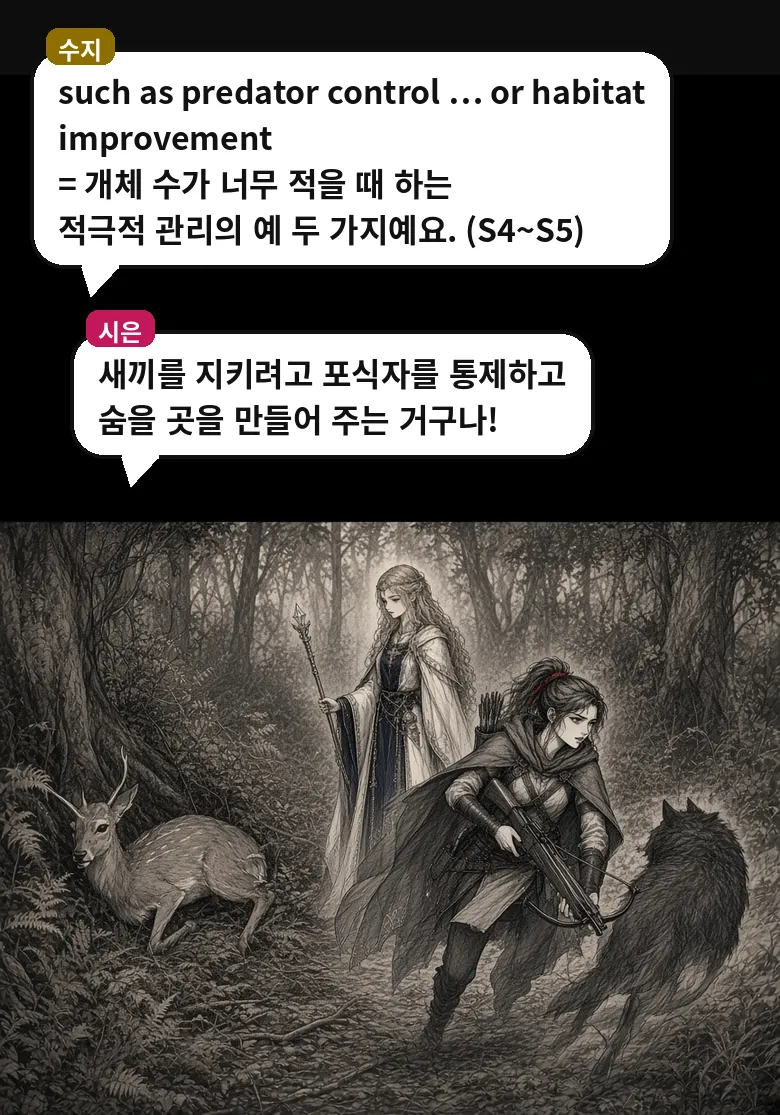
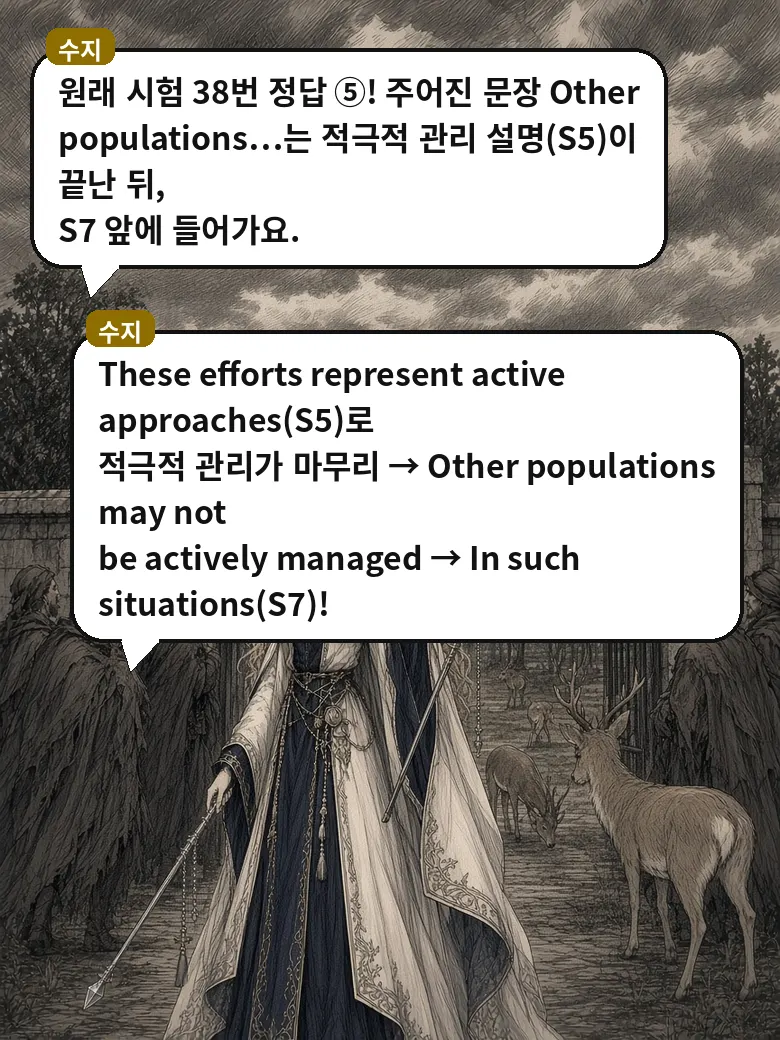
There are numerous ways wildlife is managed, but they all imply stewardship and can be classified into two broad categories: active management and inactive management. Active management does something to the population — such as increasing or decreasing its size — in a direct manner through strategies like translocations or hunting, respectively. Populations can also be actively managed by altering the habitat to the benefit or disadvantage of a population. If population numbers are too low for the goal of management agencies, other active management can be incorporated, such as predator control to minimize neonatal deaths or habitat improvement to provide required cover for neonates from predators. These efforts represent active approaches to management. Other populations may not be actively managed, like those in national parks. In such situations, management activities minimize external influences on populations and habitat, which often involves management of humans and not animals.
🏹 시은의 질문 · “한 문장으로 줄이면?”
Wildlife is managed either actively, by changing populations or habitats, or inactively, by limiting human influence.
야생 생물은 개체군·서식지를 직접 바꾸는 적극적 관리나, 인간의 영향을 줄이는 소극적 관리로 관리된다.
🎯 원래 시험 정답
38. 글의 흐름으로 보아, 주어진 문장이 들어가기에 가장 적절한 곳은?
원래 시험 정답: ⑤
📝 수지의 문제 풀이 (문장 삽입)
글의 흐름으로 보아, 주어진 문장이 들어가기에 가장 적절한 곳은?
There are numerous ways wildlife is managed, but they all imply stewardship and can be classified into two broad categories: active management and inactive management. ( ① ) Active management does something to the population — such as increasing or decreasing its size — in a direct manner through strategies like translocations or hunting, respectively. ( ② ) Populations can also be actively managed by altering the habitat to the benefit or disadvantage of a population. ( ③ ) If population numbers are too low for the goal of management agencies, other active management can be incorporated, such as predator control to minimize neonatal deaths or habitat improvement to provide required cover for neonates from predators. ( ④ ) These efforts represent active approaches to management. ( ⑤ ) In such situations, management activities minimize external influences on populations and habitat, which often involves management of humans and not animals.
- ①
- ②
- ③
- ④
- ⑤
🗡️ 흑검 ET의 정답 보기
정답 ⑤ — 원래 시험 38번 정답 ⑤! 주어진 문장 Other populations…는 적극적 관리 설명(S5)이 끝난 뒤, S7 앞에 들어가요. These efforts represent active approaches(S5)로 적극적 관리가 마무리 → Other populations may not be actively managed → In such situations(S7)!
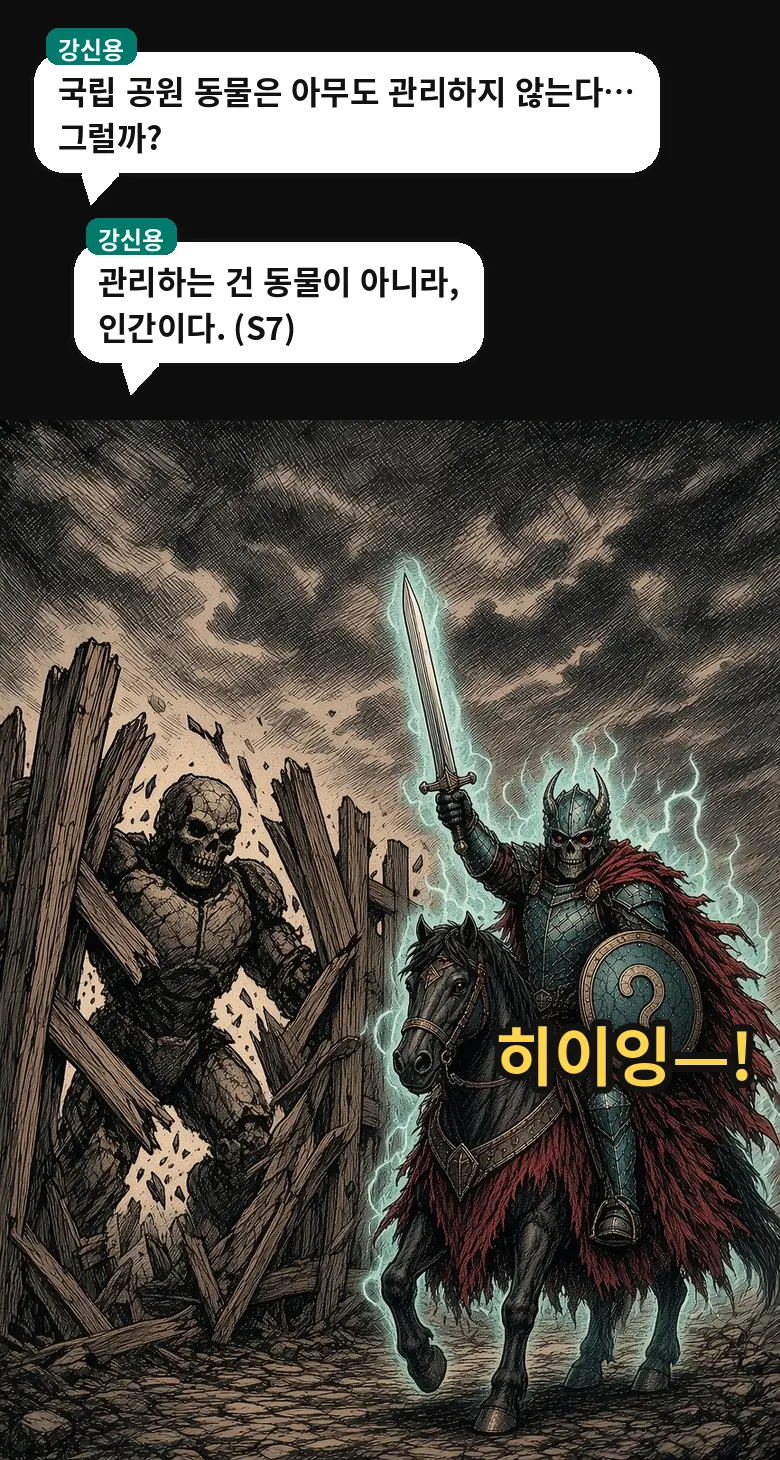
⚔️ 강신용의 함정: 국립 공원 동물은 아무도 관리하지 않는다… 그럴까? 관리하는 건 동물이 아니라, 인간이다. (S7)
"Active management never involves hunting." → 'never involves hunting'는 틀림 → 'can reduce population size through hunting' (S2)