 지산열린학원지산고2 · 25년 10월 · 37번
📌 제시의 요지
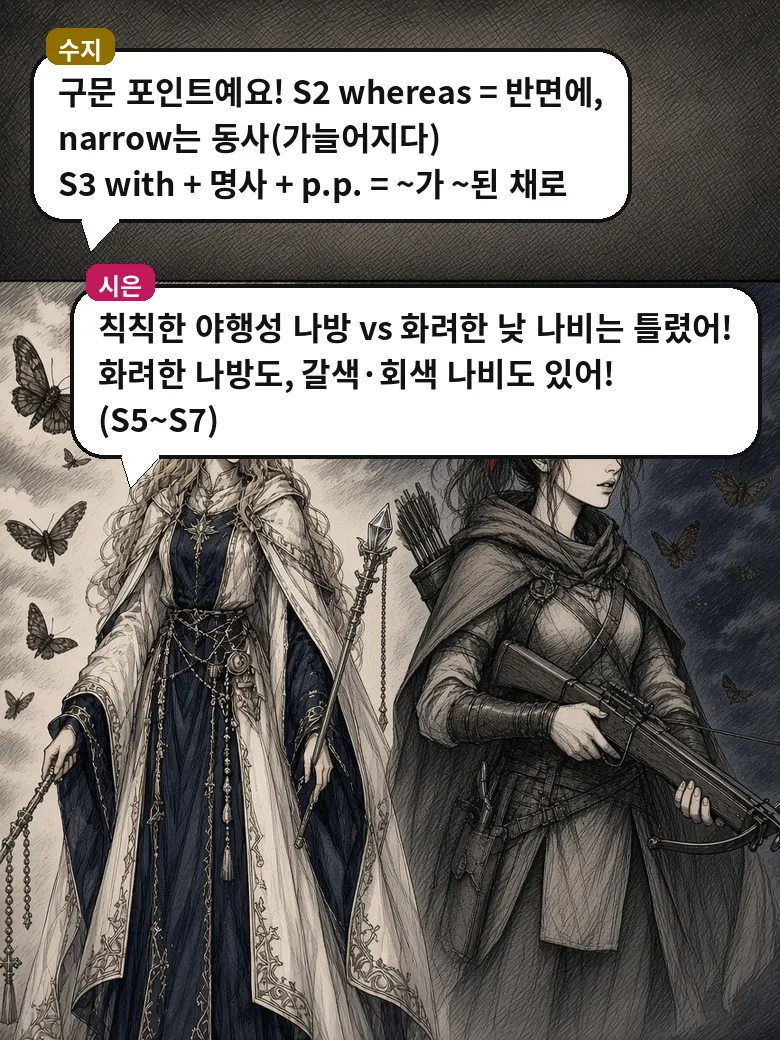
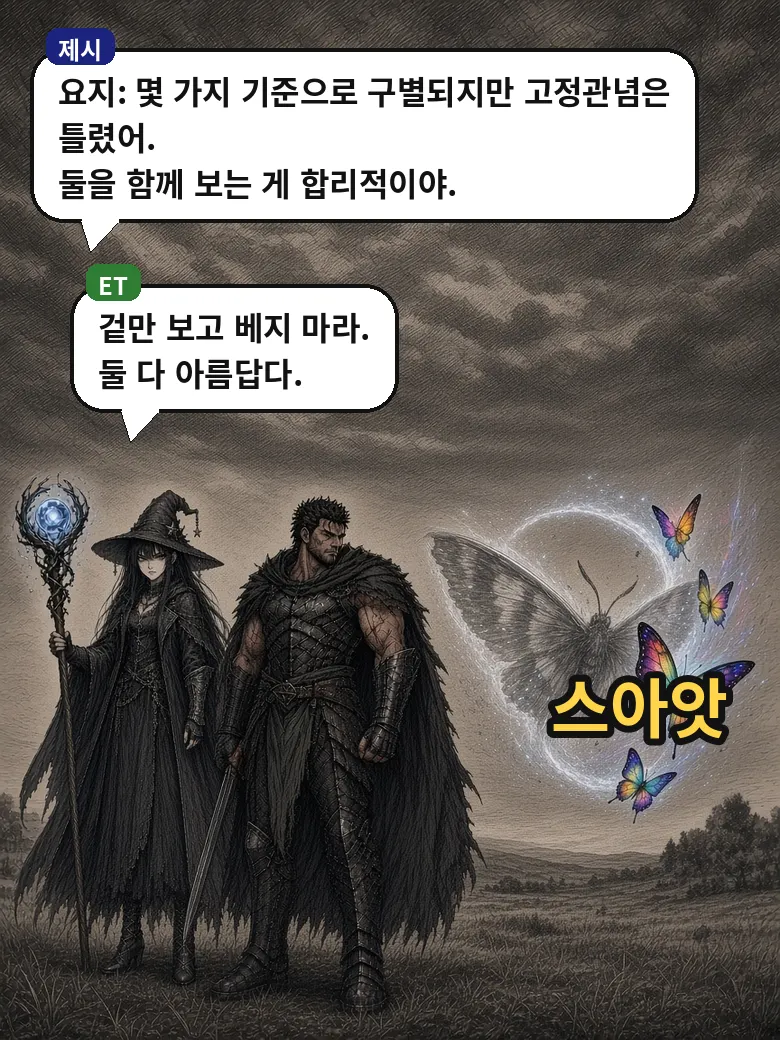
나방과 나비는 몇 가지 기준으로 구별되지만 고정관념은 틀렸으며, 함께 보는 것이 합리적이다.
Moths and butterflies can be told apart by a few rules, but the stereotypes are wrong and it is sensible to think of them together.
🌊 정미의 문단 흐름
도입: 겉모습으로 나방과 나비를 구별하기는 어렵지만 몇 가지 경험 법칙이 있다. (S1) / 전개: (B) 더듬이(나비 = 곤봉 모양, 나방 = 깃털·가늘게), 쉬는 자세(나비 = 날개 접음, 나방 = 펼침) → (A) 추가 구별: 앞뒤 날개를 잇는 갈고리(나방만) / 그러나 '칙칙한 야행성 나방 vs 화려한 낮 나비' 고정관념은 틀림. (S2~S6) / 결론: (C) 야행성·갈색 나비도 있음 → 둘을 함께 보는 것이 합리적, 둘 다 아름답고 매혹적. (S7~S8)
☠ 수남의 하수인: 칙칙한 날개 환영
🧚 산이의 어휘
| 단어 | 뜻 | 동의어 / 반의어 |
|---|---|---|
| distinguish | 구별하다 | = differentiate |
| outward | 겉의 | = external ↔ inward |
| rule of thumb | 경험 법칙 | = guideline |
| antennae | 더듬이 | — |
| swelling | 부푼 부분 | = bulge |
| feathery | 깃털 같은 | — |
📖 본문 보기
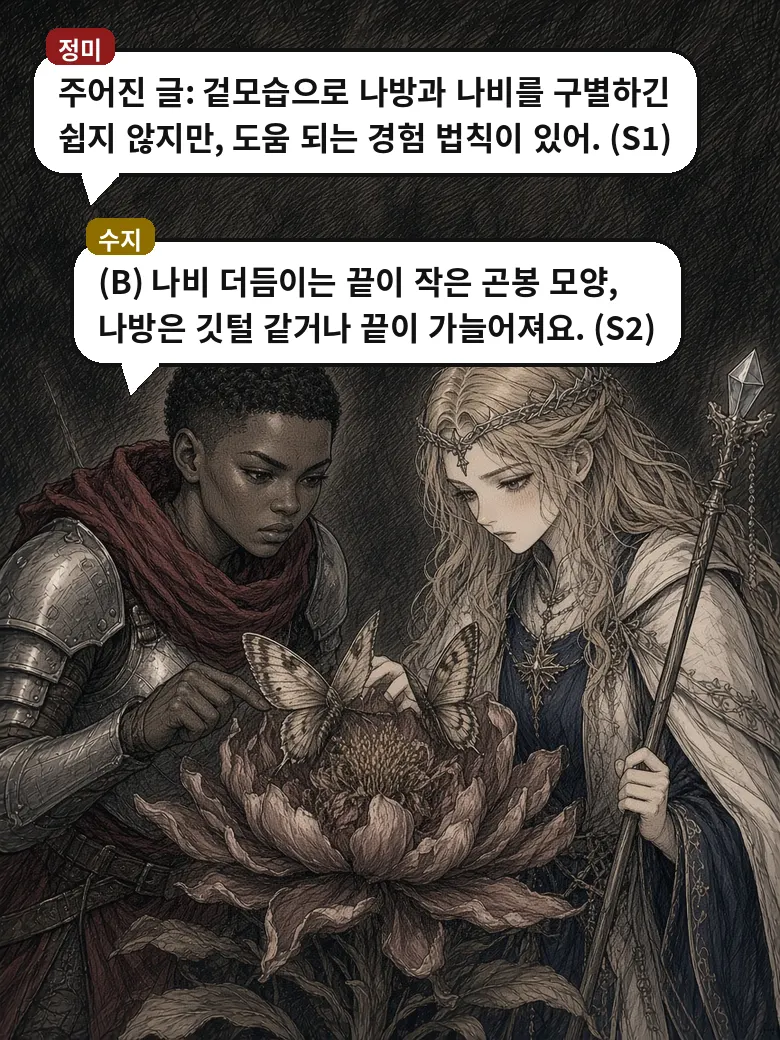
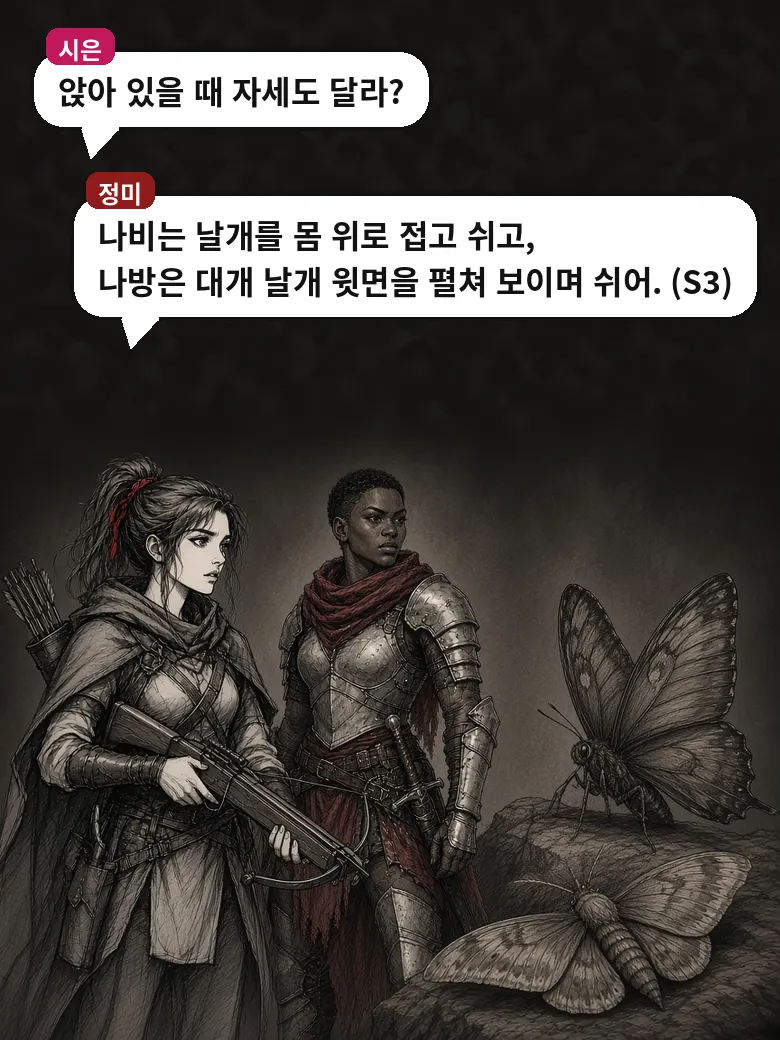
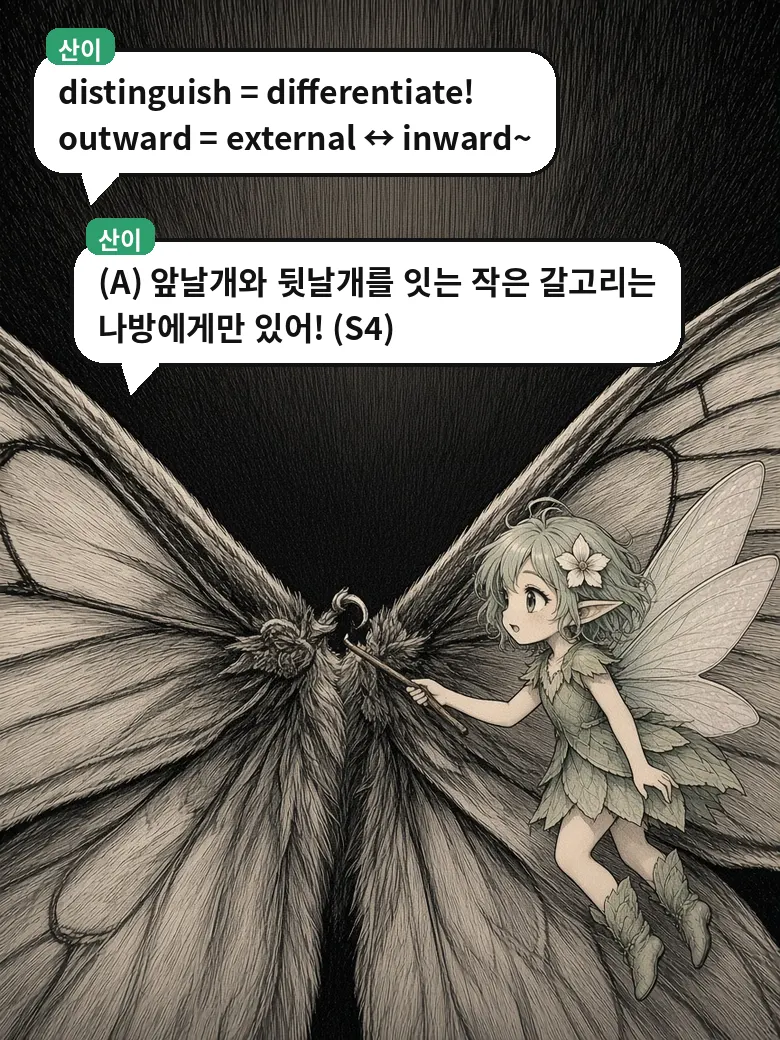
Distinguishing moths from butterflies on outward appearance is not always easy, but there are a few rules of thumb that can help. In most butterflies the antennae end with a small club-shaped swelling, whereas in moths they are usually feathery or narrow to a fine tip. Butterflies tend to rest with their wings held shut above their body, whereas moths more usually rest with the upper sides of the wings on full view. Further distinctions can be made by looking for a tiny hook that joins fore- and hindwings, a feature only present in moths. The stereotypical differences, with moths cast as the gloomy, nocturnal cousins of colourful sun-loving butterflies are simply wrong. There are many brightly coloured moths and many which are active throughout the day. Equally, there are a few nocturnal butterflies and plenty that come clothed in shades of brown and grey. It’s more sensible to think of them together; both butterflies and moths are beautiful and fascinating insects.
🏹 시은의 질문 · “한 문장으로 줄이면?”
A few features separate moths from butterflies, but the gloomy-moth stereotype is wrong, so we should see both as fascinating.
몇 가지 특징으로 나방과 나비를 구별할 수 있지만 ‘칙칙한 나방’ 고정관념은 틀렸으니 둘 다 매혹적인 곤충으로 봐야 한다.
🎯 원래 시험 정답
37. 주어진 글 다음에 이어질 글의 순서로 가장 적절한 것은? [3점]
원래 시험 정답: ② (B) - (A) - (C)
📝 수지의 문제 풀이 (순서)
주어진 글 다음에 이어질 글의 순서로 가장 적절한 것은? [3점]
(A) Further distinctions can be made by looking for a tiny hook that joins fore- and hindwings, a feature only present in moths. The stereotypical differences, with moths cast as the gloomy, nocturnal cousins of colourful sun-loving butterflies are simply wrong. There are many brightly coloured moths and many which are active throughout the day.
(B) In most butterflies the antennae end with a small club-shaped swelling, whereas in moths they are usually feathery or narrow to a fine tip. Butterflies tend to rest with their wings held shut above their body, whereas moths more usually rest with the upper sides of the wings on full view.
(C) Equally, there are a few nocturnal butterflies and plenty that come clothed in shades of brown and grey. It’s more sensible to think of them together; both butterflies and moths are beautiful and fascinating insects.
- ① (A) - (C) - (B)
- ② (B) - (A) - (C)
- ③ (B) - (C) - (A)
- ④ (C) - (A) - (B)
- ⑤ (C) - (B) - (A)
🗡️ 흑검 ET의 정답 보기
정답 ② (B) - (A) - (C) — 원래 시험 37번 정답 ② (B) - (A) - (C)! 주어진 글(구별 법칙) → (B) 더듬이·쉬는 자세 → (A) Further distinctions 갈고리, 고정관념은 틀림 → (C) Equally 야행성·갈색 나비도, 함께 보자! (S8)
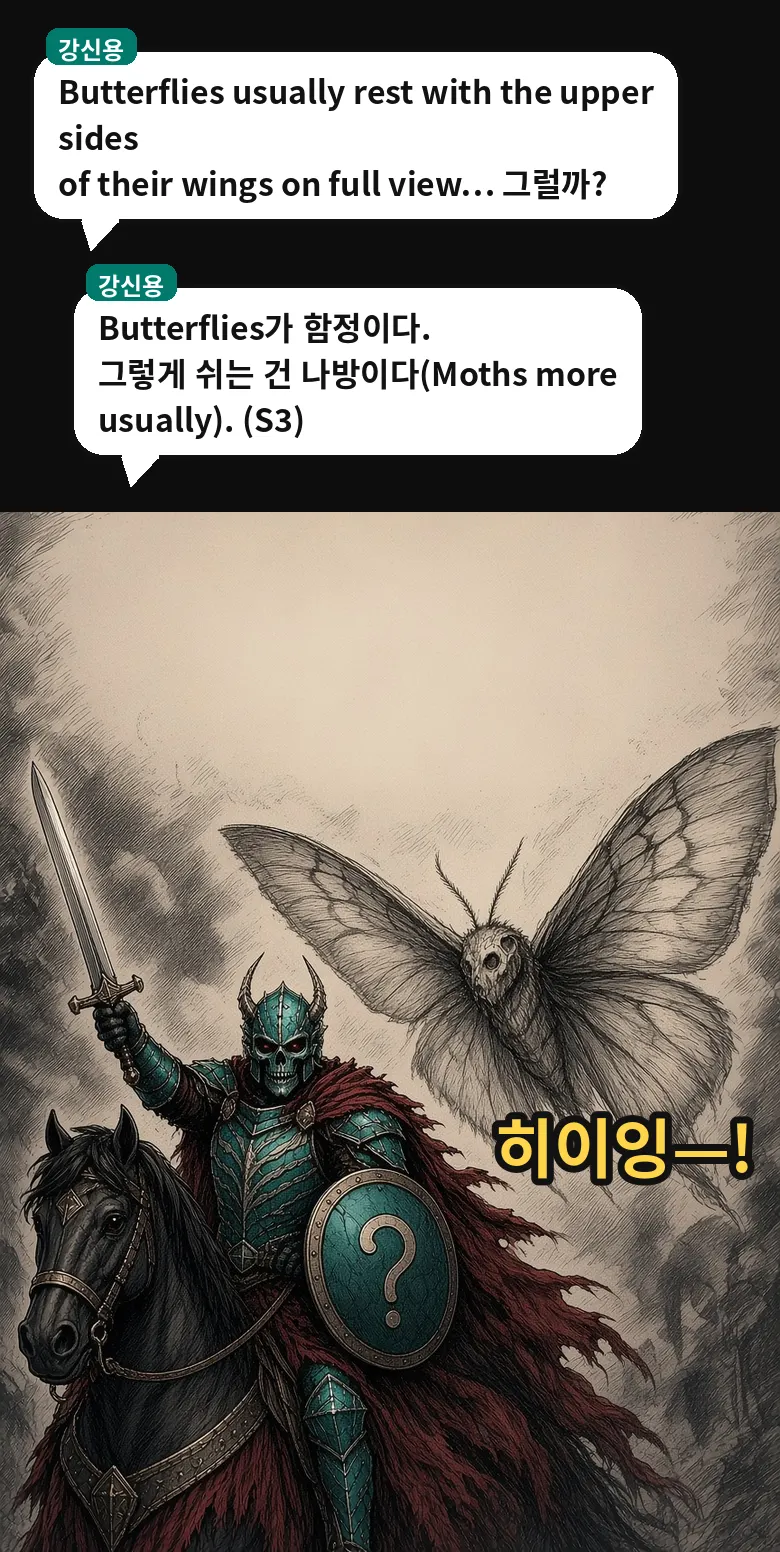
⚔️ 강신용의 함정: Butterflies usually rest with the upper sides of their wings on full view… 그럴까? Butterflies가 함정이다. 그렇게 쉬는 건 나방이다(Moths more usually). (S3)
"Butterflies usually rest with the upper sides of their wings on full view." → 'Butterflies usually'는 틀림 → 'Moths more usually' (S3)