 지산열린학원지산고2 · 25년 10월 · 33번
📌 제시의 요지
궁전의 유리는 가시성과 감시를 통해 권력 관계를 조용히 강화하는 전략적 도구였다.
Glass in palaces was a strategic tool that quietly reinforced power relations through visibility and surveillance.
🌊 정미의 문단 흐름
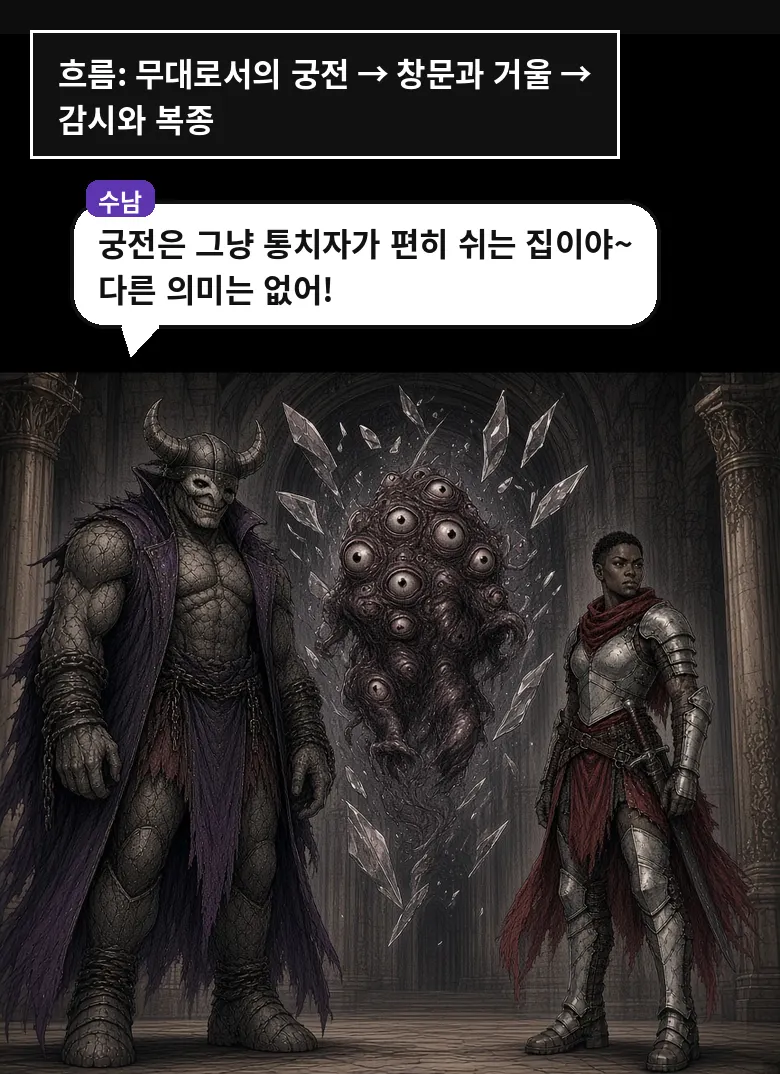
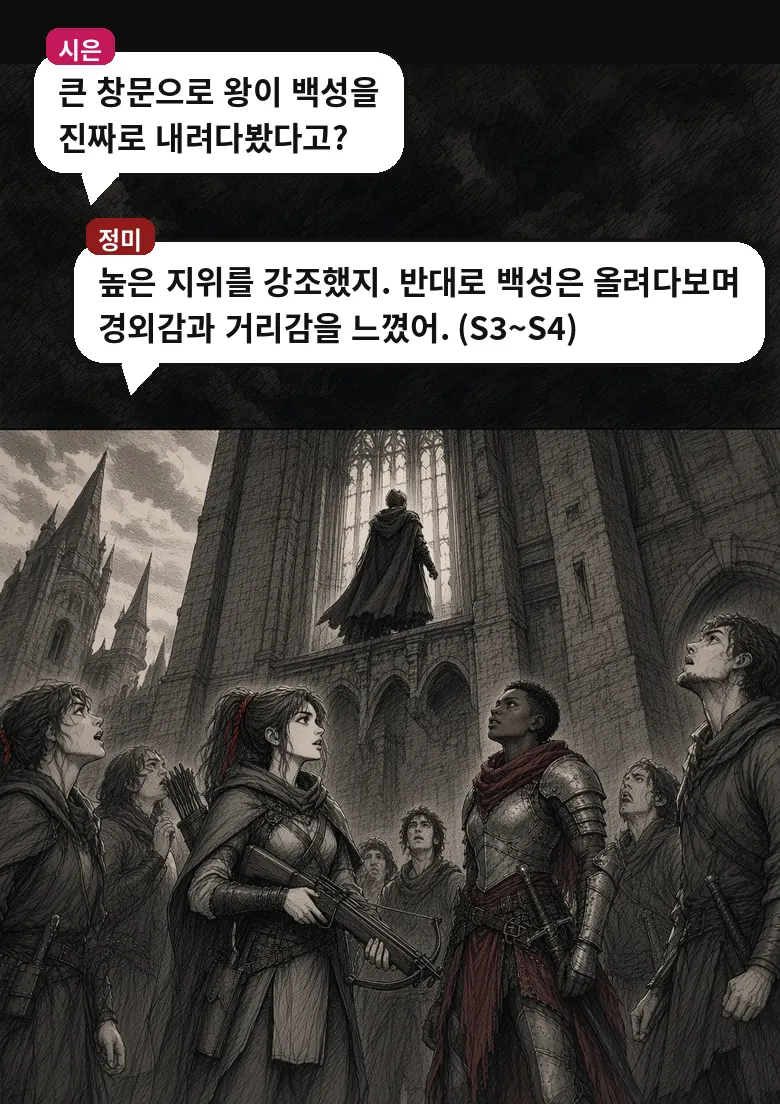
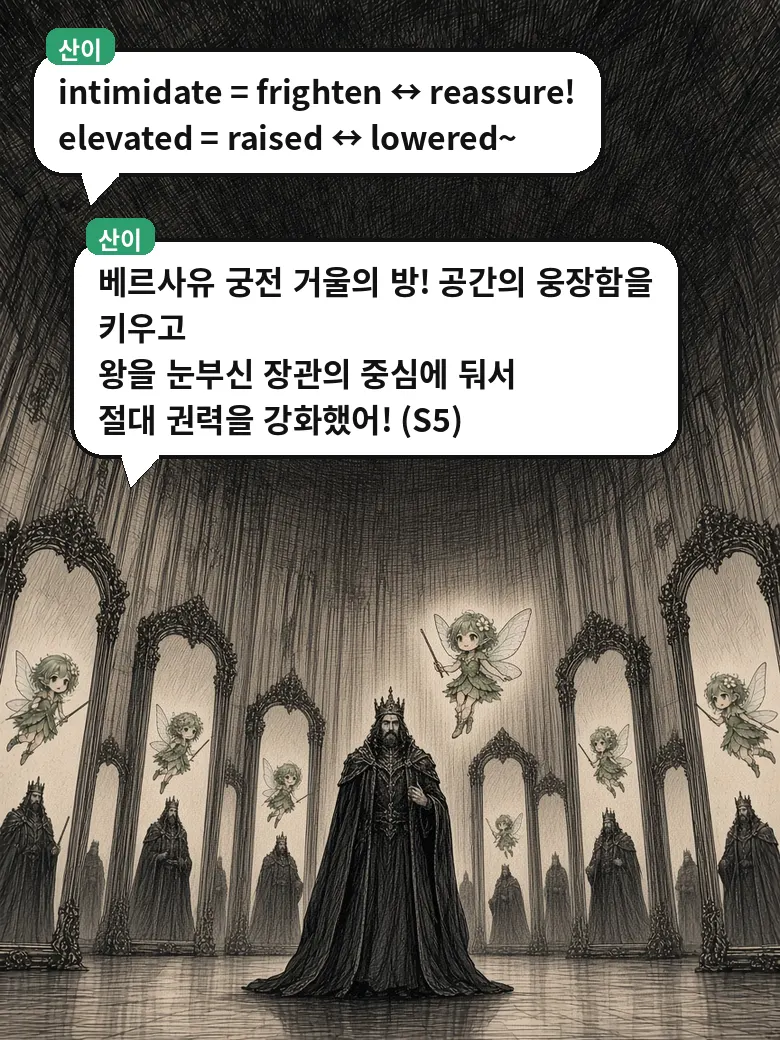
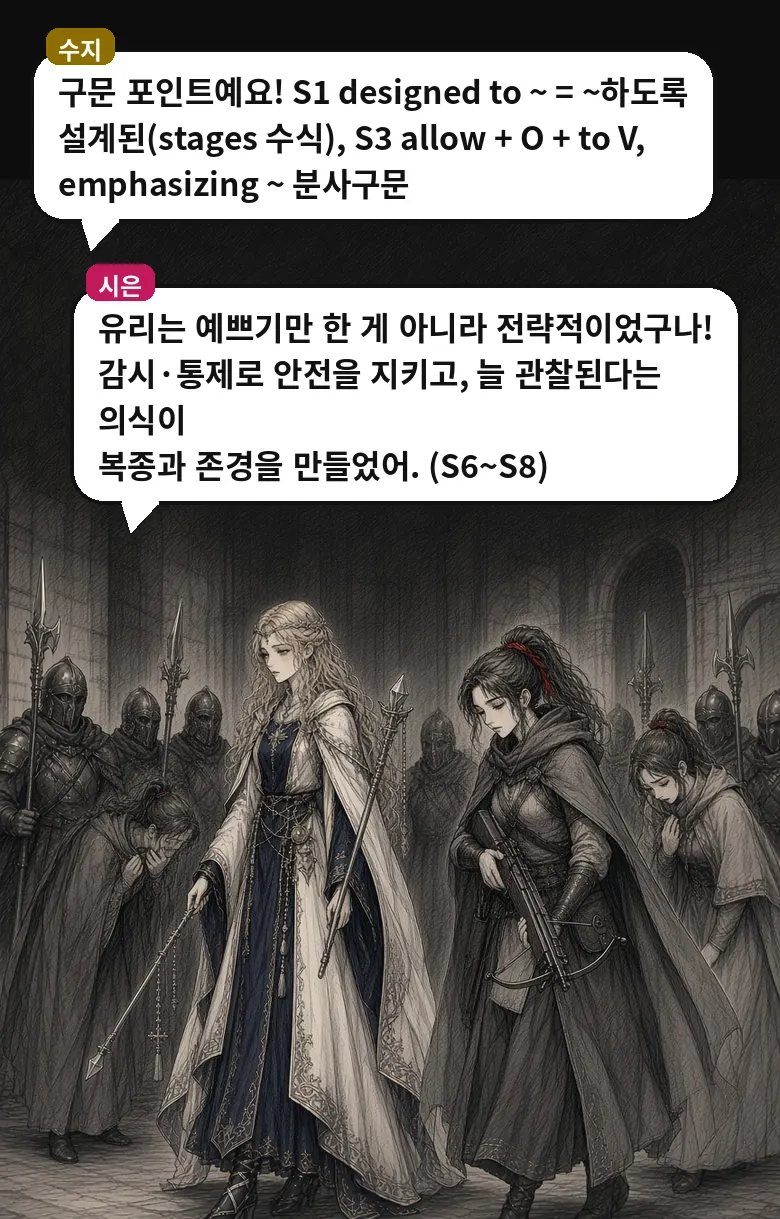
도입: 궁전은 인상을 주고 위압하는 무대 — 돌 = 영속성·힘, 유리 = 가시성. (S1~S2) / 전개: 큰 창문 → 통치자는 내려다보고 백성은 올려다봄(경외감·거리감) / 베르사유 거울의 방 → 웅장함 확대 + 왕을 중심에 두어 절대 권력 강화. (S3~S5) / 결론: 유리는 미적이 아닌 전략적 — 감시·통제로 안전 확보, 늘 관찰된다는 의식 → 복종·존경 → 유리 = 권력 관계의 조용한 집행자. (S6~S9)
☠ 수남의 하수인: 감시하는 유리 눈

🧚 산이의 어휘
| 단어 | 뜻 | 동의어 / 반의어 |
|---|---|---|
| construct | 건설하다 | = build ↔ destroy |
| impress | 깊은 인상을 주다 | = amaze |
| intimidate | 위압하다, 겁주다 | = frighten ↔ reassure |
| symbolize | 상징하다 | = represent |
| permanence | 영속성 | = durability ↔ temporariness |
| visibility | 가시성 | = being seen |
📖 본문 보기
Historically, palaces weren’t just homes; they were carefully constructed stages designed to impress and intimidate. While stone symbolized permanence and strength, glass offered something equally powerful: visibility. The introduction of large windows in palaces allowed rulers to literally look down upon their subjects, emphasizing their elevated position. Conversely, it also allowed subjects to gaze up at their leaders, creating a sense of awe and distance. Consider the Palace of Versailles: its Hall of Mirrors, lined with reflective surfaces, not only magnified the grandeur of the space but also placed the king at the center of a dazzling display, reinforcing his absolute authority. The use of glass in palaces wasn’t merely aesthetic; it was strategic. Open sightlines allowed for better surveillance and control, ensuring the safety and security of the ruling family. Courtiers and visitors were constantly aware of being observed, contributing to an atmosphere of careful obedience and respect. The very architecture dictated social behavior, with glass acting as a silent enforcer of the power dynamic.
🏹 시은의 질문 · “한 문장으로 줄이면?”
Palace glass let rulers be seen and watch others, quietly enforcing their power.
궁전의 유리는 통치자가 보이고 또 감시하게 해 권력을 조용히 강화했다.
🎯 원래 시험 정답
33. 다음 빈칸에 들어갈 말로 가장 적절한 것은?
원래 시험 정답: ① acting as a silent enforcer of the power dynamic
📝 수지의 문제 풀이 (빈칸)
다음 빈칸에 들어갈 말로 가장 적절한 것은?
Historically, palaces weren’t just homes; they were carefully constructed stages designed to impress and intimidate. While stone symbolized permanence and strength, glass offered something equally powerful: visibility. The introduction of large windows in palaces allowed rulers to literally look down upon their subjects, emphasizing their elevated position. Conversely, it also allowed subjects to gaze up at their leaders, creating a sense of awe and distance. Consider the Palace of Versailles: its Hall of Mirrors, lined with reflective surfaces, not only magnified the grandeur of the space but also placed the king at the center of a dazzling display, reinforcing his absolute authority. The use of glass in palaces wasn’t merely aesthetic; it was strategic. Open sightlines allowed for better surveillance and control, ensuring the safety and security of the ruling family. Courtiers and visitors were constantly aware of being observed, contributing to an atmosphere of careful obedience and respect. The very architecture dictated social behavior, with glass .
- ① acting as a silent enforcer of the power dynamic
- ② serving as a tool for a king to reflect on himself
- ③ opening the king’s eyes to his subjects’ hardships
- ④ offering the ruler a window and the ruled a mirror
- ⑤ representing a bridge between the king and the public
🗡️ 흑검 ET의 정답 보기
정답 ① acting as a silent enforcer of the power dynamic — 원래 시험 33번 정답 ① acting as a silent enforcer of the power dynamic! 근거는 S6~S8 — 전략적, 감시와 통제, 관찰된다는 의식 → 복종. 건축이 행동을 지시하고 유리가 권력 관계를 조용히 집행해요. (S9)
⚔️ 강신용의 함정: Palaces were designed only as comfortable homes for rulers… 그럴까? only as comfortable homes가 함정이다. 감탄과 위압을 위한 무대(stages)다. (S1)
"Palaces were designed only as comfortable homes for rulers." → 'only as comfortable homes for rulers'는 틀림 → 'as stages to impress and intimidate' (S1)