 지산열린학원지산고2 · 25년 10월 · 21번
📌 제시의 요지
미각 민감도의 차이가 개인의 식습관과 건강에 영향을 줄 수 있으므로 미각에 주목해야 한다.
Differences in taste sensitivity can affect our eating habits and health, so we should pay attention to taste.
🌊 정미의 문단 흐름
도입: 소금·설탕·레몬즙·커피를 면봉으로 혀에 대 보는 미각 실험 → 친구들과 비교. (S1~S5) / 전개: 맛 패턴은 선호 이상을 드러냄 — 미각 유형과 행동 장애의 연관: 미각 둔감자 → 알코올 중독↑ / 초미각자 → 쓴 채소 회피 → 균형 잡힌 식단 놓침. (S6~S9) / 결론: 미각은 덜 화려해도 주목할 가치 — 입속 화학 작용(미각 민감도)이 식습관과 건강, 즉 '운명'을 좌우할 수 있다. (S10)
☠ 수남의 하수인: 쓴맛 독초 정령




🧚 산이의 어휘
| 단어 | 뜻 | 동의어 / 반의어 |
|---|---|---|
| coat | 덮다, 묻히다 | = cover |
| swab | 면봉 | — |
| spot | 부위 | = area |
| gargle | (입을) 헹구다 | = rinse |
| thoroughly | 완전히 | = completely ↔ partially |
| reveal | 드러내다 | = show ↔ conceal |



📖 본문 보기
Coat a fresh, wet swab in salt, and gently touch various spots on your tongue, recording where your taste seems strongest. Then, gargle with water to thoroughly clean your tongue, use a swab coated with sugar on the same spots, and record those results. Gargle again, and then swab with lemon juice. After a final gargle, try coffee. Compare your reactions with your friends’. Your taste pattern may reveal more than just taste preferences. Recent studies suggest links between taster status and behavioral disorders. For example, “non-tasters” tend to have a higher incidence of alcoholism, perhaps because liquor seems less bitter to them. Conversely, “super-tasters” may avoid nutritious but mildly bitter foods such as broccoli, thus depriving themselves of a balanced diet. So, although taste is not nearly as glamorous as vision, hearing, or even touch, it makes sense for you to pay closer attention to it because chemistry, at least in your mouth, could be destiny.
🏹 시은의 질문 · “한 문장으로 줄이면?”
How sensitive your tongue is to taste can shape what you eat, so taste deserves closer attention.
혀가 맛에 얼마나 민감한지가 식습관을 좌우할 수 있으므로 미각에 더 주목해야 한다.
🎯 원래 시험 정답
21. 밑줄 친 chemistry, at least in your mouth, could be destiny가 다음 글에서 의미하는 바로 가장 적절한 것은? [3점]
원래 시험 정답: ④ Differences in taste sensitivity can shape individual dietary behavior.
📝 수지의 문제 풀이 (함축 의미)
밑줄 친 chemistry, at least in your mouth, could be destiny가 다음 글에서 의미하는 바로 가장 적절한 것은? [3점]
Coat a fresh, wet swab in salt, and gently touch various spots on your tongue, recording where your taste seems strongest. Then, gargle with water to thoroughly clean your tongue, use a swab coated with sugar on the same spots, and record those results. Gargle again, and then swab with lemon juice. After a final gargle, try coffee. Compare your reactions with your friends’. Your taste pattern may reveal more than just taste preferences. Recent studies suggest links between taster status and behavioral disorders. For example, “non-tasters” tend to have a higher incidence of alcoholism, perhaps because liquor seems less bitter to them. Conversely, “super-tasters” may avoid nutritious but mildly bitter foods such as broccoli, thus depriving themselves of a balanced diet. So, although taste is not nearly as glamorous as vision, hearing, or even touch, it makes sense for you to pay closer attention to it because chemistry, at least in your mouth, could be destiny.
- ① Every part of the tongue can sense all the flavors.
- ② Intensity of taste could be influenced by your physical condition.
- ③ Nutritional benefits of food may vary depending on personal traits.
- ④ Differences in taste sensitivity can shape individual dietary behavior.
- ⑤ Early exposure to certain food can determine your lifetime preference.
🗡️ 흑검 ET의 정답 보기
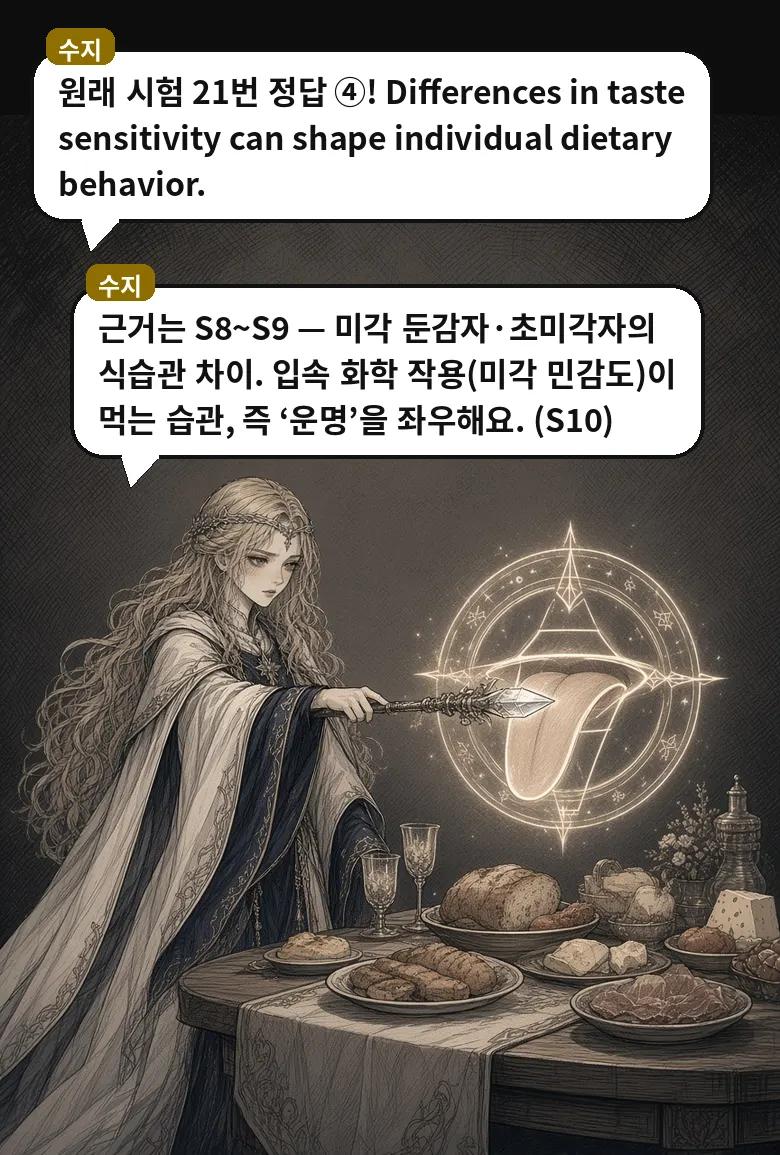
정답 ④ Differences in taste sensitivity can shape individual dietary behavior. — 원래 시험 21번 정답 ④! Differences in taste sensitivity can shape individual dietary behavior. 근거는 S8~S9 — 미각 둔감자·초미각자의 식습관 차이. 입속 화학 작용(미각 민감도)이 먹는 습관, 즉 ‘운명’을 좌우해요. (S10)
⚔️ 강신용의 함정: Your taste pattern reveals nothing more than taste preferences… 그럴까? nothing more than이 함정이다. may reveal more than just. (S6)
"Your taste pattern reveals nothing more than taste preferences." → 'reveals nothing more than'는 틀림 → 'may reveal more than just' (S6)