 지산열린학원지산고2 · 26년 6월 · 40번
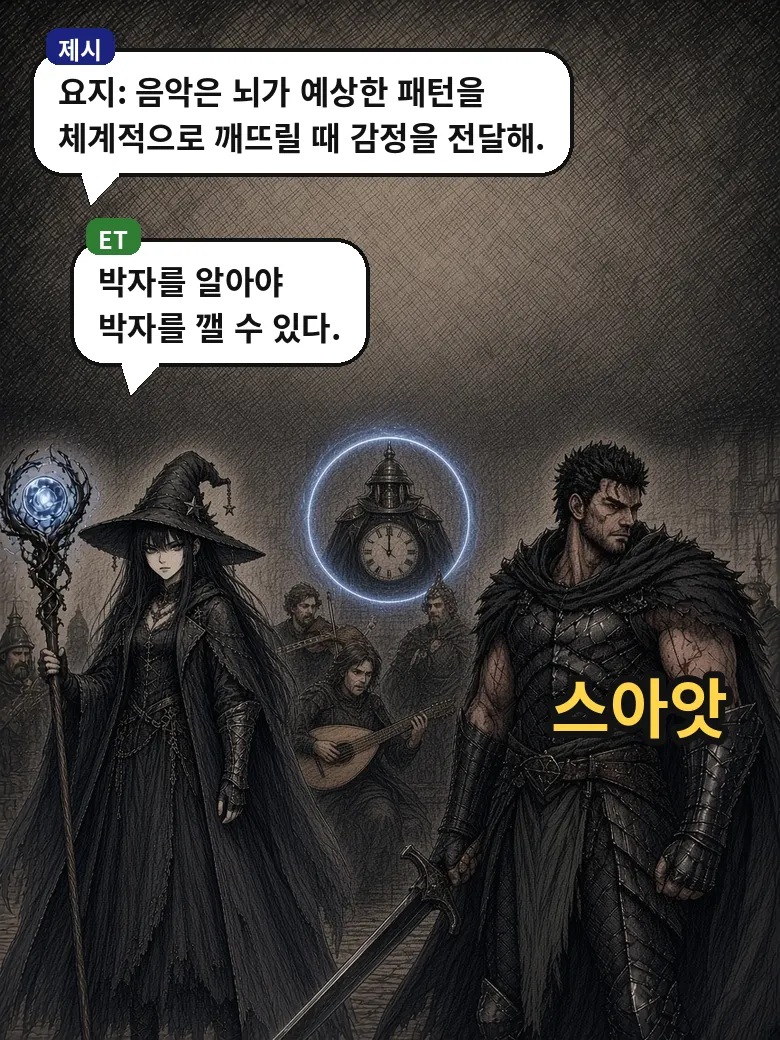
📌 제시의 요지
음악은 뇌가 예상한 패턴을 체계적으로 깨뜨릴 때 감정을 전달한다.
Music conveys emotion when it systematically breaks the patterns the brain expects.
🌊 정미의 문단 흐름
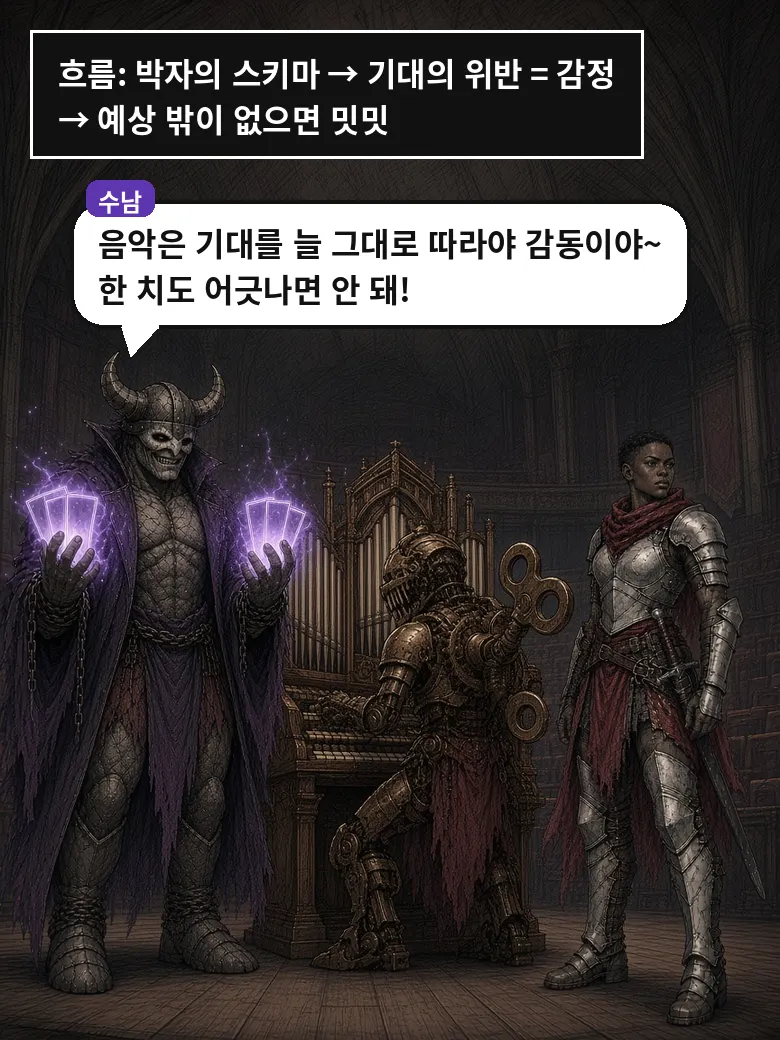
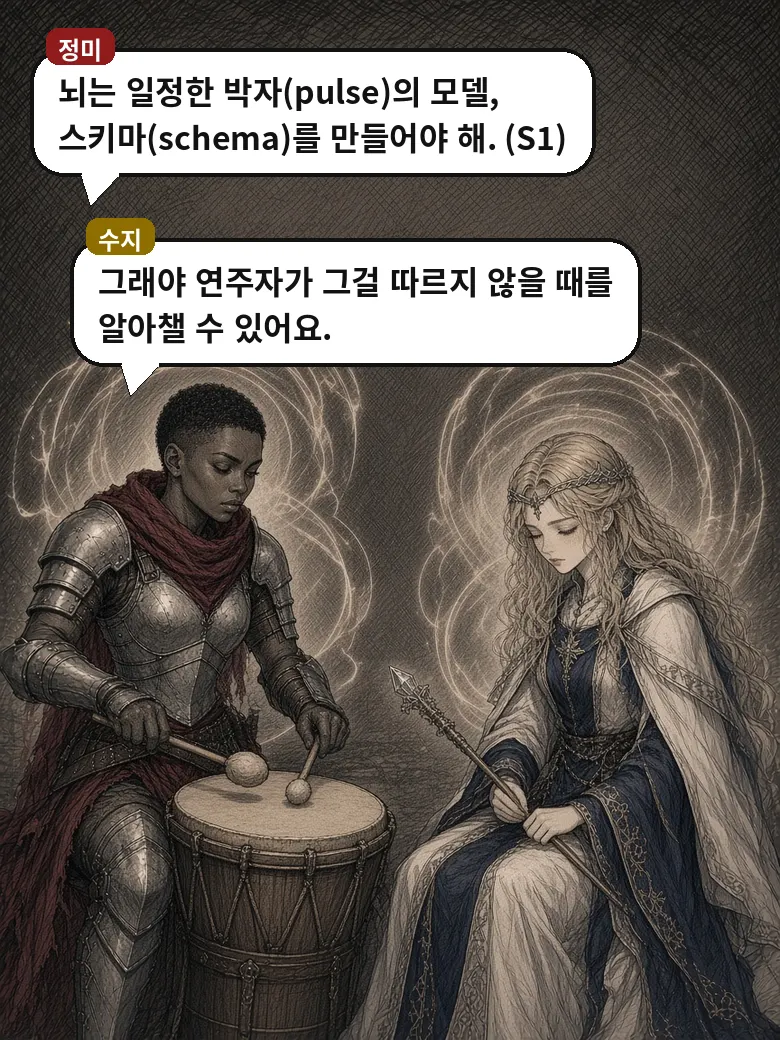
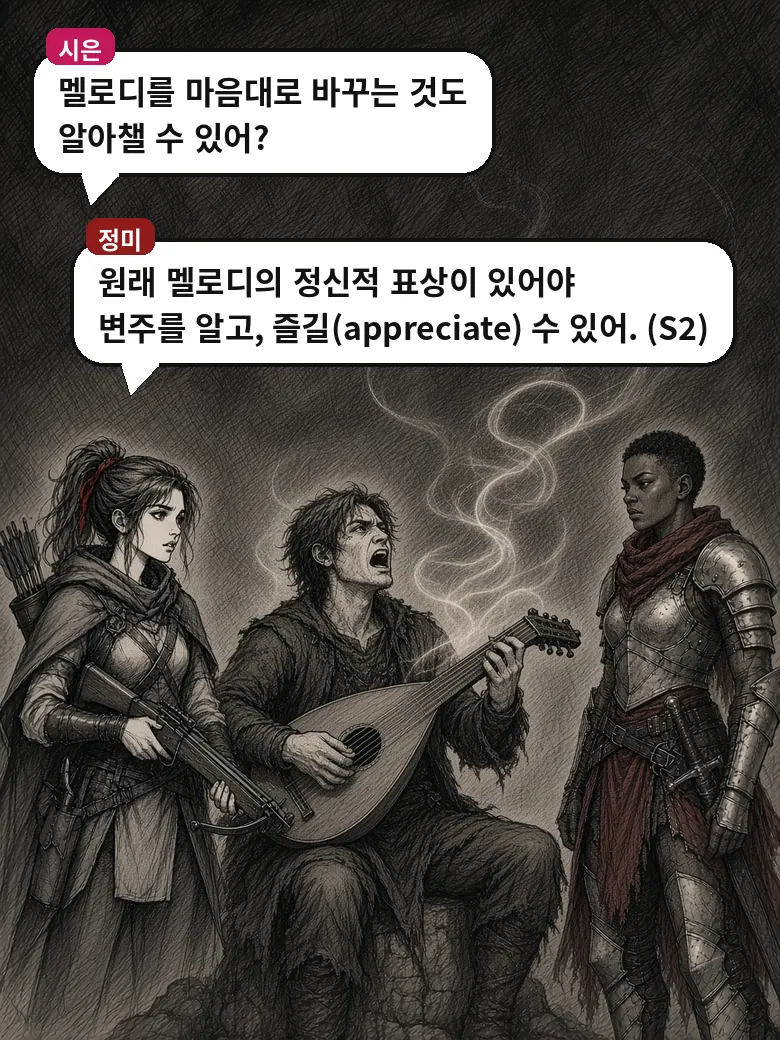
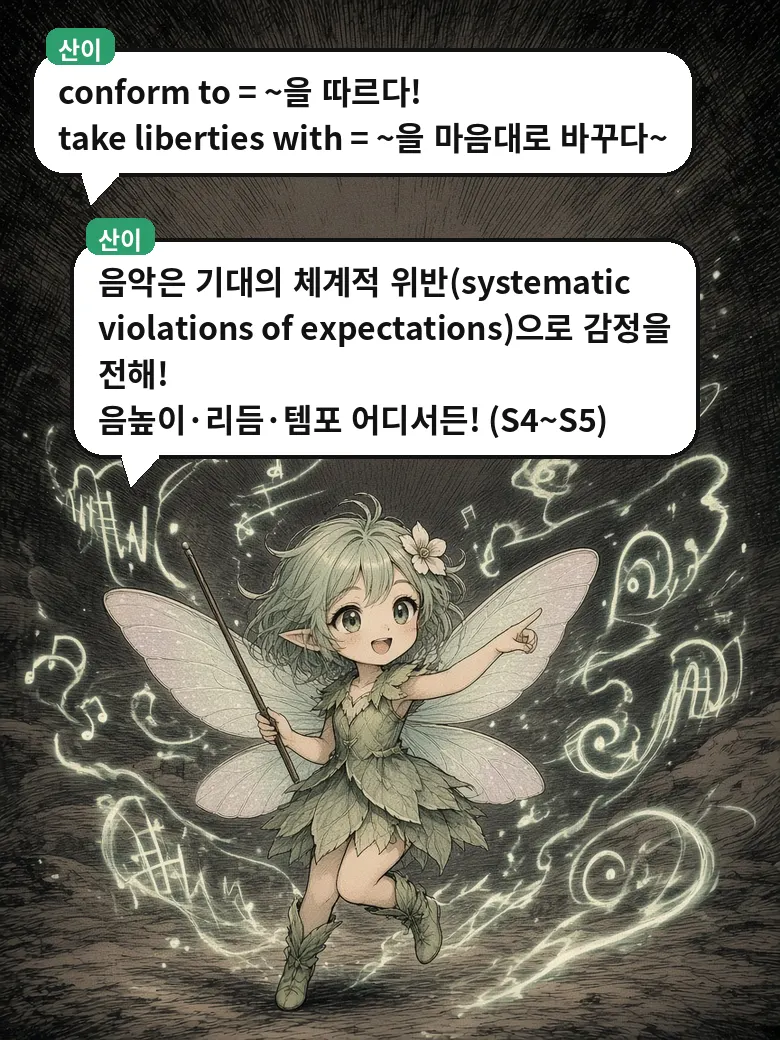
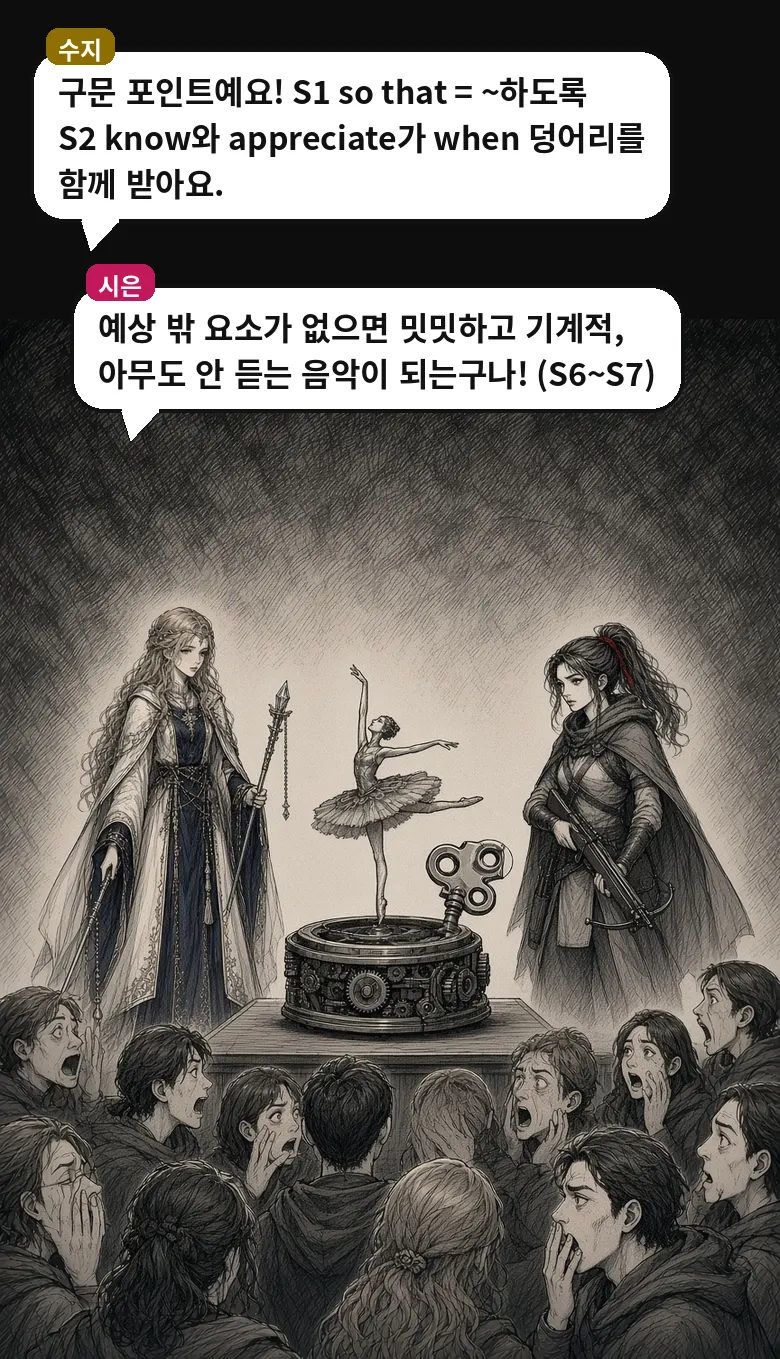
도입: 뇌는 일정한 박자의 모델(스키마)을 만들어야 연주자가 그것에서 벗어나는 때를 안다 — 멜로디 변주도 원래 멜로디의 표상이 있어야 즐길 수 있다. (S1~S2) / 전개: 박자 추출(박자와 그 예상 시점 파악)은 음악적 감정의 핵심 → 음악은 '기대의 체계적 위반'으로 감정을 전달하며, 위반은 어느 영역에서든 반드시 일어나야 한다. (S3~S5) / 결론: 예상치 못한 요소가 없으면 밋밋하고 기계적 → 지나친 조직은 아무도 듣지 않는 음악. (S6~S7)
☠ 수남의 하수인: 기계 태엽 악사
🧚 산이의 어휘
| 단어 | 뜻 | 동의어 / 반의어 |
|---|---|---|
| constant | 일정한, 끊임없는 | — |
| pulse | 박자, 맥박 | — |
| schema | 도식, 스키마 | — |
| conform to | ~을 따르다, ~에 순응하다 | — |
| variation | 변주, 변형 | — |
| mental representation | 정신적 표상 | — |
📖 본문 보기
The brain needs to create a model of a constant pulse — a schema — so that we know when the musicians are not conforming to it. This is similar to variations of a melody: We need to have a mental representation of what the melody is in order to know — and appreciate — when the musician is taking liberties with it. Metrical extraction, knowing what the pulse is and when we expect it to occur, is a crucial part of musical emotion. Music communicates to us emotionally through systematic violations of expectations. These violations can occur in any domain — the domain of pitch, rhythm, tempo, and so on — but occur they must. Music is organized sound, but the organization has to involve some element of the unexpected or it is emotionally flat and robotic. Too much organization may technically still be music, but it would be music that no one wants to listen to. ■■■■■■■■■■ 2025년 10월 고2 모의고사 ■■■■■■■■■■
🏹 시은의 질문 · “한 문장으로 줄이면?”
Our brain predicts musical patterns, and music moves us when musicians break those patterns.
뇌는 음악의 패턴을 예상하고, 연주자가 그 패턴을 깰 때 음악은 우리를 감동시킨다.
🎯 원래 시험 정답
40. 다음 글의 내용을 한 문장으로 요약하고자 한다. 빈칸 (A), (B)에 들어갈 말로 가장 적절한 것은? [3점]
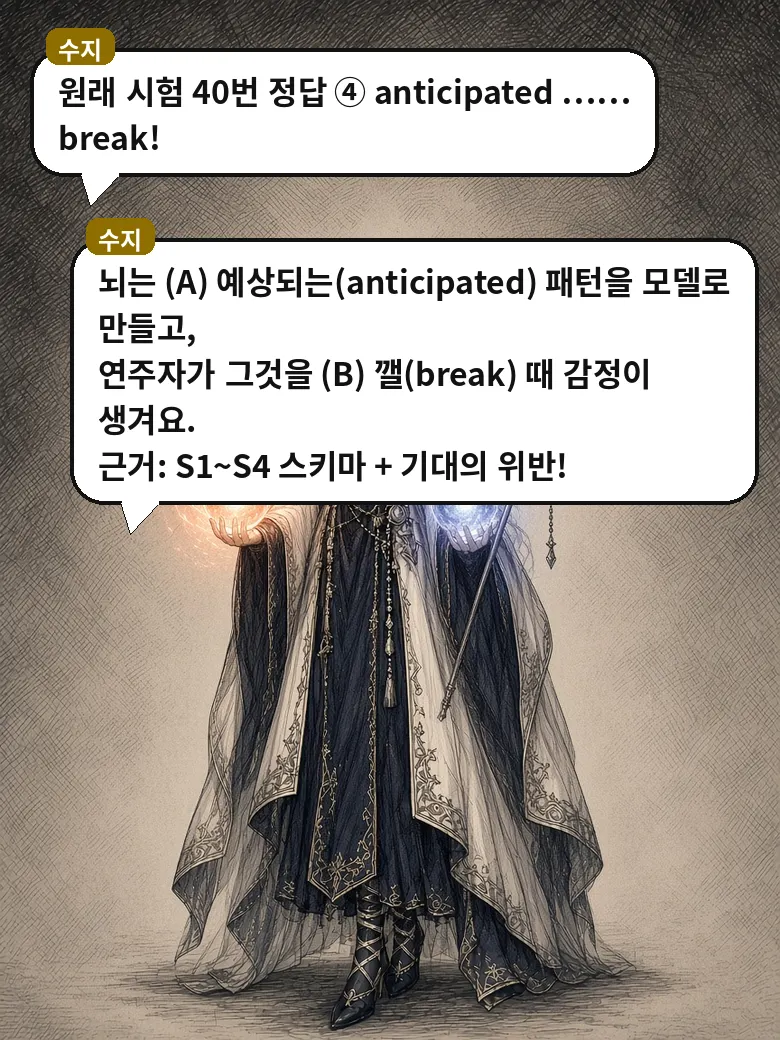
원래 시험 정답: ④ anticipated …… break
📝 수지의 문제 풀이 (요약)
다음 글의 내용을 한 문장으로 요약하고자 한다. 빈칸 (A), (B)에 들어갈 말로 가장 적절한 것은? [3점]
The brain needs to create a model of a constant pulse — a schema — so that we know when the musicians are not conforming to it. This is similar to variations of a melody: We need to have a mental representation of what the melody is in order to know — and appreciate — when the musician is taking liberties with it. Metrical extraction, knowing what the pulse is and when we expect it to occur, is a crucial part of musical emotion. Music communicates to us emotionally through systematic violations of expectations. These violations can occur in any domain — the domain of pitch, rhythm, tempo, and so on — but occur they must. Music is organized sound, but the organization has to involve some element of the unexpected or it is emotionally flat and robotic. Too much organization may technically still be music, but it would be music that no one wants to listen to.
- ① unpredictable …… repeat
- ② unpredictable …… disobey
- ③ anticipated …… maintain
- ④ anticipated …… break
- ⑤ established …… embody
🗡️ 흑검 ET의 정답 보기
정답 ④ anticipated …… break — 원래 시험 40번 정답 ④ anticipated …… break! 뇌는 (A) 예상되는(anticipated) 패턴을 모델로 만들고, 연주자가 그것을 (B) 깰(break) 때 감정이 생겨요. 근거: S1~S4 스키마 + 기대의 위반!
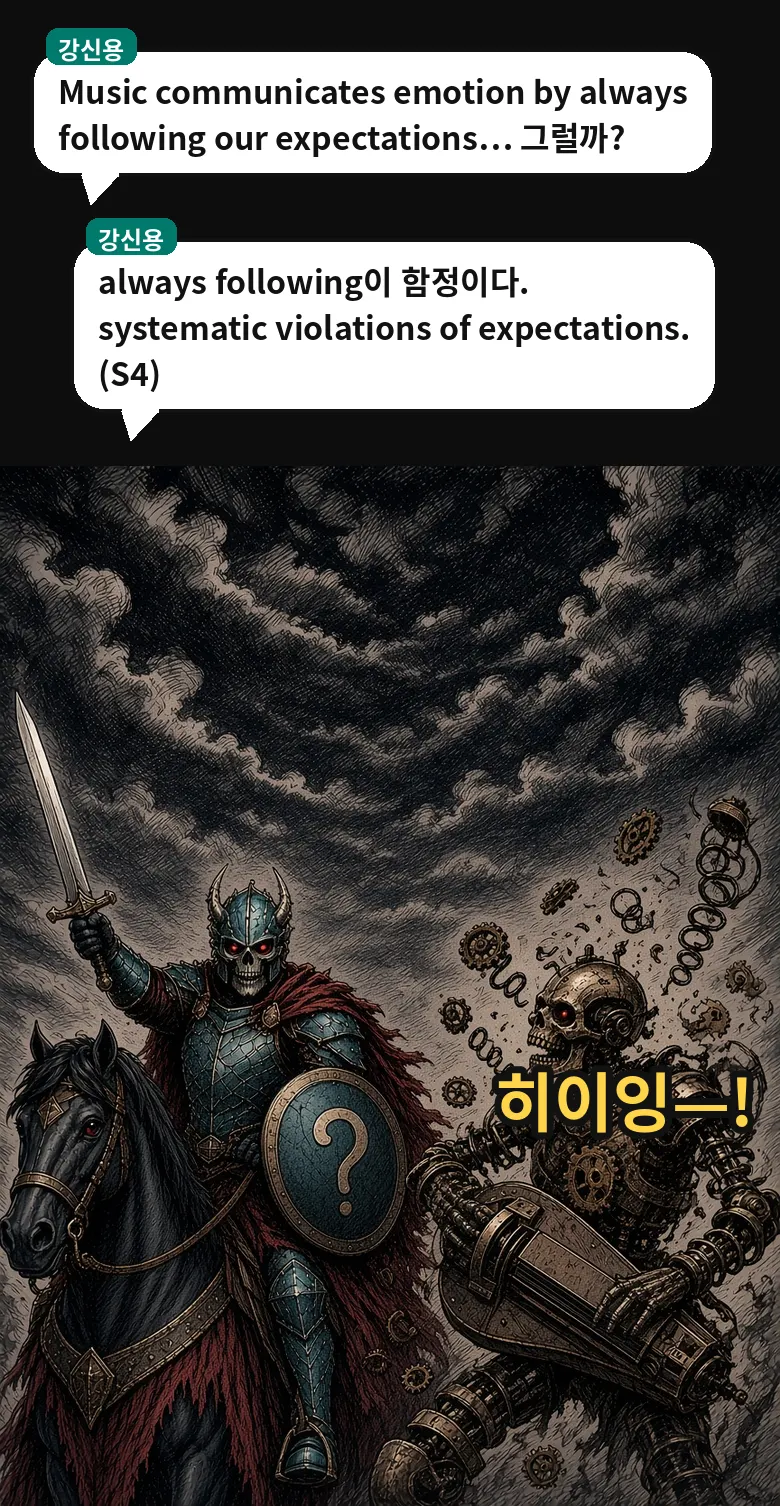
⚔️ 강신용의 함정: Music communicates emotion by always following our expectations… 그럴까? always following이 함정이다. systematic violations of expectations. (S4)
"Music communicates emotion by always following our expectations." → 'always following our expectations'는 틀림 → 'systematic violations of expectations' (S4)