 지산열린학원지산고2 · 26년 6월 · 36번
📌 제시의 요지
생존에 모든 시간을 쓰던 인류는 지능 덕분에 효율적인 사냥꾼이 되어 풍요와 여가를 얻었다.
Early humans, once using all their time to survive, became efficient hunters through intelligence and gained affluence and leisure.
🌊 정미의 문단 흐름
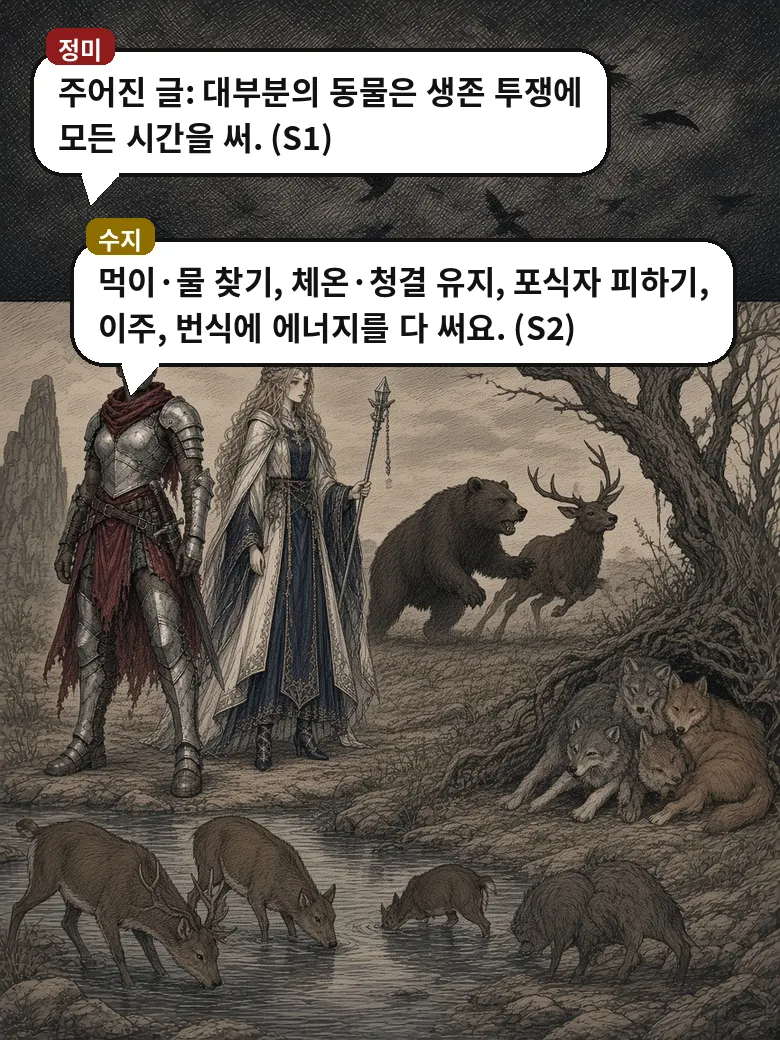
도입: 대부분의 동물은 생존 투쟁(먹이·체온·포식자 회피·이주·번식)에 모든 시간과 에너지를 쓴다. (S1~S2) / 전개: (B) 남는 시간은 휴식·잠, 놀이는 어린 동물만 → 초기 조상도 마찬가지 → (A) But: 지능 발달로 효율적 사냥꾼이 되며 상황 반전, 농경 이전에 이미 풍요. (S3~S10) / 결론: (C) 먹이가 풍부하고 사냥 기술이 발달한 곳·시기에는 놀라운 번영 → 인류는 '남는 시간(여가)'을 갖게 되었다. (S11~S12)
☠ 수남의 하수인: 끝없는 굶주림의 늑대
🧚 산이의 어휘
| 단어 | 뜻 | 동의어 / 반의어 |
|---|---|---|
| struggle | 투쟁, 분투 | — |
| predator | 포식자 | — |
| migrate | 이주하다 | — |
| reproduce | 번식하다 | — |
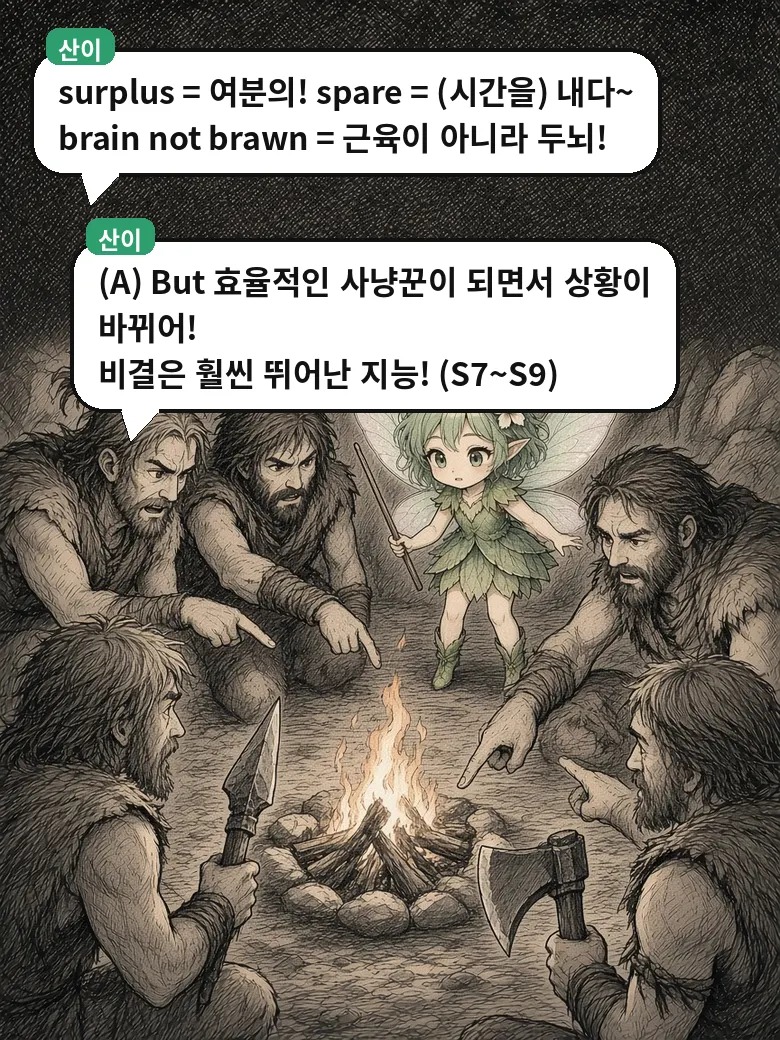
| spare | (시간을) 내다, 남는 | — |
| surplus | 여분의, 잉여의 | — |
📖 본문 보기
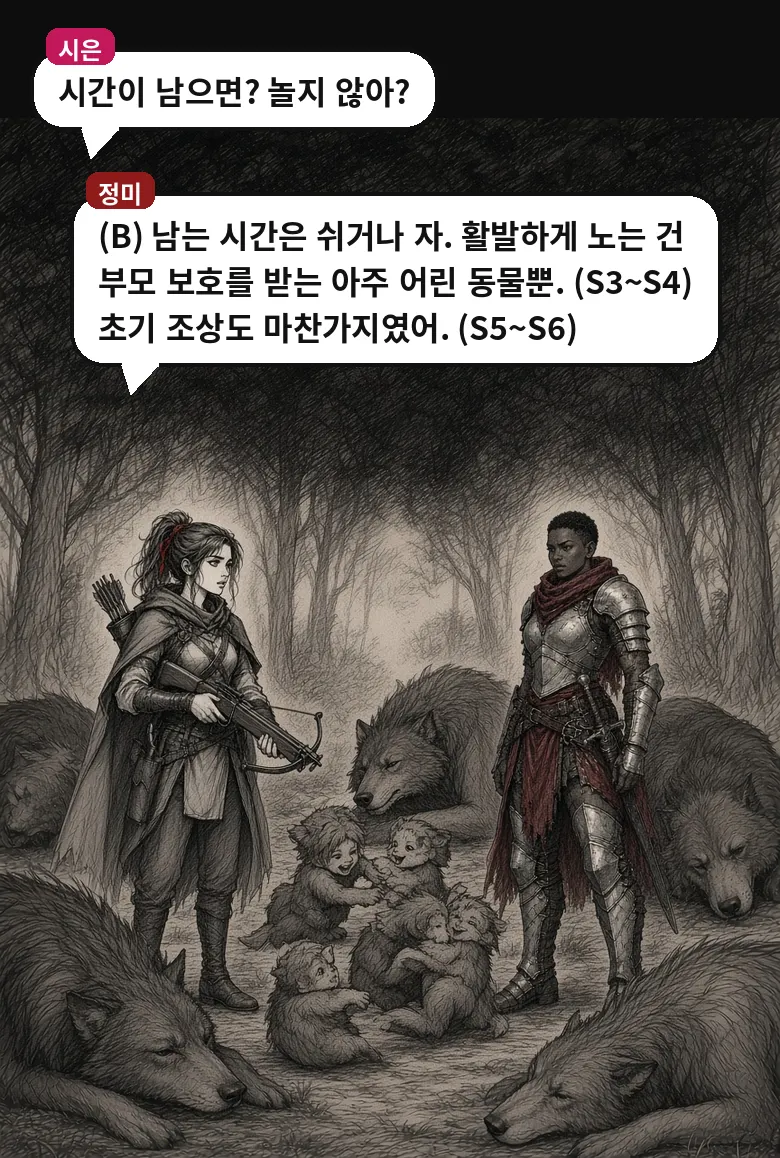
For most animals the struggle to survive takes up all their time. Finding food and drink, keeping warm and clean, avoiding predators, migrating and reproducing use up all their energies. If they do have any time to spare, they spend it resting or sleeping. Only very young animals, under the protection of their parents, have enough surplus energy to engage in lively bouts of play. This was also true for our early ancestors. The constant search for food would have put heavy demands upon them. But as they slowly evolved into more and more efficient hunters, the situation changed. The secret of their success was the development of much greater intelligence. They used brain not brawn to kill their prey. At the end of the long hunting era, before they turned to farming, they were already enjoying some degree of affluence. In certain regions, at particular times of year, the prey was sufficiently plentiful and their hunting techniques sufficiently advanced for them to experience a remarkable degree of prosperity. They had time on their hands.
🏹 시은의 질문 · “한 문장으로 줄이면?”
Unlike most animals, our ancestors became smart, efficient hunters and finally had time to spare.
대부분의 동물과 달리 우리 조상은 영리하고 효율적인 사냥꾼이 되어 마침내 여유 시간을 갖게 되었다.
🎯 원래 시험 정답
36. 주어진 글 다음에 이어질 글의 순서로 가장 적절한 것은? [3점]
원래 시험 정답: ② (B) - (A) - (C)
📝 수지의 문제 풀이 (순서)
주어진 글 다음에 이어질 글의 순서로 가장 적절한 것은? [3점]
(A) But as they slowly evolved into more and more efficient hunters, the situation changed. The secret of their success was the development of much greater intelligence. They used brain not brawn to kill their prey. At the end of the long hunting era, before they turned to farming, they were already enjoying some degree of affluence.
(B) If they do have any time to spare, they spend it resting or sleeping. Only very young animals, under the protection of their parents, have enough surplus energy to engage in lively bouts of play. This was also true for our early ancestors. The constant search for food would have put heavy demands upon them.
(C) In certain regions, at particular times of year, the prey was sufficiently plentiful and their hunting techniques sufficiently advanced for them to experience a remarkable degree of prosperity. They had time on their hands.
- ① (A) - (C) - (B)
- ② (B) - (A) - (C)
- ③ (B) - (C) - (A)
- ④ (C) - (A) - (B)
- ⑤ (C) - (B) - (A)
🗡️ 흑검 ET의 정답 보기
정답 ② (B) - (A) - (C) — 원래 시험 36번 정답 ② (B) - (A) - (C)! 주어진 글(동물의 생존 투쟁) → (B) 남는 시간은 휴식, 조상도 마찬가지 → (A) But 지능으로 상황 반전 → (C) 놀라운 번영, 여가!
⚔️ 강신용의 함정: Most animals have plenty of free time after finding food… 그럴까? 함정이다. 동물은 생존 투쟁에 모든 에너지를 다 쓴다. (S1~S2)
"Most animals have plenty of free time after finding food." → 'have plenty of free time after finding food'는 틀림 → 'use up all their energies struggling to survive' (S1~2)