 지산열린학원지산고2 · 26년 6월 · 37번
📌 제시의 요지
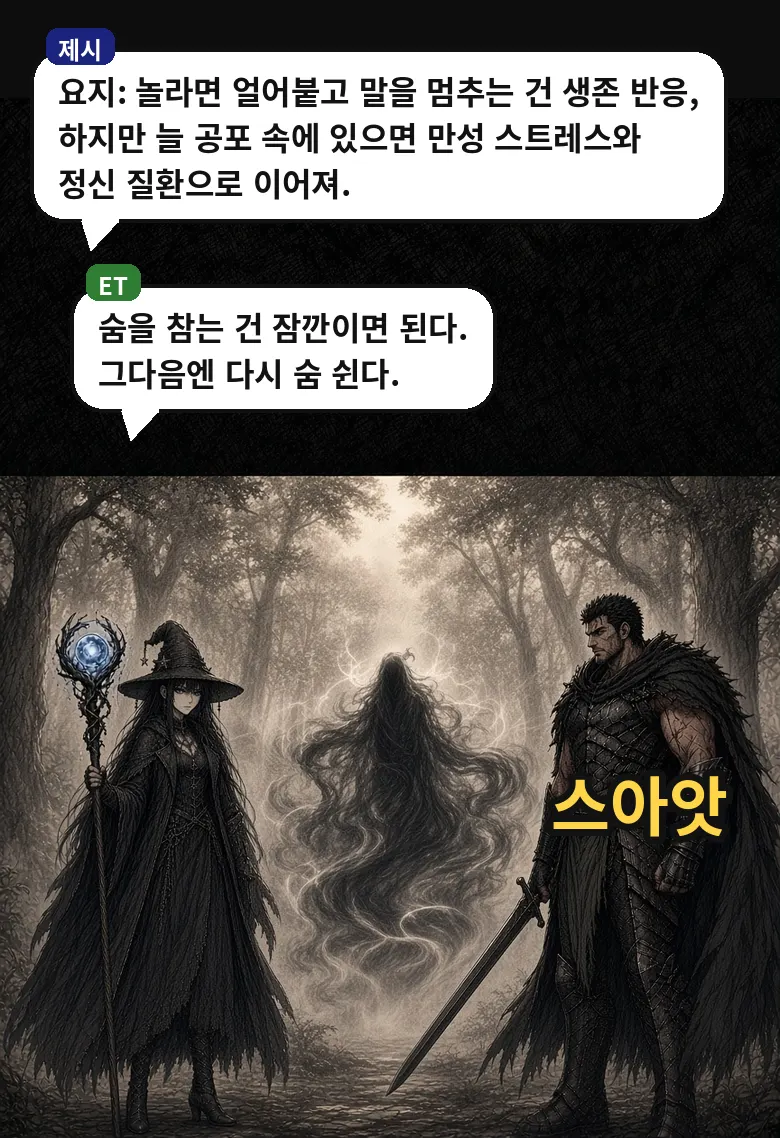
놀라면 얼어붙고 말을 멈추는 것은 생존 반응이지만, 늘 공포 상태에 있으면 만성 스트레스와 정신 질환으로 이어진다.
Freezing and falling silent when startled helps survival, but living in constant fear can cause chronic stress and mental illness.
🌊 정미의 문단 흐름
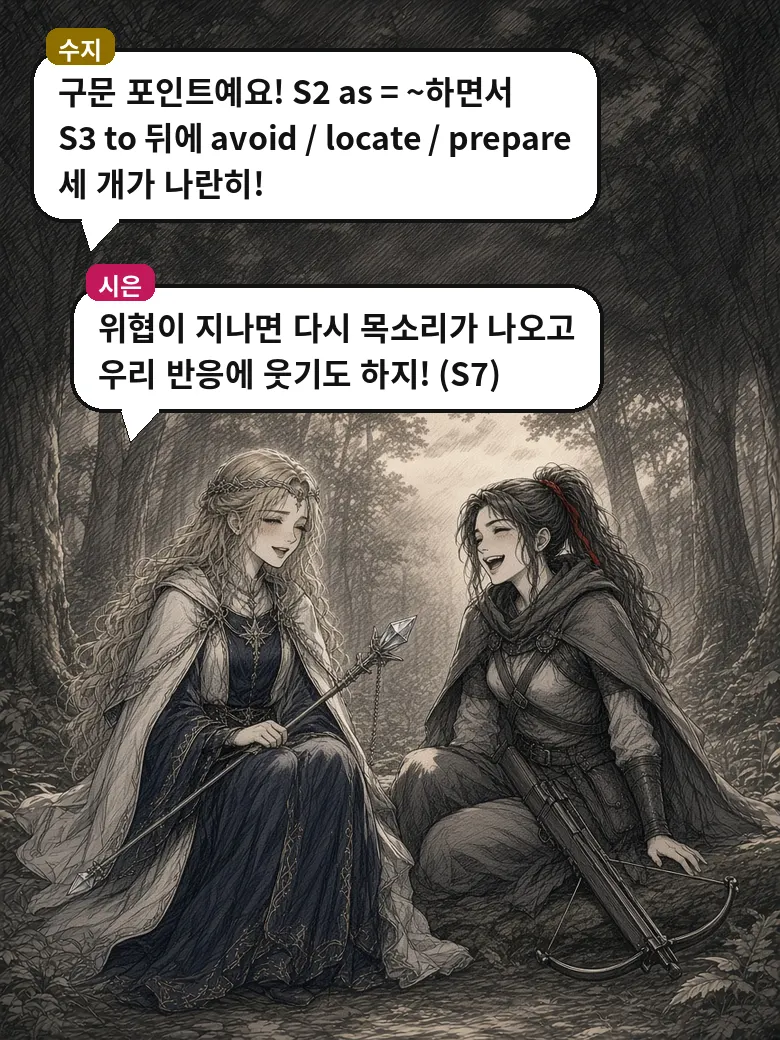
도입: 깜짝 놀라면 멈추고, 얼어붙고, 숨을 참으며 위협을 살핀다. (S1~S2) / 전개: (C) 이 반응들은 들키지 않기·위험원 파악·싸움/도주 준비를 극대화, 소리는 위치를 노출 → (B) 그래서 극한 스트레스 상황에서 언어가 억제됨(자연 선택이 freeze rule 보존), 위협이 지나면 목소리 회복. (S3~S7) / 결론: (A) But: 긴장을 결코 풀 수 없다면? 끊임없는 공포 상태는 신경망 발달을 방해 → 만성 스트레스·정신 질환. (S8~S10)
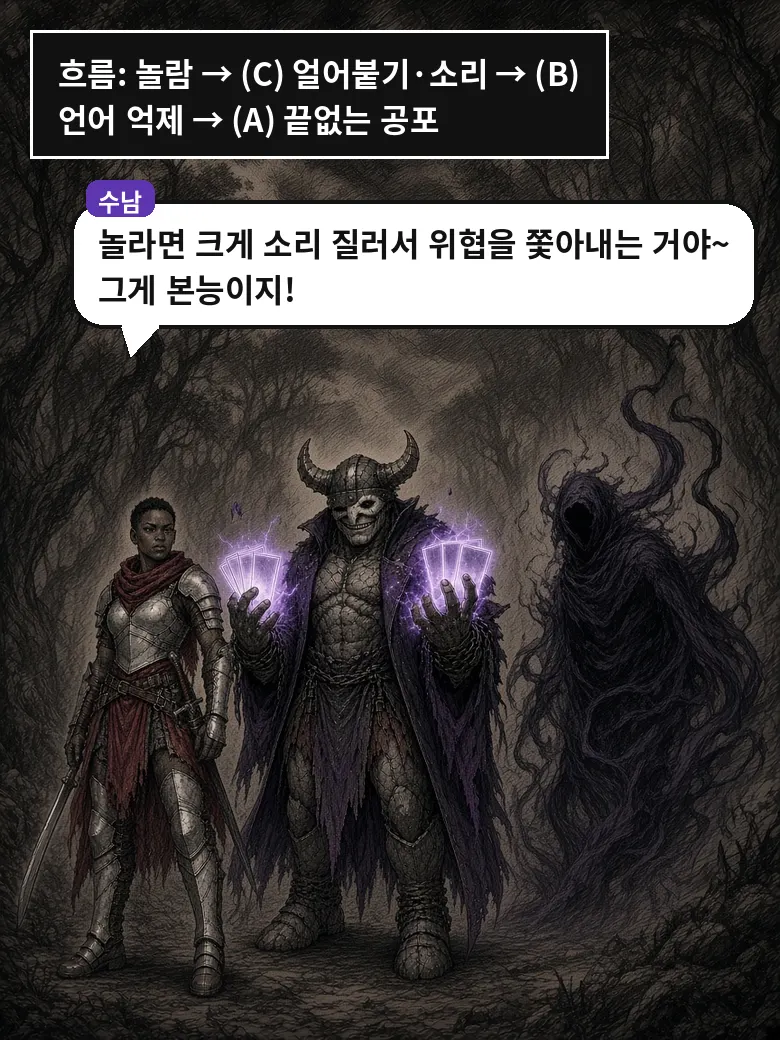
☠ 수남의 하수인: 끝나지 않는 공포의 그림자
🧚 산이의 어휘
| 단어 | 뜻 | 동의어 / 반의어 |
|---|---|---|
| startled | 깜짝 놀란 | — |
| freeze | 얼어붙다, 멈추다 | — |
| scan | 살피다, 훑어보다 | — |
| threat | 위협 | — |
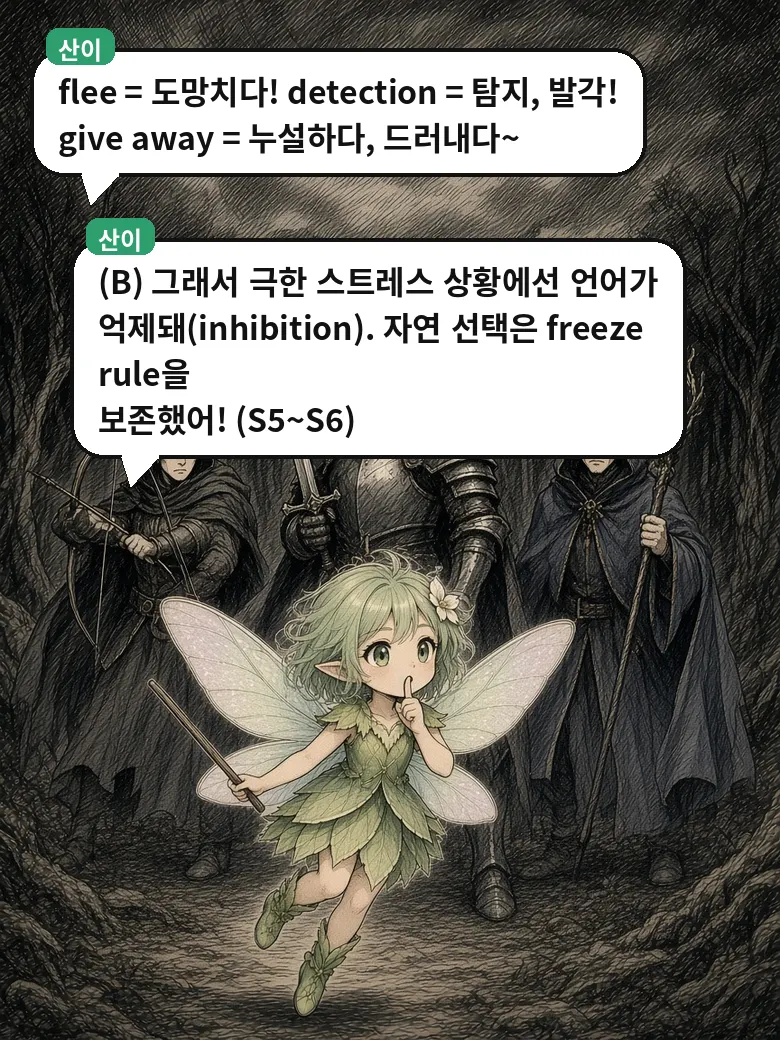
| detection | 탐지, 발각 | — |
| locate | ~의 위치를 찾아내다 | — |
📖 본문 보기
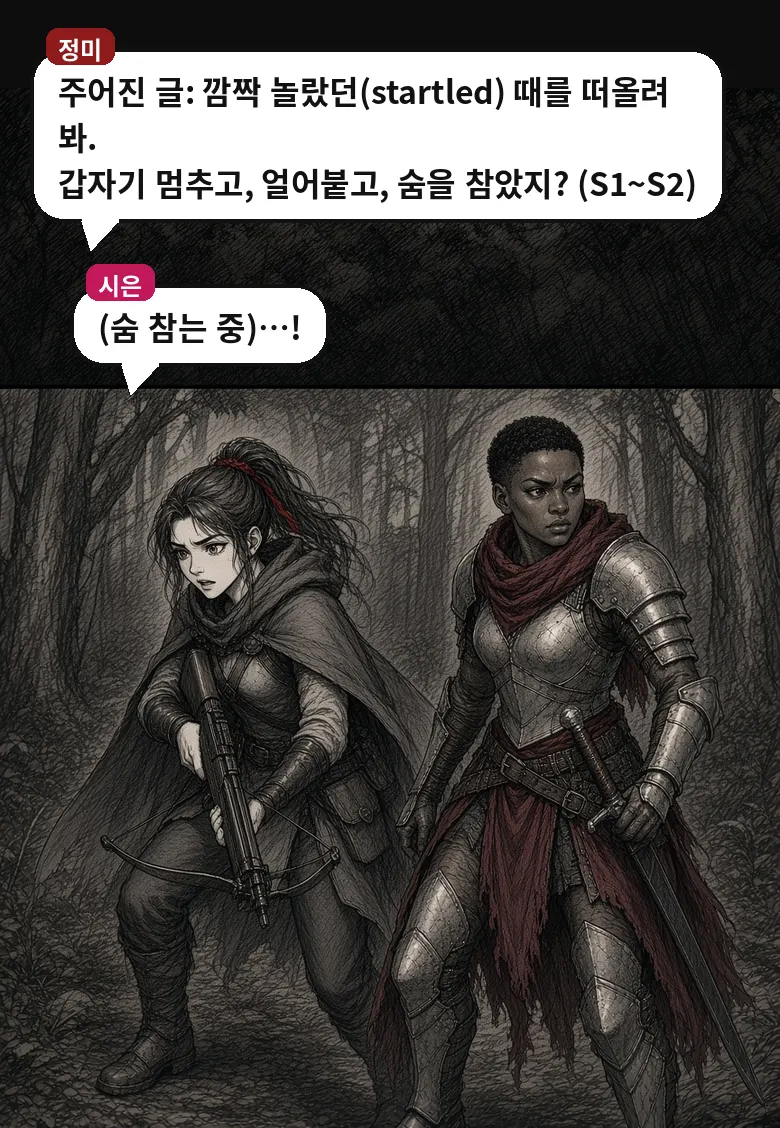
Think about a time when you were startled. Did you come to a sudden stop, freeze all your movements, and hold your breath as you scanned the environment for a threat? All these responses maximize our ability to avoid detection, locate the source of possible danger, and prepare to fight or flee. As sophisticated as language has become, it is still the creation of sound that might give away our location to a potential predator. Because of this, the freeze response results in the inhibition of language in highly stressful and traumatic situations. Natural selection promoted the evolution of language but conserved the freeze rule. When the threat passes, we begin to relax and find our voices again, perhaps even to laugh at our own reactions. But what if we can never relax? What if our experiences shape our brain to be in a constant state of fear? This interference with the proper development and integration of neural networks can result in chronic stress and even mental illness.
🏹 시은의 질문 · “한 문장으로 줄이면?”
We freeze and go quiet when startled to stay safe, but constant fear can harm the brain and cause chronic stress.
우리는 놀라면 안전을 위해 얼어붙고 말을 멈추지만, 끊임없는 공포는 뇌를 해쳐 만성 스트레스를 낳을 수 있다.
🎯 원래 시험 정답
37. 주어진 글 다음에 이어질 글의 순서로 가장 적절한 것은?
원래 시험 정답: ⑤ (C) - (B) - (A)
📝 수지의 문제 풀이 (순서)
주어진 글 다음에 이어질 글의 순서로 가장 적절한 것은?
(A) But what if we can never relax? What if our experiences shape our brain to be in a constant state of fear? This interference with the proper development and integration of neural networks can result in chronic stress and even mental illness.
(B) Because of this, the freeze response results in the inhibition of language in highly stressful and traumatic situations. Natural selection promoted the evolution of language but conserved the freeze rule. When the threat passes, we begin to relax and find our voices again, perhaps even to laugh at our own reactions.
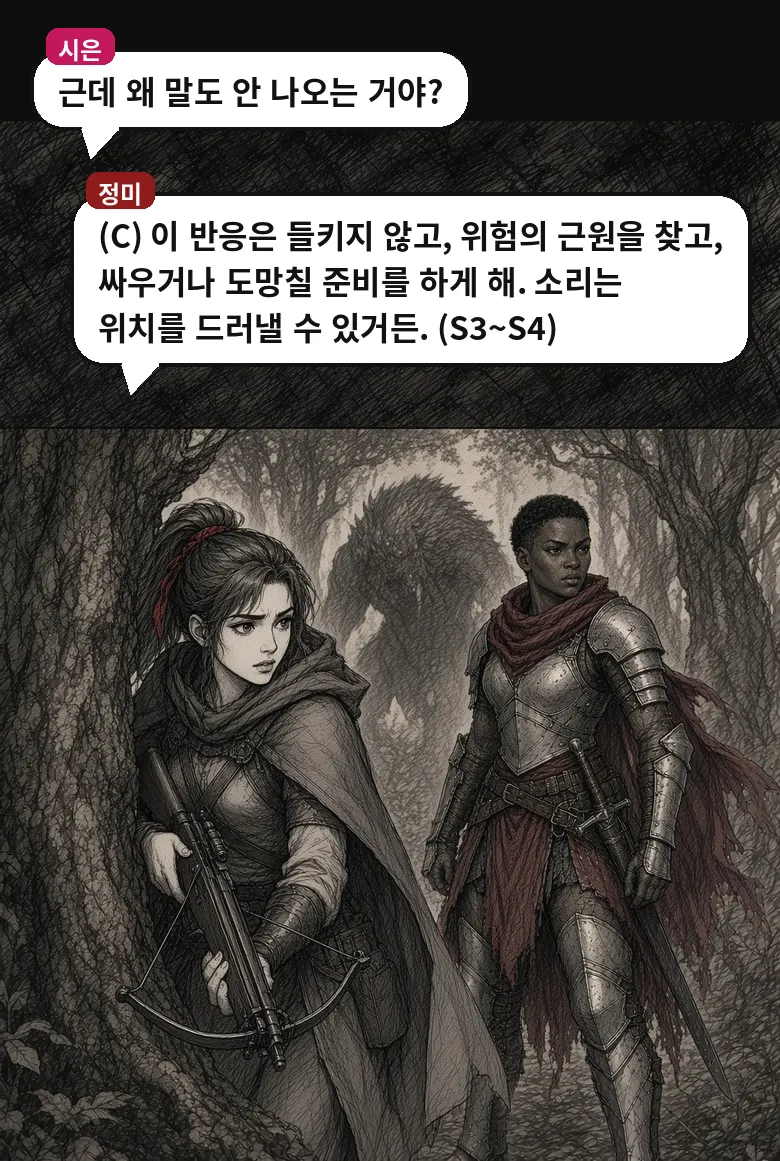
(C) All these responses maximize our ability to avoid detection, locate the source of possible danger, and prepare to fight or flee. As sophisticated as language has become, it is still the creation of sound that might give away our location to a potential predator.
- ① (A) - (C) - (B)
- ② (B) - (A) - (C)
- ③ (B) - (C) - (A)
- ④ (C) - (A) - (B)
- ⑤ (C) - (B) - (A)
🗡️ 흑검 ET의 정답 보기
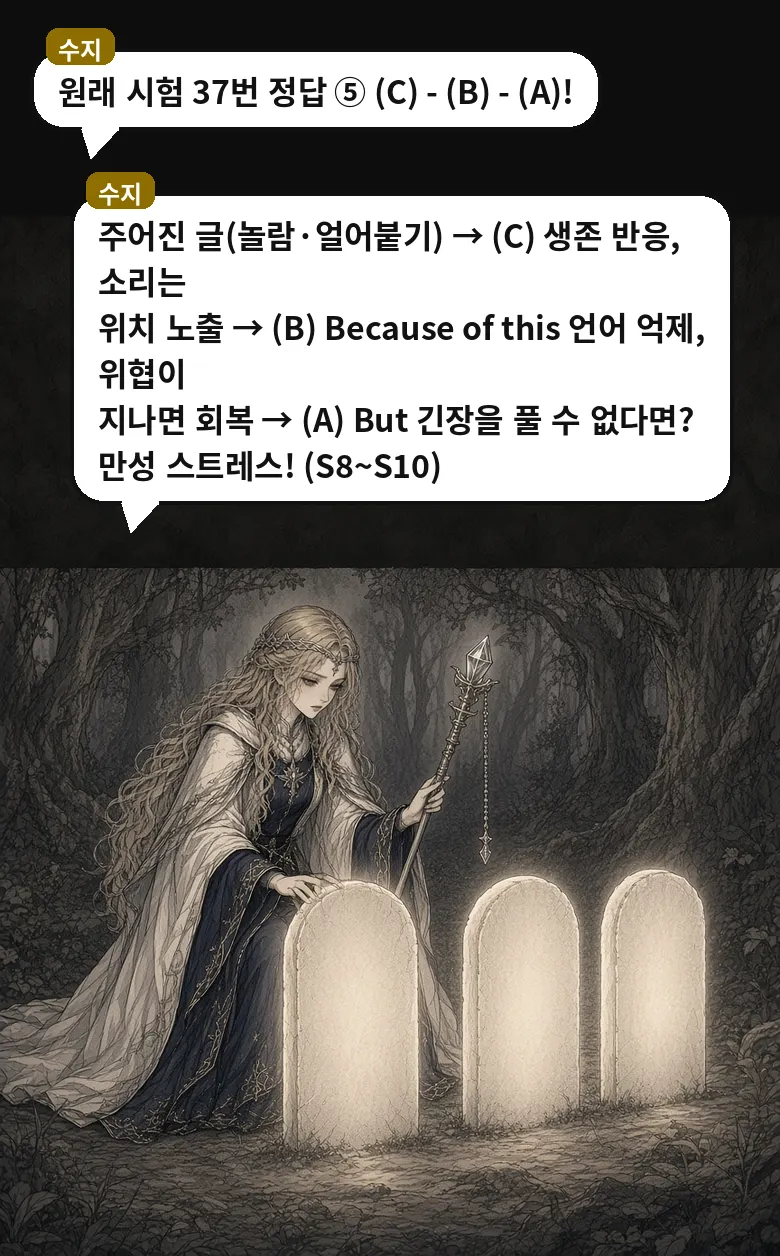
정답 ⑤ (C) - (B) - (A) — 원래 시험 37번 정답 ⑤ (C) - (B) - (A)! 주어진 글(놀람·얼어붙기) → (C) 생존 반응, 소리는 위치 노출 → (B) Because of this 언어 억제, 위협이 지나면 회복 → (A) But 긴장을 풀 수 없다면? 만성 스트레스! (S8~S10)
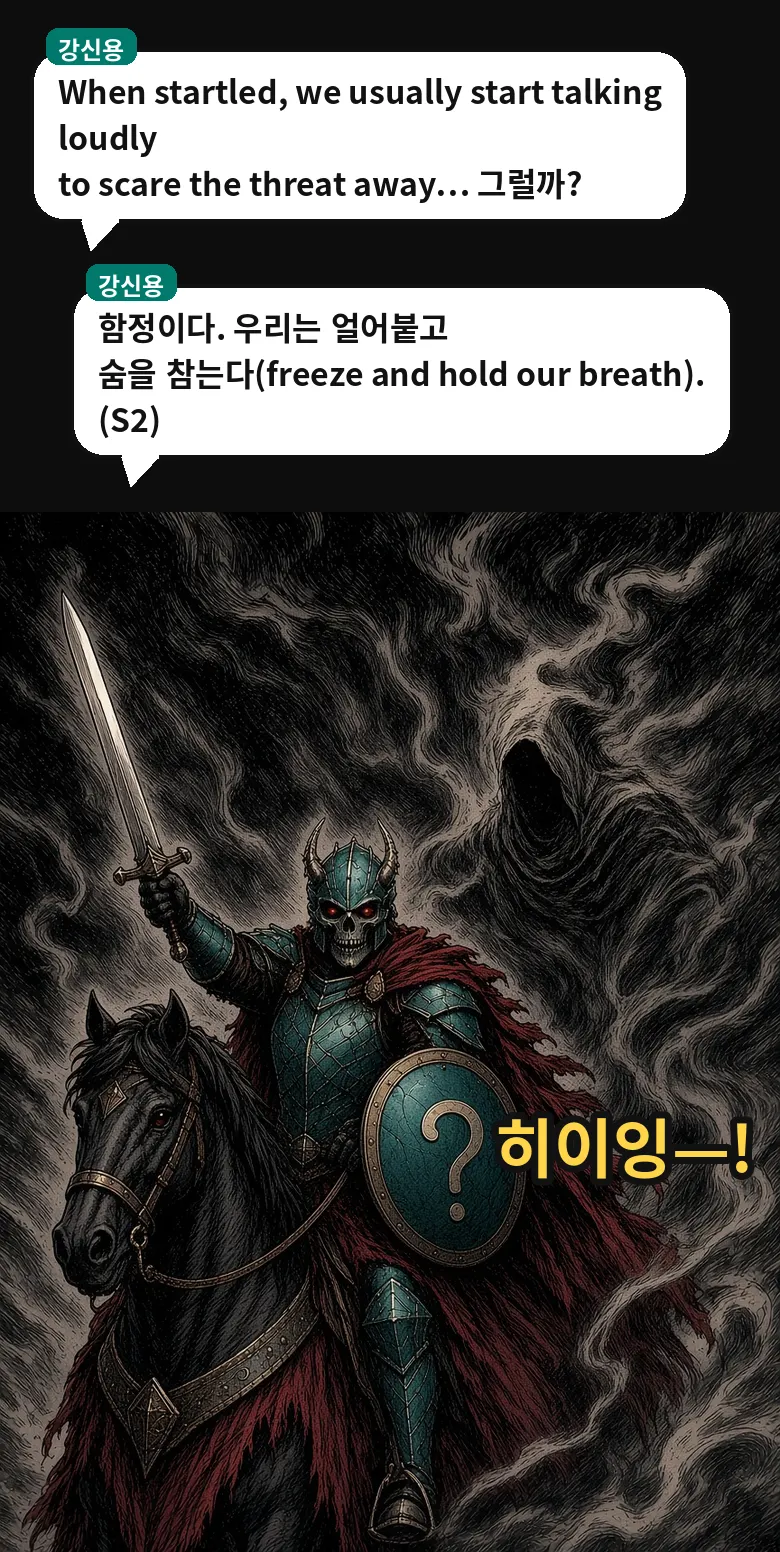
⚔️ 강신용의 함정: When startled, we usually start talking loudly to scare the threat away… 그럴까? 함정이다. 우리는 얼어붙고 숨을 참는다(freeze and hold our breath). (S2)
"When startled, we usually start talking loudly to scare the threat away." → 'start talking loudly to scare the threat away'는 틀림 → 'freeze and hold our breath' (S2)