 지산열린학원25년 10월 · 38번
📌 제시의 요지
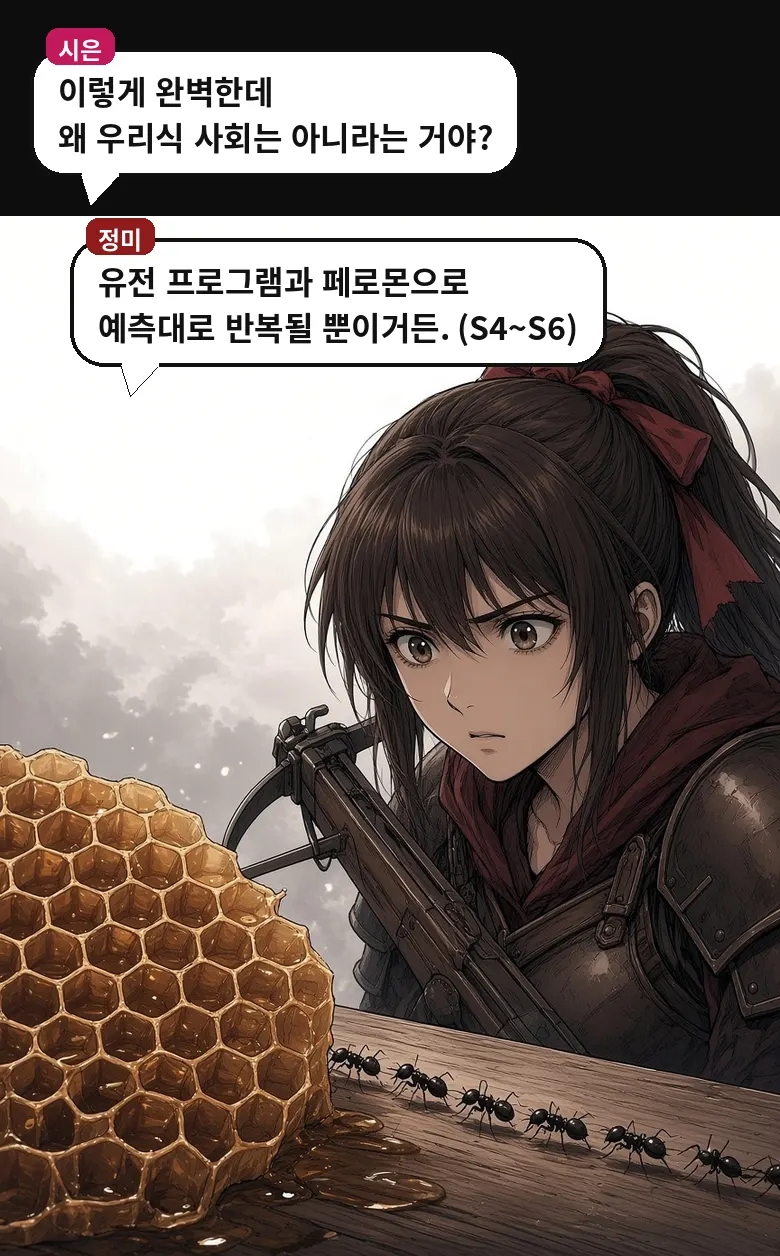
곤충은 유전적으로 고정된 패턴으로 사회생활을 하지만, 인간은 덜 프로그램되어 있어 양육에 의해 더 다양하고 역동적인 사회 패턴을 가진다.
Insects follow genetically fixed social patterns, while humans, less programmed, form more diverse patterns shaped by nurture.
🌊 정미의 문단 흐름
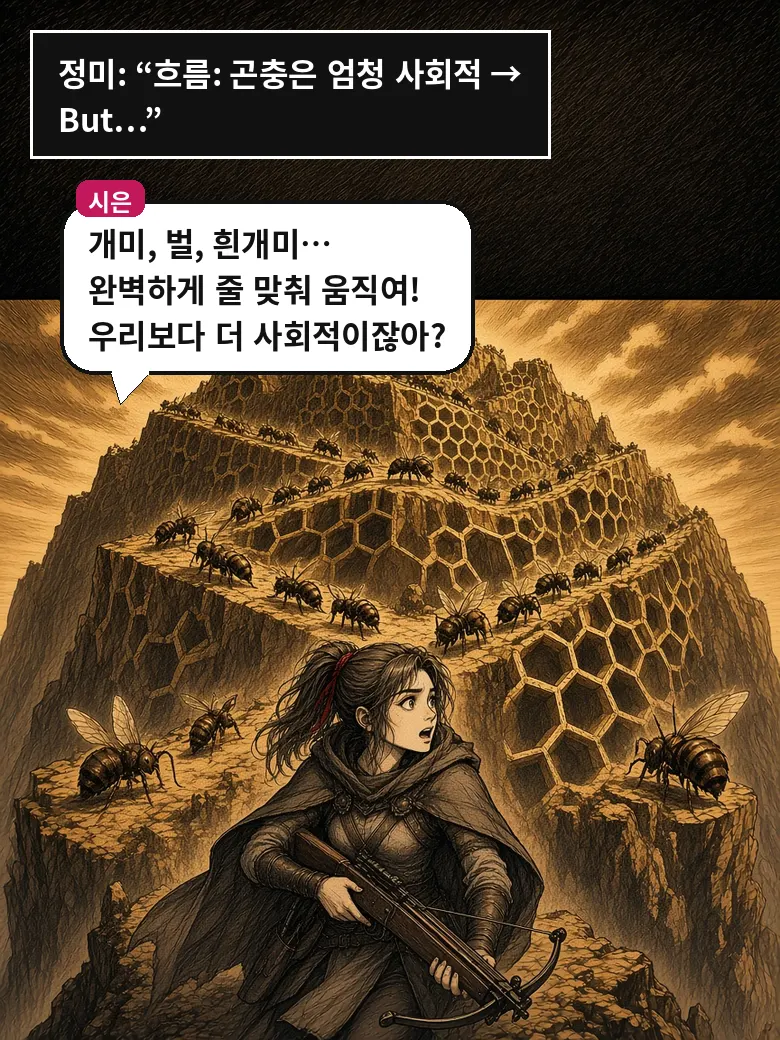
흐름: 곤충은 엄청 사회적 → But…
☠ 수남의 하수인: 고정 패턴 병정개미
🧚 산이의 어휘
| 단어 | 뜻 | 동의어 / 반의어 |
|---|---|---|
| put A to shame | A를 무색하게 하다 | = outshine |
| metric | 척도 | = measure |
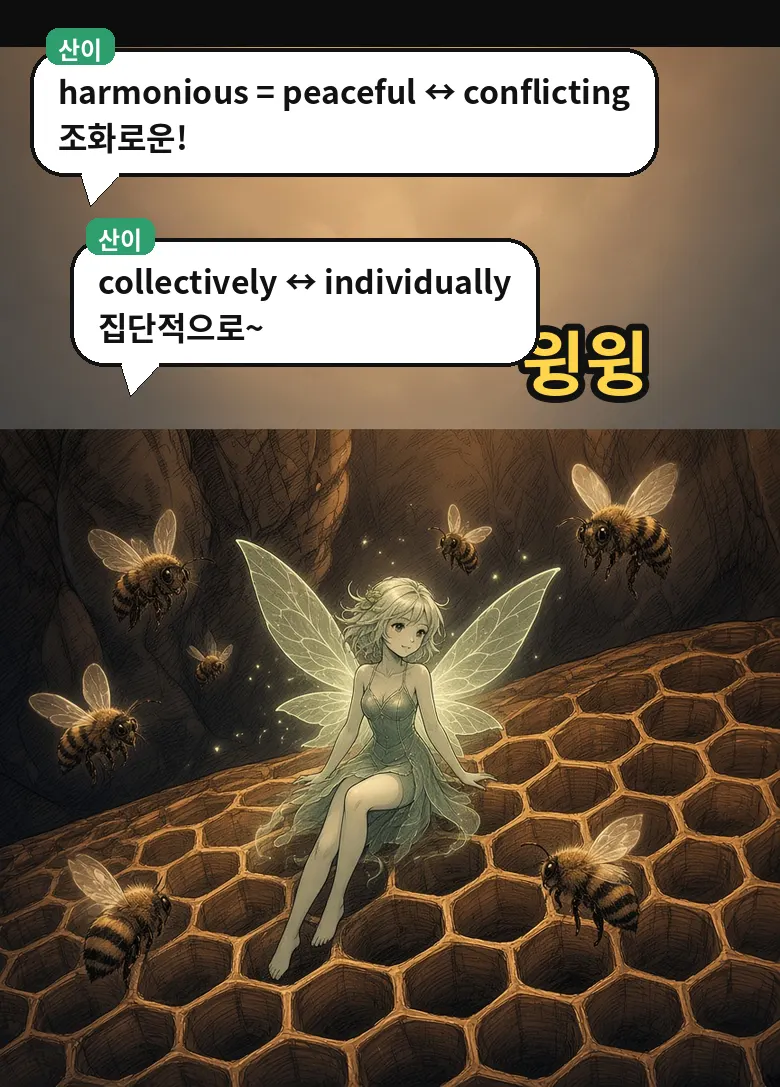
| harmonious | 조화로운 | ↔ discordant |
| recur | 반복되다 | = repeat |
| propel | 추진하다 | = drive |
| nurture | 양육 | ↔ nature(본성) |
📖 본문 보기
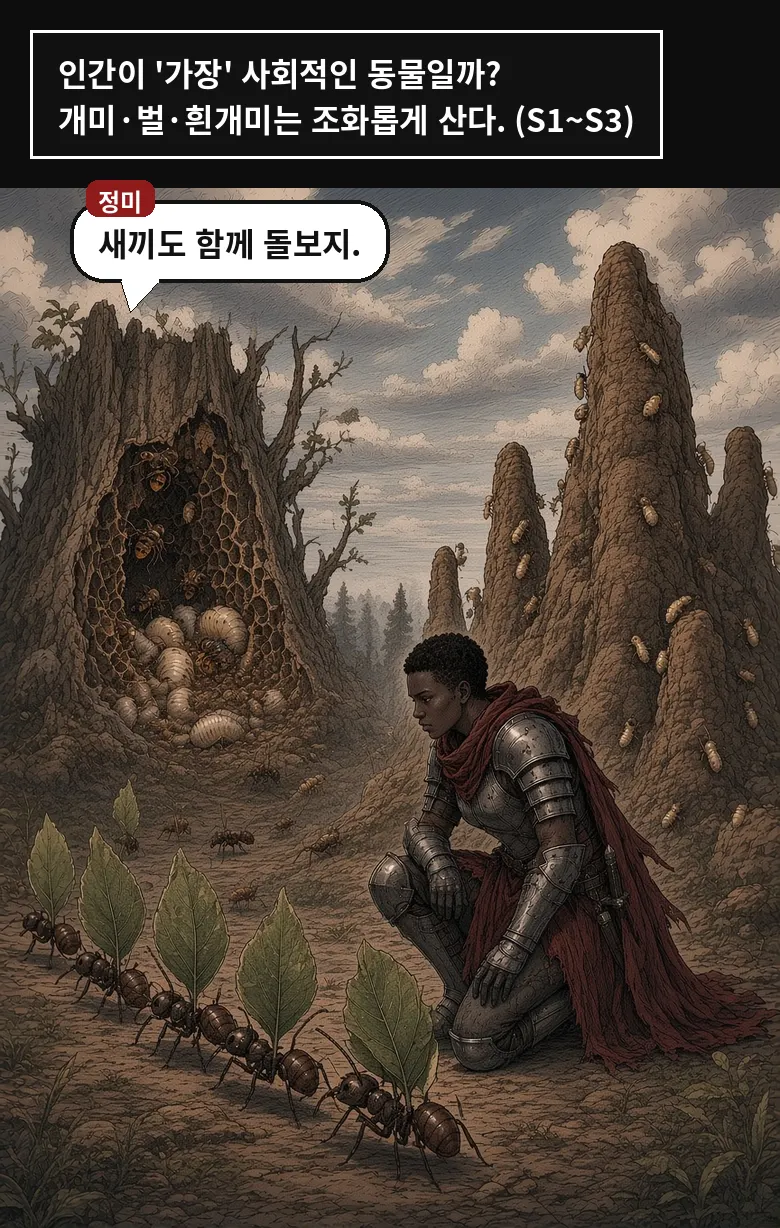
Humans are not the most social animal. Ants, bees, and termites put humanity to shame on many metrics of sociality. A wide variety of relatives live together with perfectly harmonious behavior and collectively care for their young. But while insect colonies are impressively social places, it’s not our kind of social life. Bees always build hexagonal hives, ants march in lines, and termites move in zigzag formations. These patterns recur predictably because they are tightly programmed genetically and propelled pheromonally. We humans are more free, less tightly programmed genetically, so our social patterns can be more diverse and dynamic. Every group dances a slightly different dance, and these choreographies change across generations. We still think and act in ways that are in harmony with others around us, but it is through patterns that are more shaped by nurture, not just nature.
🏹 시은의 질문 · “한 문장으로 줄이면?”
Unlike genetically fixed insect societies, human social patterns are diverse and shaped by nurture.
유전적으로 고정된 곤충 사회와 달리, 인간의 사회 패턴은 다양하며 양육에 의해 형성된다.
🎯 원래 시험 정답
원래 시험 정답: ③
📝 수지의 문제 풀이 (문장 삽입)
글의 흐름으로 보아, 주어진 문장이 들어가기에 가장 적절한 곳은?
But while insect colonies are impressively social places, it’s not our kind of social life.
Humans are not the most social animal. Ants, bees, and termites put humanity to shame on many metrics of sociality. A wide variety of relatives live together… and collectively care for their young. ( ① ) Bees always build hexagonal hives, ants march in lines, and termites move in zigzag formations. ( ② ) These patterns recur predictably because they are tightly programmed genetically… ( ③ ) We humans are more free… ( ④ ) Every group dances a slightly different dance… ( ⑤ ) We still think and act in ways that are in harmony with others…
- ①
- ②
- ③
- ④
- ⑤
🗡️ 흑검 ET의 정답 보기
정답 ① — 곤충의 사회성 칭찬 → But 우리식은 아님 → 곤충의 고정된 패턴(벌집·줄·지그재그) 설명.
⚔️ 강신용의 함정: ③ — We humans 앞이 그럴듯하지만, 주어진 문장 뒤에는 ‘곤충식 패턴’ 설명이 와야 함.
📝 수지의 문제 풀이 (원래 시험 문항 (2025년 10월 38번))
글의 흐름으로 보아, 주어진 문장이 들어가기에 가장 적절한 곳은?
These patterns recur predictably because they are tightly programmed genetically and propelled pheromonally.
Humans are not the most social animal. Ants, bees, and termites put humanity to shame on many metrics of sociality. ( ① ) A wide variety of relatives live together with perfectly harmonious behavior and collectively care for their young. ( ② ) But while insect colonies are impressively social places, it’s not our kind of social life. Bees always build hexagonal hives, ants march in lines, and termites move in zigzag formations. ( ③ ) We humans are more free, less tightly programmed genetically, so our social patterns can be more diverse and dynamic. ( ④ ) Every group dances a slightly different dance, and these choreographies change across generations. ( ⑤ ) We still think and act in ways that are in harmony with others around us, but it is through patterns that are more shaped by nurture, not just nature.
- ①
- ②
- ③
- ④
- ⑤
🗡️ 흑검 ET의 정답 보기
정답 ③ — These patterns는 바로 앞의 벌집(hexagonal hives)·줄(lines)·지그재그(zigzag formations)를 가리키고, 뒤의 We humans are more free, less tightly programmed genetically가 주어진 문장의 tightly programmed genetically와 대조를 이룬다.
⚔️ 강신용의 함정: ② — 아직 ‘패턴’이 나오기 전이라 These patterns가 가리킬 대상이 없음.