 지산열린학원25년 10월 · 37번
📌 제시의 요지
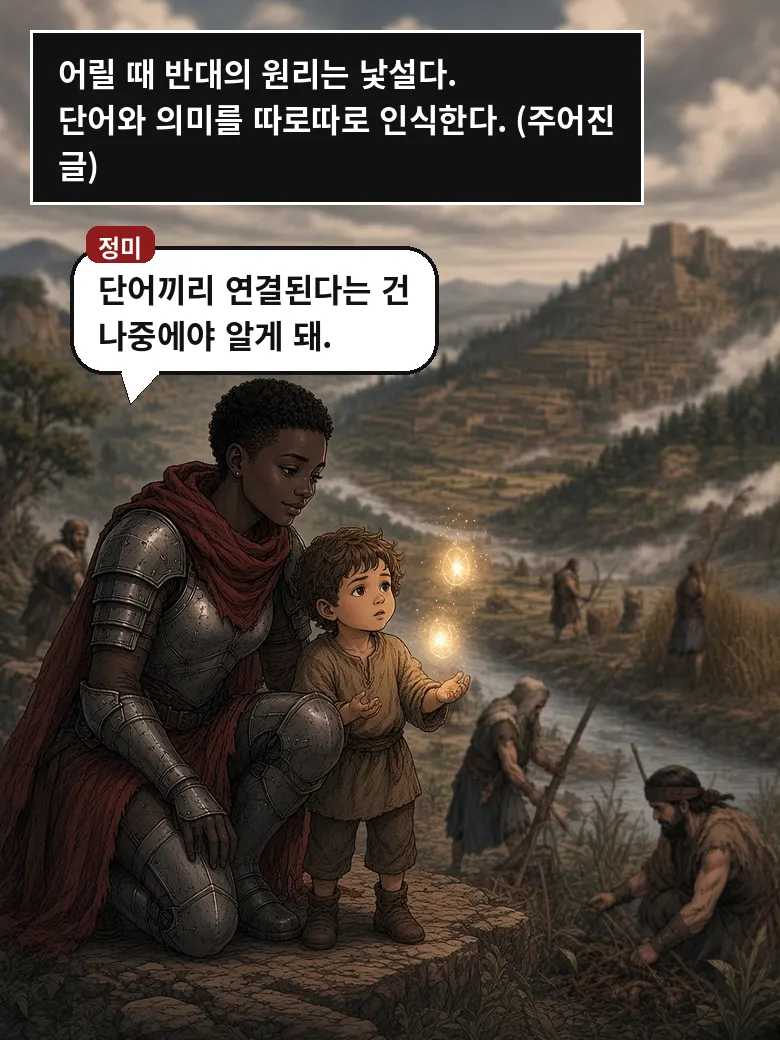
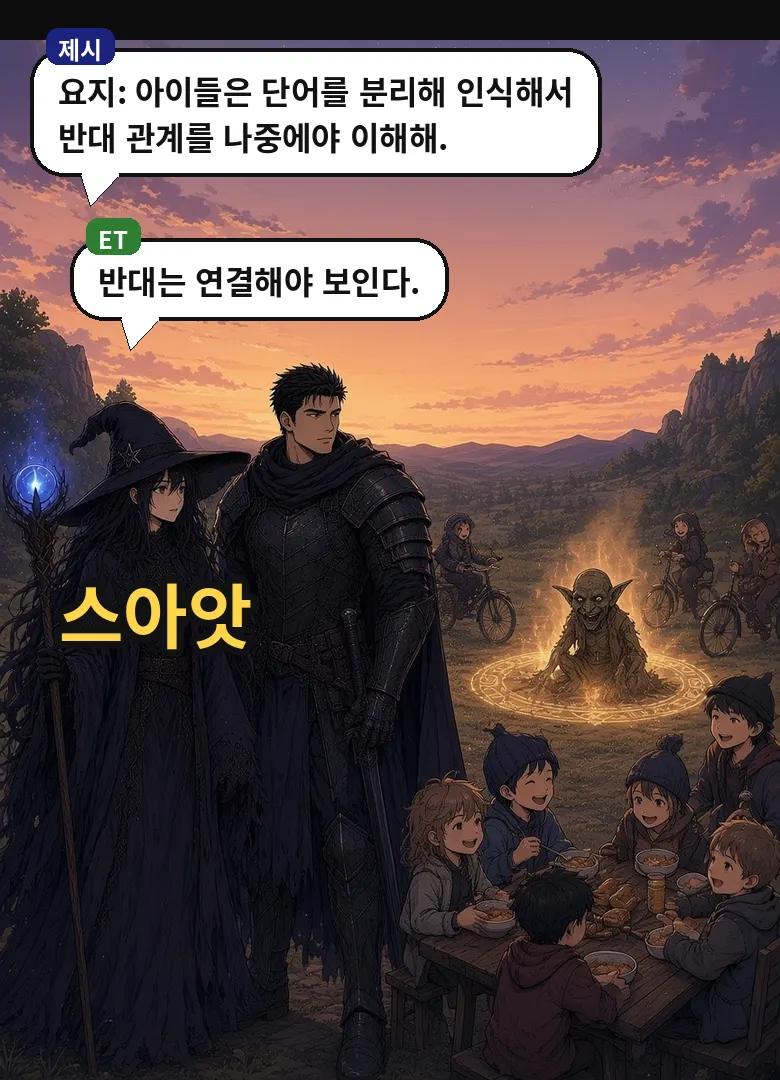
아이들은 반대말의 원리를 처음엔 모르며, 단어들이 서로 연결된다는 것을 나중에야 이해한다.
Children do not grasp the principle of opposites at first; they only later understand that words connect to one another.
🌊 정미의 문단 흐름
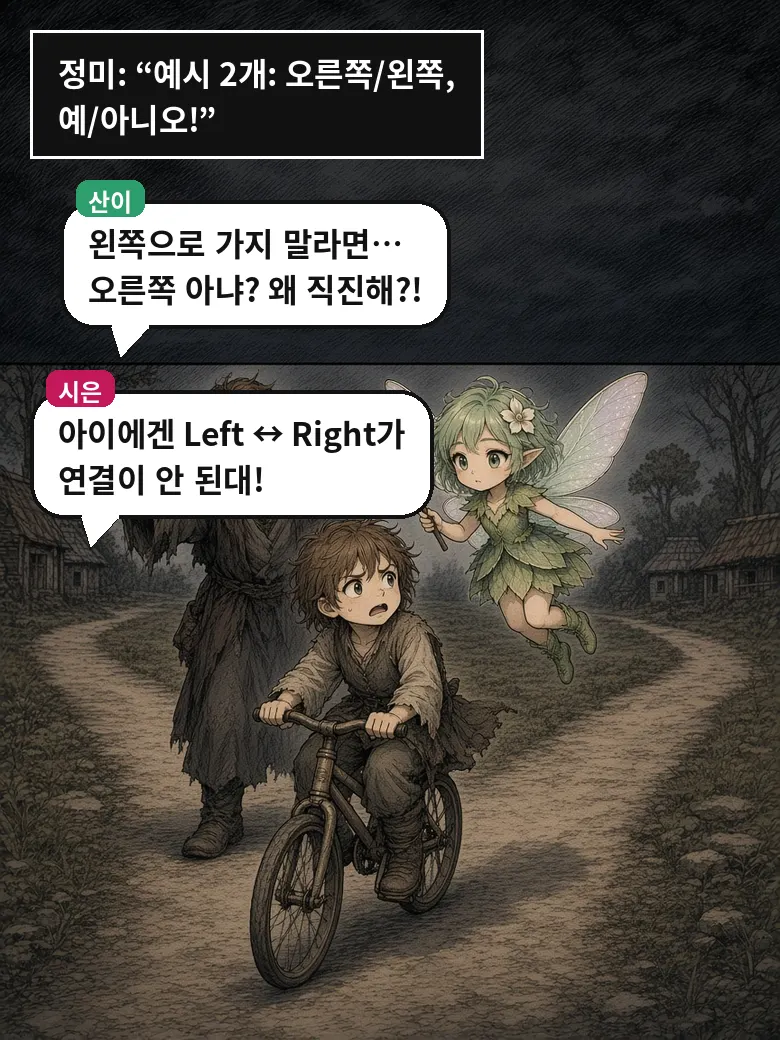
예시 2개: 오른쪽/왼쪽, 예/아니오!
☠ 수남의 하수인: 뒤바뀐 이정표 도깨비
🧚 산이의 어휘
| 단어 | 뜻 | 동의어 / 반의어 |
|---|---|---|
| principle | 원리 | = rule, law |
| opposite | 반대(말) | = contrary ↔ same |
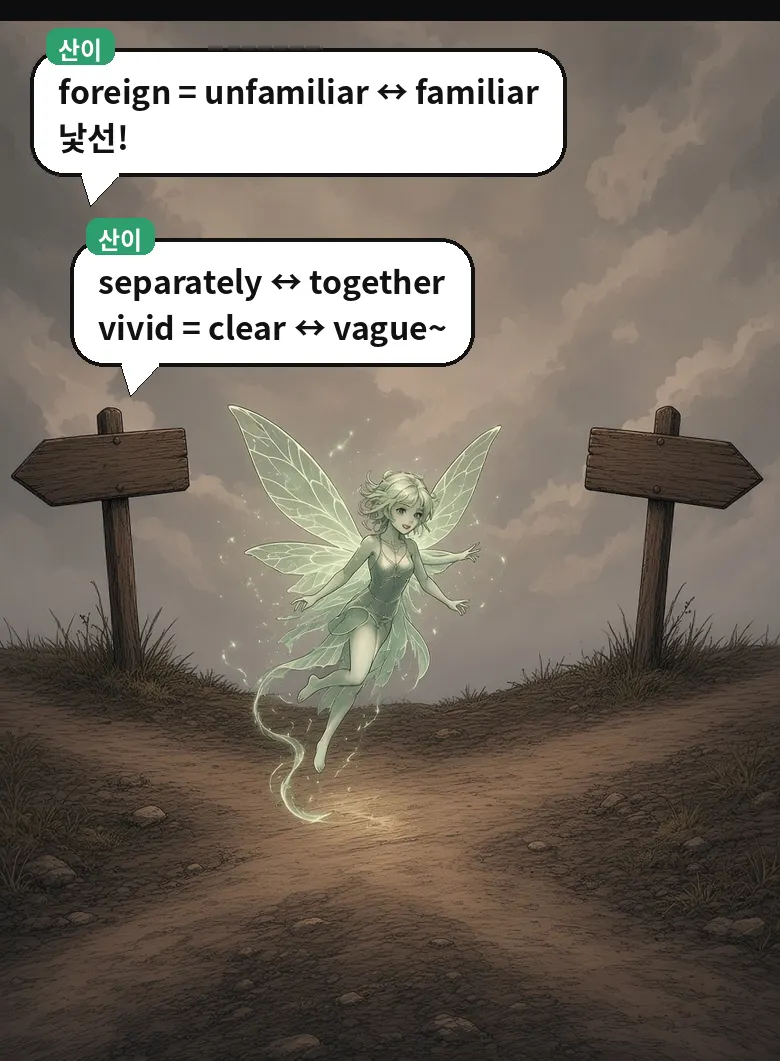
| foreign | 낯선 | = unfamiliar ↔ familiar |
| perceive | 인식하다 | = recognize |
| vivid | 생생한 | = clear ↔ vague |
| automatically | 자동으로 | ↔ deliberately |
📖 본문 보기
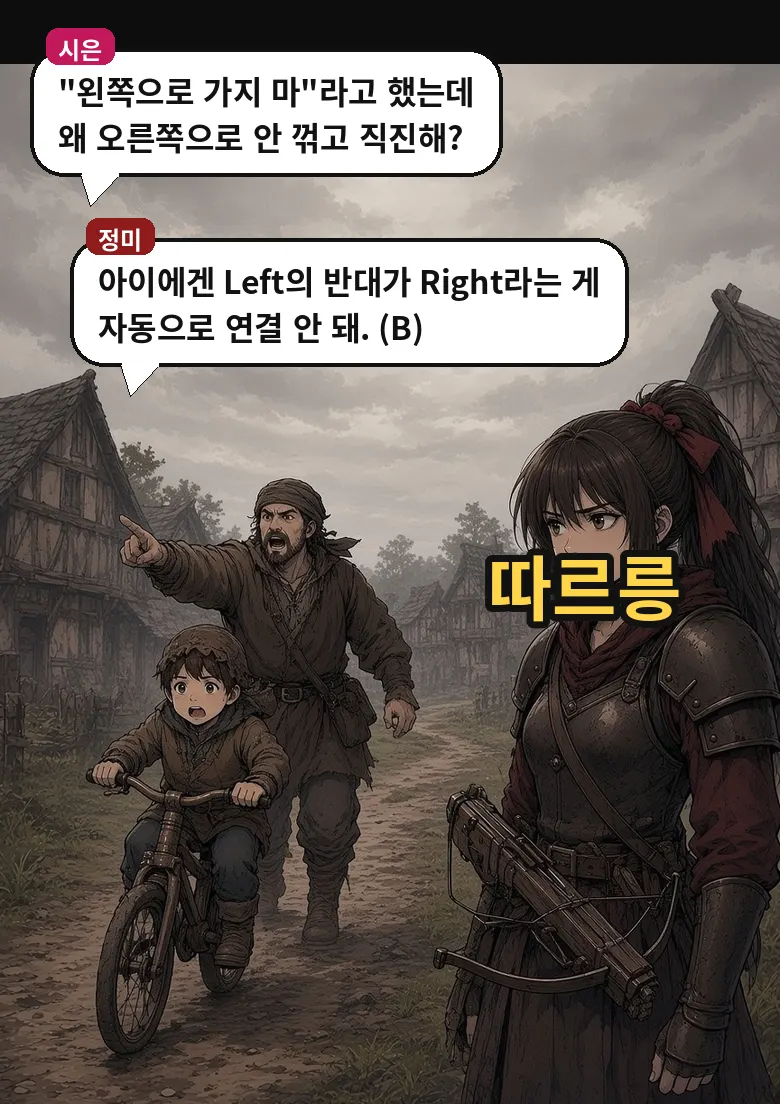
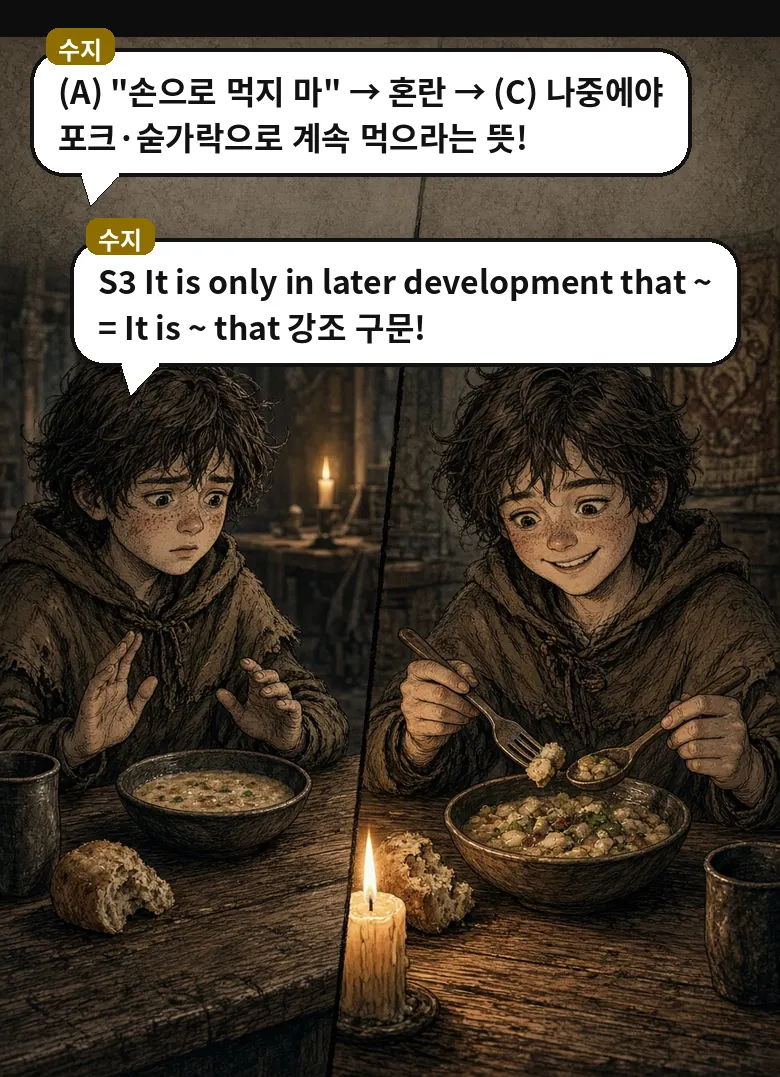
As children, the principle of opposites is foreign. Children perceive words and their meanings separately from each other. It is only in later development that we understood that individual words directly connect to one another. For many children, for instance, it is not clear that ‘Right’ is the opposite of ‘Left’. A vivid example of this can be seen when children learn to ride a bicycle. If parents tell their child “Don’t go to the left,” they will often find that the child will continue riding straight ahead and not automatically turn to the right. The same applies to the logical connection between ‘Yes’ and ‘No’ as perceived by parents. When we were children and were told, for example, “No, don’t eat with your hands,” we were confused and didn’t know what our parents expected from us. Our confusion was about whether we should continue eating or not and if so, how? Only later did we recognize the connection and understand that we should continue eating, but not with our hands but with a fork or a spoon.
🏹 시은의 질문 · “한 문장으로 줄이면?”
Children only gradually learn that opposite words like Right and Left or Yes and No are connected.
아이들은 오른쪽/왼쪽, 예/아니오 같은 반대말이 연결되어 있다는 것을 서서히 배운다.
🎯 원래 시험 정답
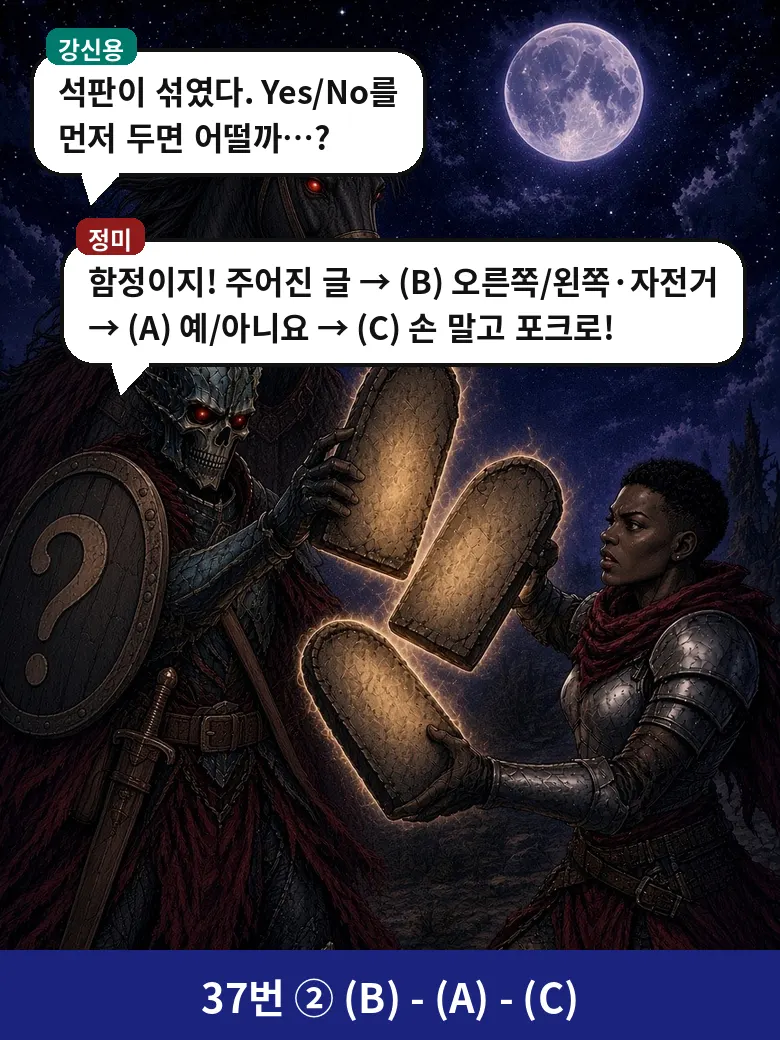
원래 시험 정답: ② (B) - (A) - (C)
📝 수지의 문제 풀이 (글의 순서)
주어진 글 다음에 이어질 글의 순서로 가장 적절한 것은?
As children, the principle of opposites is foreign. Children perceive words and their meanings separately from each other.
(A) A vivid example of this can be seen when children learn to ride a bicycle. If parents tell their child “Don’t go to the left,” they will often find that the child will continue riding straight ahead and not automatically turn to the right.
(B) It is only in later development that we understood that individual words directly connect to one another. For many children, for instance, it is not clear that ‘Right’ is the opposite of ‘Left’.
(C) The same applies to the logical connection between ‘Yes’ and ‘No’ as perceived by parents. When we were children and were told, for example, “No, don’t eat with your hands,” we were confused… Only later did we recognize the connection and understand that we should continue eating, but not with our hands but with a fork or a spoon.
- (A)-(C)-(B)
- (B)-(A)-(C)
- (B)-(C)-(A)
- (C)-(A)-(B)
- (C)-(B)-(A)
🗡️ 흑검 ET의 정답 보기
정답 ② — (B) 단어 연결은 나중에 이해, 예: Right ↔ Left → (A) this(Right/Left 혼동)의 생생한 예: 자전거 → (C) The same applies to Yes/No.
⚔️ 강신용의 함정: ④ (C)-(A)-(B) — (C)의 The same은 앞의 ‘예시’를 받아야 하므로 맨 앞에 올 수 없음.