 지산열린학원25년 10월 · 36번
📌 제시의 요지
평범한 식사조차 시각·질감·맛·냄새·소리가 융합된 다감각 경험이다.
Even an ordinary meal is a multisensory fusion of sight, texture, taste, smell and sound.
🌊 정미의 문단 흐름
식사 하나에 감각이 몇 개?
☠ 수남의 하수인: 감각 마비 연기 정령



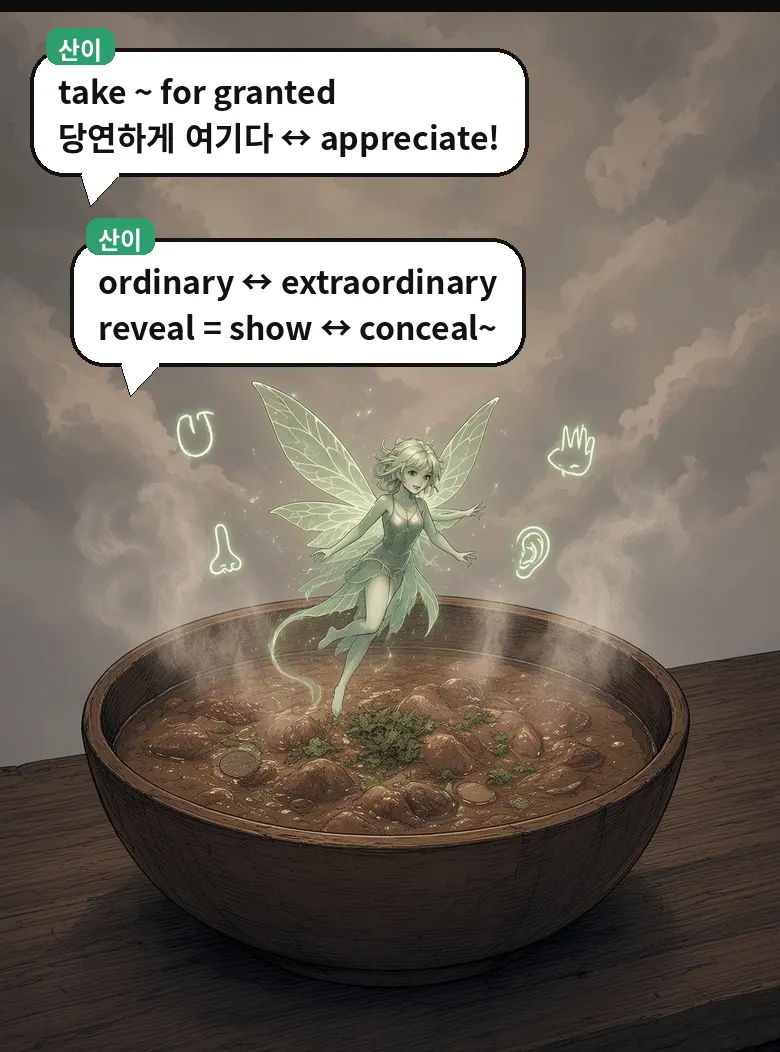
🧚 산이의 어휘
| 단어 | 뜻 | 동의어 / 반의어 |
|---|---|---|
| multisensory | 다감각의 | ↔ single-sense |
| take for granted | 당연시하다 | = overlook ↔ appreciate |
| inspection | 검사, 관찰 | = examination |
| remarkable | 놀라운 | = extraordinary ↔ ordinary |
| fusion | 융합 | = blend, combination |
| be exposed to | ~에 노출되다 | = be subjected to |




📖 본문 보기
Multisensory experiences are a central part of our everyday lives, yet we often take them for granted, especially when our senses function normally or are corrected to normal with aids like glasses. However, closer inspection to any, even the most ordinary experiences, reveals the remarkable multisensory world in which we live. Consider the experience of eating a regular meal. At first, it may seem like an ordinary experience, but it is actually a fusion of the senses. We first eat with our eyes, but we are also exposed to countless sensory signals that influence our eating experience such as food textures, tastes, and smells. And it does not stop there. Even the sounds that come both from the atmospheres in which we eat and our interactions with the food (such as chewing) and the tools we use to eat influence our eating experience.
🏹 시은의 질문 · “한 문장으로 줄이면?”
Everyday eating is actually a rich fusion of many senses.
일상의 식사는 사실 여러 감각이 풍부하게 융합된 경험이다.
🎯 원래 시험 정답
원래 시험 정답: ③ (B) - (C) - (A)
📝 수지의 문제 풀이 (글의 순서)
주어진 글 다음에 이어질 글의 순서로 가장 적절한 것은?
Multisensory experiences are a central part of our everyday lives, yet we often take them for granted, especially when our senses function normally or are corrected to normal with aids like glasses.
(A) And it does not stop there. Even the sounds that come both from the atmospheres in which we eat and our interactions with the food (such as chewing) and the tools we use to eat influence our eating experience.
(B) However, closer inspection to any, even the most ordinary experiences, reveals the remarkable multisensory world in which we live.
(C) Consider the experience of eating a regular meal. At first, it may seem like an ordinary experience, but it is actually a fusion of the senses. We first eat with our eyes, but we are also exposed to countless sensory signals that influence our eating experience such as food textures, tastes, and smells.
- (A)-(C)-(B)
- (B)-(A)-(C)
- (B)-(C)-(A)
- (C)-(A)-(B)
- (C)-(B)-(A)
🗡️ 흑검 ET의 정답 보기
정답 ③ — 당연시함 → (B) However, 자세히 보면 놀라운 다감각 세계 → (C) 그 예: 평범한 식사(눈·질감·맛·냄새) → (A) And it does not stop there — 소리까지.
⚔️ 강신용의 함정: ② (B)-(A)-(C) — (A)의 ‘there’는 (C)의 감각 목록을 받아야 하므로 (C)보다 먼저 올 수 없음.