 지산열린학원25년 10월 · 29번
📌 제시의 요지
영양학은 아직 미숙하므로, 오랜 세월 먹어 온 전통 음식을 고도로 가공된 식품보다 우선 선택하는 겸손함이 필요하다.
Since nutritional science is still young, we should humbly prefer long-eaten traditional foods over highly processed ones.
🌊 정미의 문단 흐름
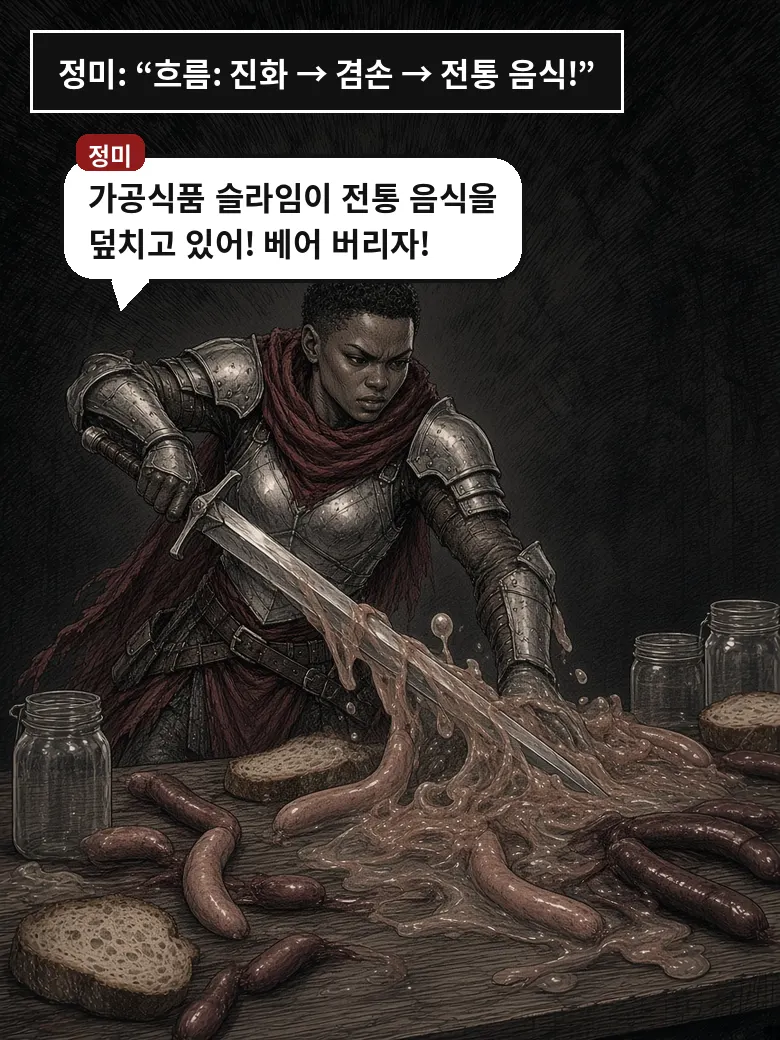
흐름: 진화 → 겸손 → 전통 음식!
☠ 수남의 하수인: 가공식품 슬라임

🧚 산이의 어휘
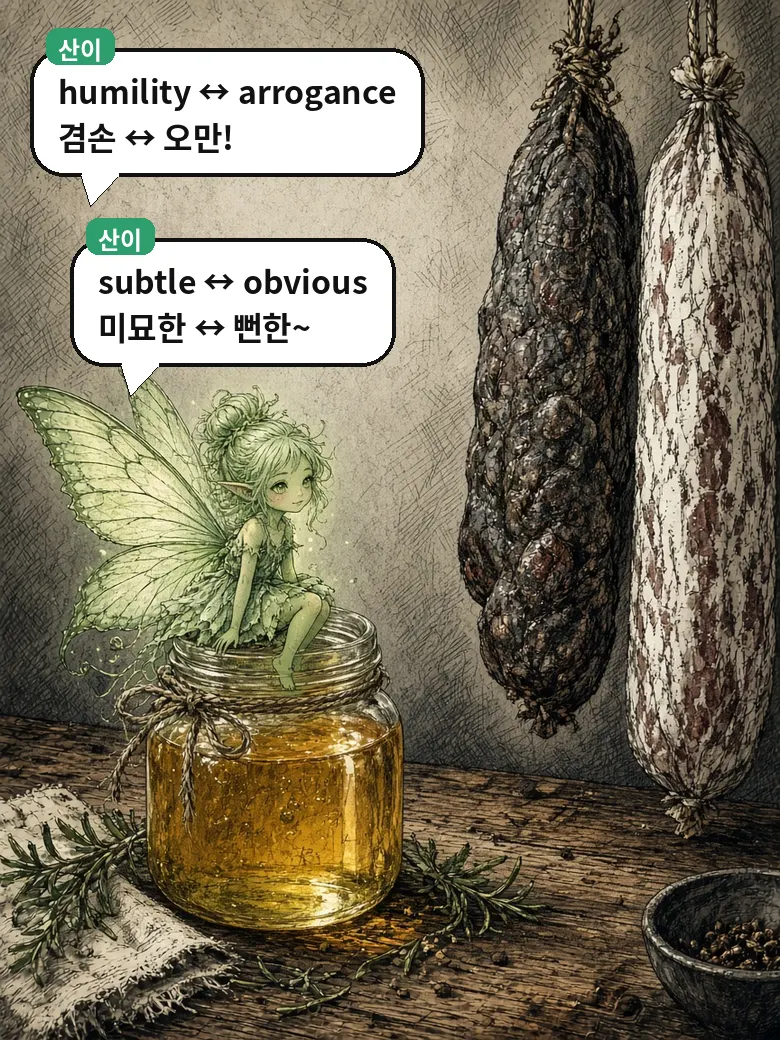
| 단어 | 뜻 | 동의어 / 반의어 |
|---|---|---|
| subtle | 미묘한 | = delicate ↔ obvious |
| humility | 겸손 | = modesty ↔ arrogance |
| contemporary | 현대의 | = modern ↔ ancient |
| preferable | 더 나은 | = better, superior |
| fare | 지내다 | = get along |
| transition | 전환 | = shift, change |

📖 본문 보기
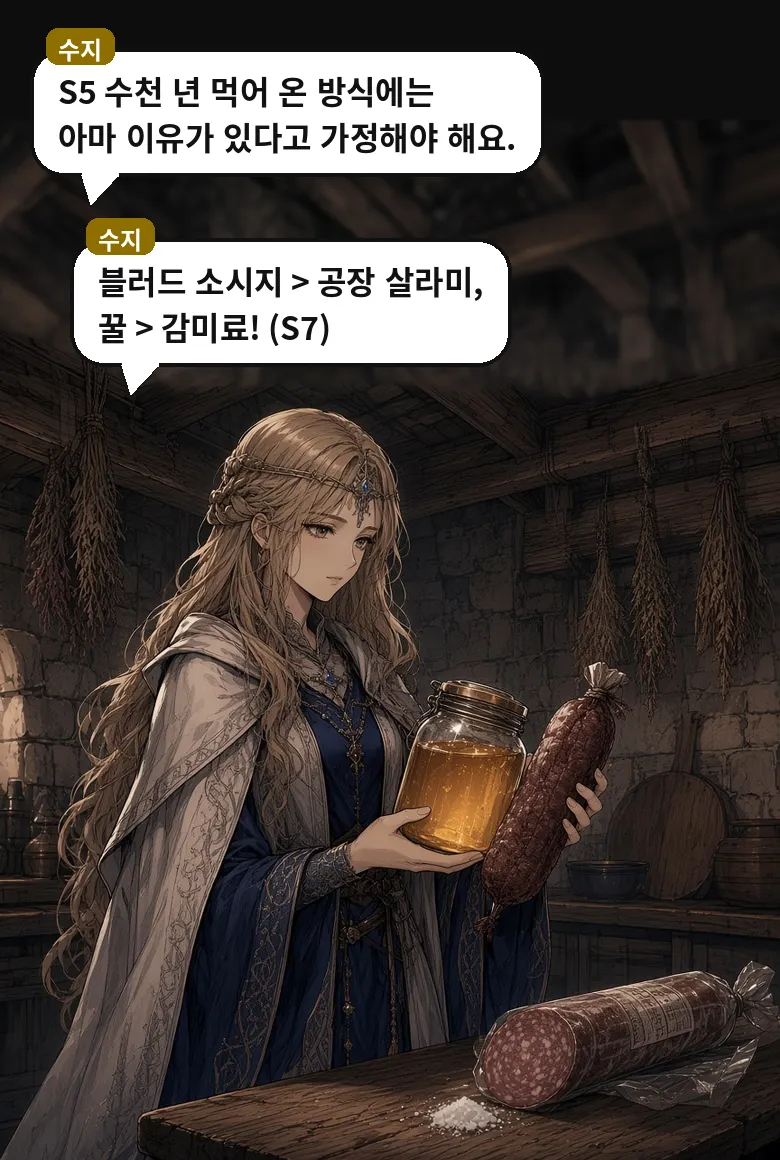
Human beings have evolved to make the most of the resources available to them in ways that are subtle and complicated. When we change our diets, especially when we do so quickly, we are effectively conducting huge experiments in nutrition. We ought to have more humility. Nutritional science is still young and there is so much we do not know. If we have eaten certain foods in certain ways for millennia, we should assume until it is proven otherwise that there is probably a good reason why. Traditional foods that don’t fit neatly on the contemporary dietary food plate should generally be chosen over highly processed ones that do. We should assume that traditionally made fatty blood sausages are preferable to lean, factory-made salamis; that spoonfuls of honey are superior to sprinkles of sweeteners. Witnessing how poorly traditional societies are faring as they undergo a nutrition transition should make those who have already completed it question whether their diets have moved too far.
🏹 시은의 질문 · “한 문장으로 줄이면?”
Because nutrition science is young, we should trust traditional foods over highly processed ones.
영양학은 아직 미숙하므로, 고도로 가공된 식품보다 전통 음식을 신뢰해야 한다.
🎯 원래 시험 정답
원래 시험 정답: ② what → that
📝 수지의 문제 풀이 (어법)
다음 밑줄 친 부분 중, 어법상 틀린 것은?
Human beings have evolved to make the most of the resources available to them in ways that are subtle and complicated. When we change our diets, especially when we do so quickly, we are ①effectively conducting huge experiments in nutrition. We ought to have more humility. Nutritional science is still young and there is so much we do not know. If we have eaten certain foods in certain ways for millennia, we should assume until it is proven otherwise ②what there is probably a good reason why. Traditional foods that don’t fit neatly on the contemporary dietary food plate should generally be chosen over highly processed ones that ③do. We should assume that traditionally ④made fatty blood sausages are preferable to lean, factory-made salamis; that spoonfuls of honey are superior to sprinkles of sweeteners. Witnessing how poorly traditional societies are faring as they undergo a nutrition transition should make those who have already completed it ⑤question whether their diets have moved too far.
- effectively
- what
- do
- made
- question
🗡️ 흑검 ET의 정답 보기
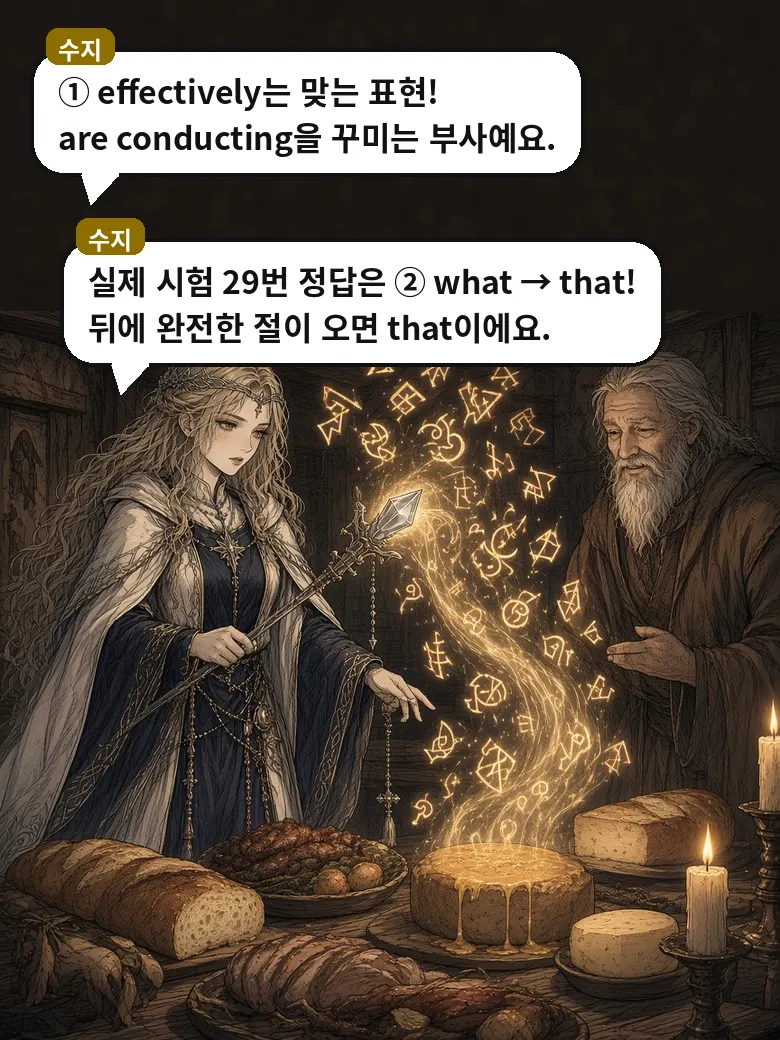
정답 ② — assume의 목적어 자리이고 뒤에 there is probably a good reason why라는 완전한 절이 오므로 명사절 접속사 that이 와야 한다. what은 불완전한 절을 이끈다.
① effectively — 진행형 동사구 are conducting을 꾸미는 부사이므로 올바름. ③ do — 앞의 일반동사 fit을 대신하는 대동사(= fit neatly on the plate)로, 주어 ones(복수)에 맞춘 do가 올바름. ④ made — 소시지가 ‘전통적으로 만들어진’ 것이므로 수동 의미의 과거분사가 올바름. ⑤ question — 사역동사 make + 목적어(those) + 동사원형이므로 올바름.
⚔️ 강신용의 함정: ③ do — does나 are로 바꾸고 싶게 만들지만, 대신하는 동사가 일반동사 fit이고 주어가 복수 ones라서 do가 맞음. ① effectively — 형용사 effective로 고치고 싶어지지만, 동사(are conducting)를 꾸미므로 부사가 맞음.