 지산열린학원25년 10월 · 21번
📌 제시의 요지
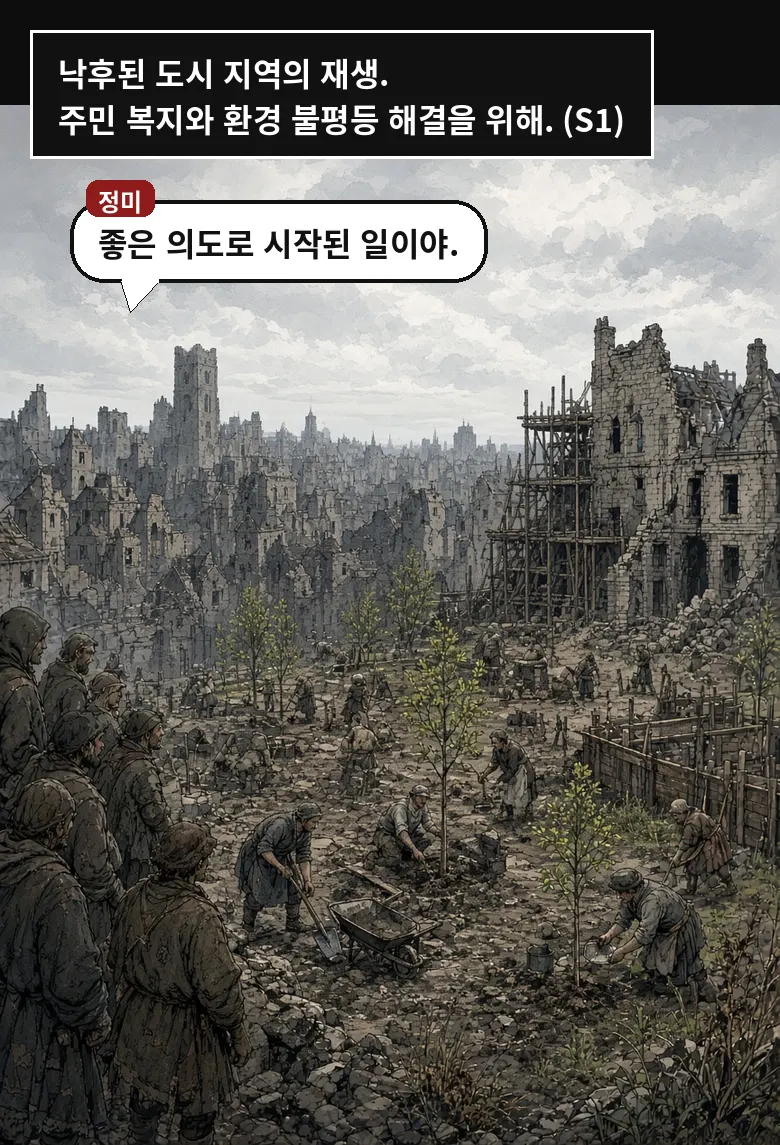
낙후 지역의 녹지 개선이 오히려 집값을 올려, 혜택을 받아야 할 저소득 주민을 내쫓는 ‘도시 녹지 역설’을 낳는다.
Green improvements in poor areas can raise housing costs and displace the very residents they were meant to benefit — the urban green space paradox.
🌊 정미의 문단 흐름
흐름: 기대 → However → 역설!
☠ 수남의 하수인: 임대료 골렘


🧚 산이의 어휘
| 단어 | 뜻 | 동의어 / 반의어 |
|---|---|---|
| degraded | 낙후된 | = run-down ↔ improved |
| paradox | 역설 | = contradiction |
| desirable | 바람직한, 인기 있는 | = attractive ↔ undesirable |
| afford | ~할 여유가 있다 | = manage to pay |
| displacement | 쫓겨남 | = eviction, removal |
| exclusion | 배제 | ↔ inclusion |


📖 본문 보기
Currently, urban regeneration projects in degraded areas have been promoted as improving the wellbeing of residents and solving environmental injustice problems. However, such environmental improvements in ethnic communities and/or low-income households can create an urban green space paradox. The creation of new, high-quality green spaces can increase attractiveness, making these neighbourhood more desirable. By contrast, the cost of housing can rise, and residents may not be able to afford the rent. This results in the exclusion or displacement of the poor neighbourhood’s residents, who were intended to benefit from the ecosystem services provided by the new green space. In turn, the residents may only be able to afford to live in a similar degraded neighbourhood to the one they left, with low access to green infrastructure.
🏹 시은의 질문 · “한 문장으로 줄이면?”
Green improvements in poor neighborhoods can raise rents and push out the residents they were meant to help.
낙후 지역의 녹지 개선은 임대료를 올려 원래 도우려던 주민들을 내쫓을 수 있다.
🎯 원래 시험 정답
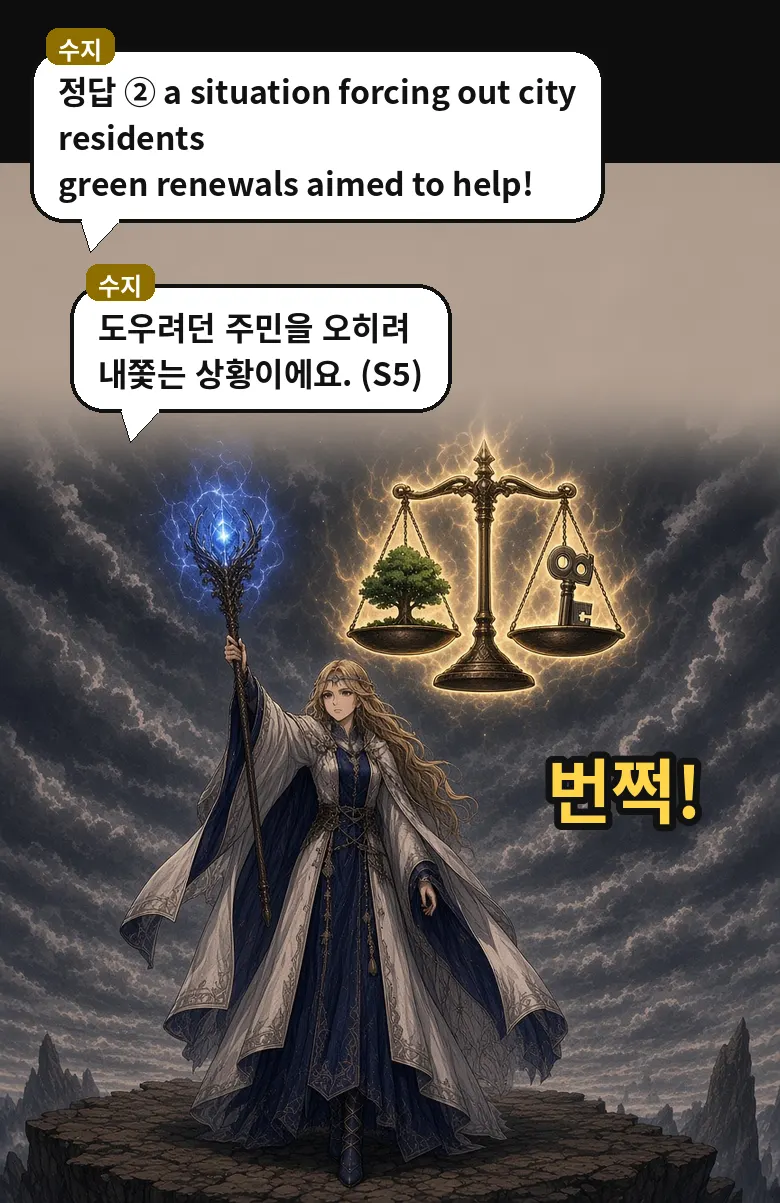
원래 시험 정답: ② a situation forcing out city residents green renewals aimed to help
📝 수지의 문제 풀이 (밑줄 함축 의미)
밑줄 친 an urban green space paradox가 의미하는 바로 가장 적절한 것은?
- 녹지가 늘수록 환경 오염도 함께 늘어나는 현상
- 녹지 조성 비용을 정부가 부담하지 않는 현상
- 주민들이 새 녹지를 이용하지 않는 현상
- 녹지 개선이 집값을 올려 혜택 대상 주민을 내쫓는 현상
- 부유층이 녹지를 싫어하여 떠나는 현상
🗡️ 흑검 ET의 정답 보기
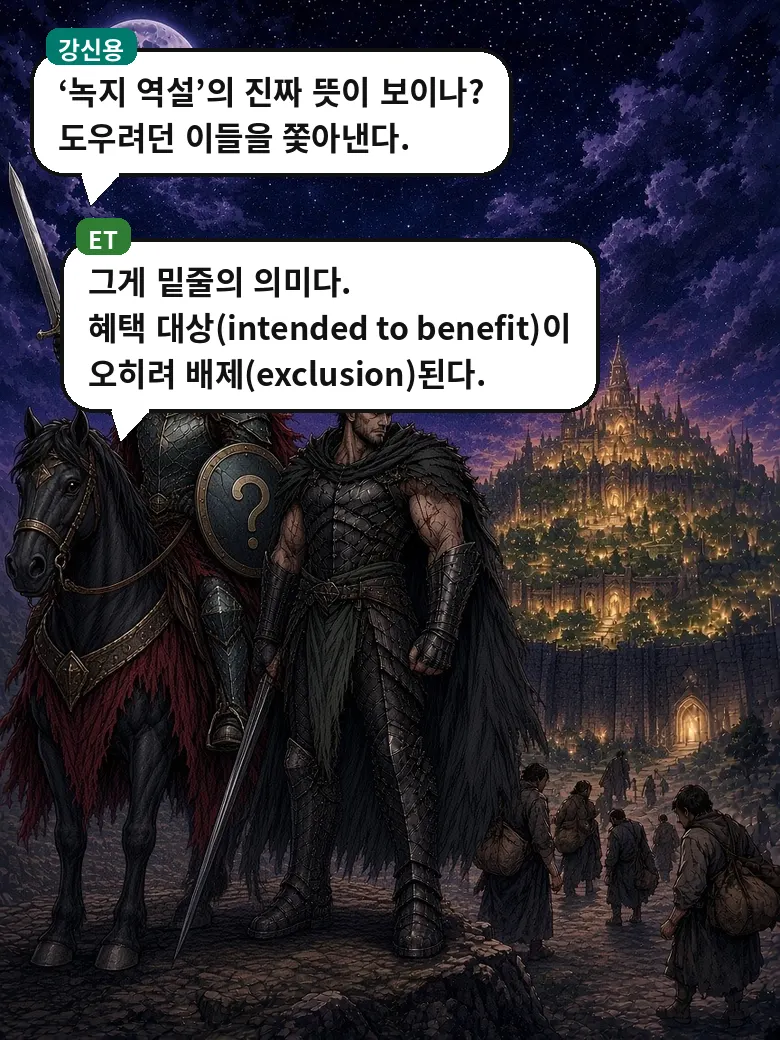
정답 ④ — the cost of housing can rise → exclusion or displacement of… residents, who were intended to benefit.
⚔️ 강신용의 함정: ①은 ‘역설’이란 말만 보고 환경 문제로 오해한 오답.