 지산열린학원24년 10월 · 41~42번
📌 제시의 요지
인간은 진화 과정에서 생존을 위해 모호한 대상에 의도를 부여하도록 편향되었으며, 그래서 의도가 없는 곳에서도 의도를 가정한다.
Evolution biased humans to attribute intention to ambiguous things for survival, so we assume intent even where there is none.
🌊 정미의 문단 흐름
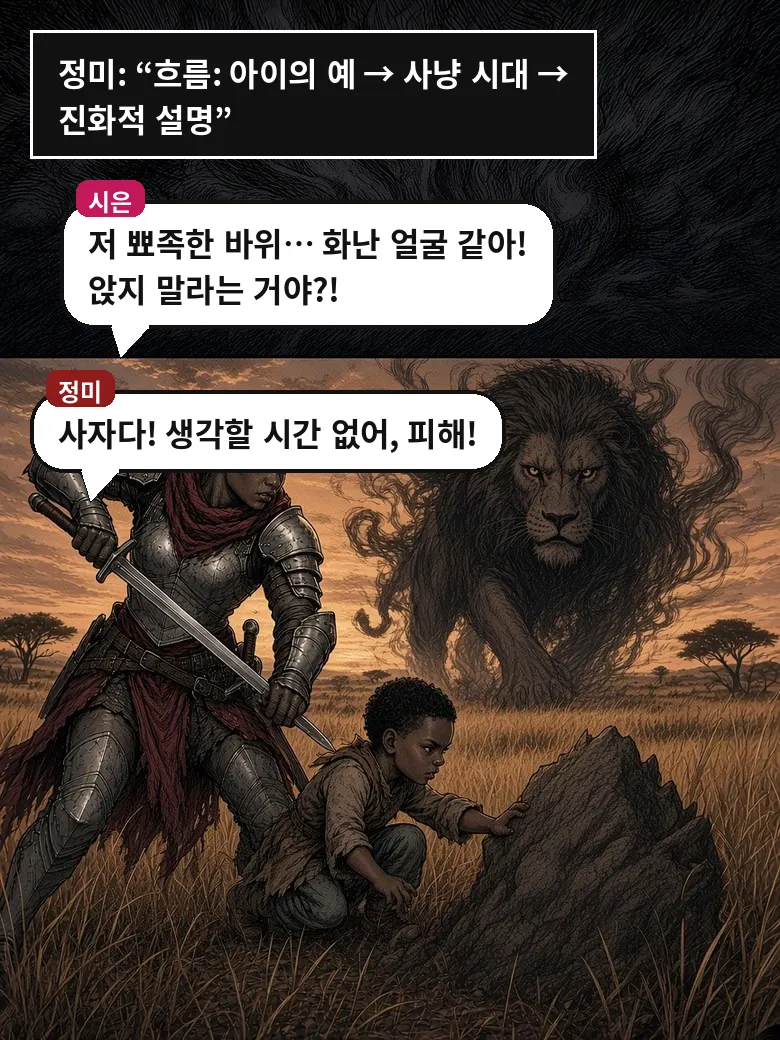
흐름: 아이의 예 → 사냥 시대 → 진화적 설명
☠ 수남의 하수인: 의도를 속삭이는 그림자 사자
🧚 산이의 어휘
| 단어 | 뜻 | 동의어 / 반의어 |
|---|---|---|
| assign | 부여하다 | = attribute |
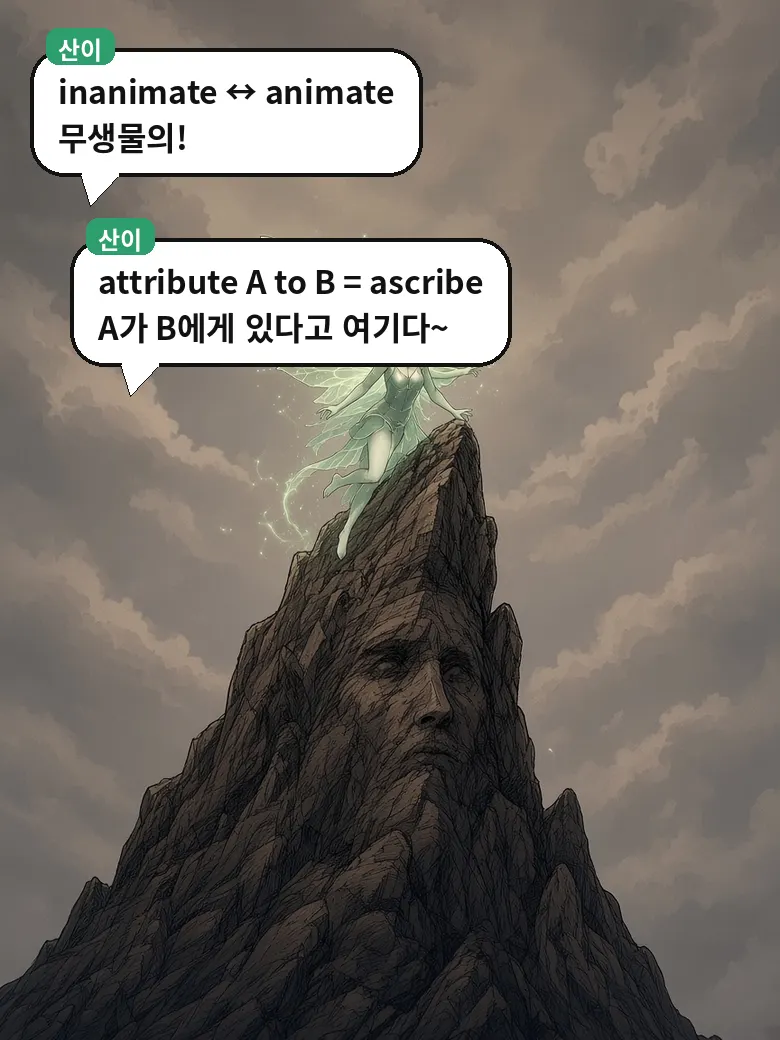
| inanimate | 무생물의 | ↔ animate |
| attribute | ~의 탓으로 돌리다, 부여하다 | = ascribe |
| ambiguous | 모호한 | = unclear ↔ clear |
| anthropomorphism | 의인화 | = personification |
| probable | 있을 법한 | = likely ↔ unlikely |

📖 본문 보기
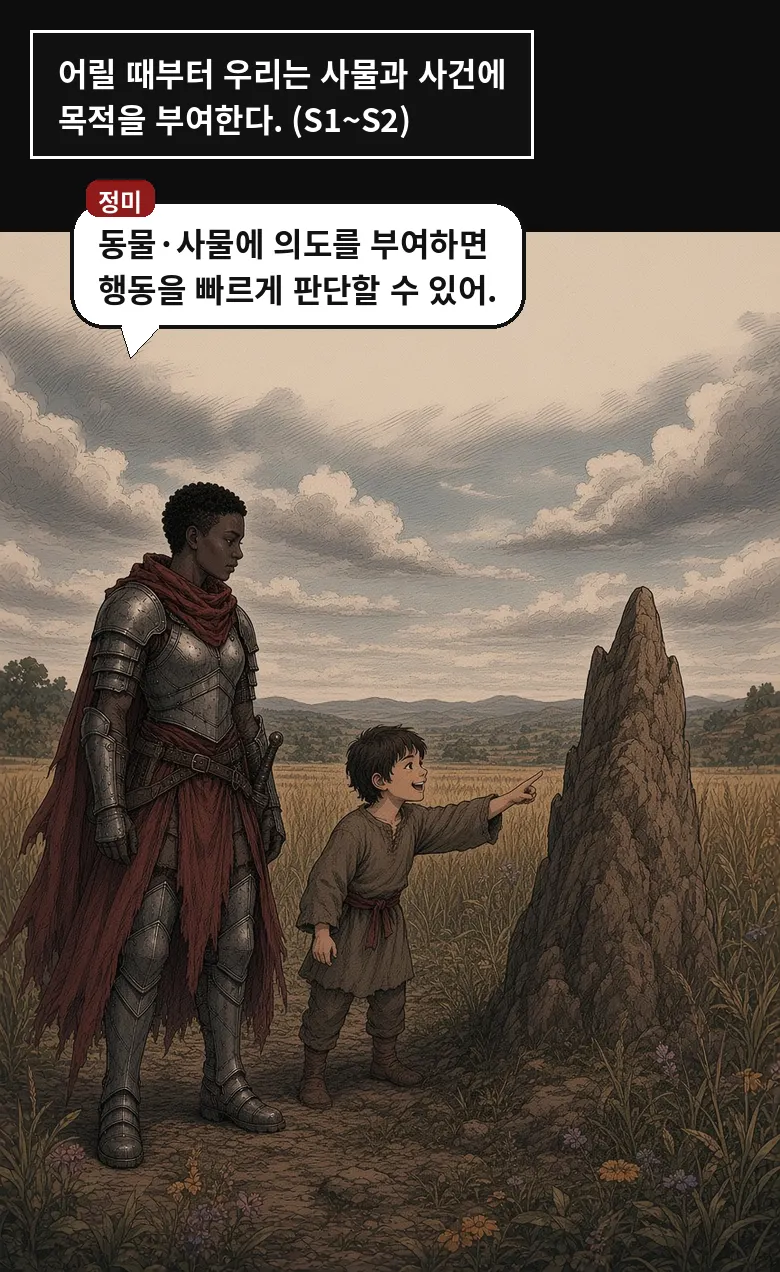
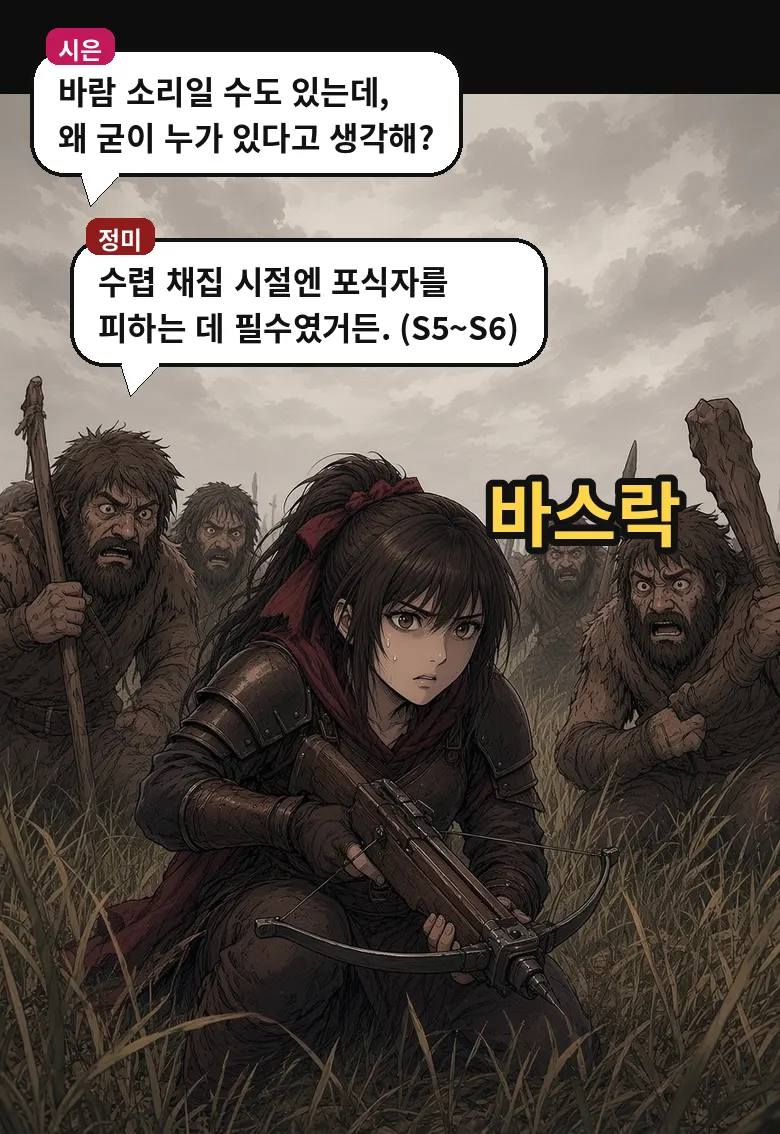
From an early age, we assign purpose to objects and events, preferring this reasoning to random chance. Children assume, for instance, that pointy rocks are that way because they don’t want you to sit on them. When we encounter something, we first need to determine what sort of thing it is. Inanimate objects and plants generally do not move and can be evaluated from physics alone. However, by attributing intention to animals and even objects, we are able to make fast decisions about the likely behaviour of that being. This was essential in our hunter-gatherer days to avoid being eaten by predators. The anthropologist Stewart Guthrie made the point that survival in our evolutionary past meant that we interpret ambiguous objects as agents with human mental characteristics, as those are the mental processes which we understand. Ambiguous events are caused by such agents. This results in a perceptual system strongly biased towards anthropomorphism. Therefore, we tend to assume intention even where there is none. This would have arisen as a survival mechanism. If a lion is about to attack you, you need to react quickly, given its probable intention to kill you. By the time you have realized that the design of its teeth and claws could kill you, you are dead. So, assuming intent, without detailed design analysis or understanding of the physics, has saved your life.
🏹 시은의 질문 · “한 문장으로 줄이면?”
We instinctively assume intention behind things because doing so helped our ancestors survive.
우리는 본능적으로 사물 뒤에 의도를 가정하는데, 그것이 조상의 생존을 도왔기 때문이다.
🎯 원래 시험 정답
원래 시험 정답: 41 ① / 42 ③ (c) resistant → biased
📝 수지의 문제 풀이 (제목)
윗글의 제목으로 가장 적절한 것은?
- Why Children Fear Pointy Rocks
- How Lions Hunt Their Prey
- Physics Explains All Animal Behaviour
- Seeing Intention Everywhere: A Survival Instinct
- The Dangers of Anthropomorphism in Science
🗡️ 흑검 ET의 정답 보기
정답 ④ — we tend to assume intention even where there is none. This would have arisen as a survival mechanism.
⚔️ 강신용의 함정: ① — 도입 ‘예시’일 뿐 글 전체를 담지 못함.
📝 수지의 문제 풀이 (42번 · 어휘)
밑줄 친 (a)~(e) 중에서 문맥상 낱말의 쓰임이 적절하지 않은 것은?
From an early age, we assign purpose to objects and events, preferring this reasoning to (a) random chance. … However, by attributing intention to animals and even objects, we are able to make (b) fast decisions about the likely behaviour of that being. … This results in a perceptual system strongly (c) resistant towards anthropomorphism. Therefore, we tend to (d) assume intention even where there is none. … If a lion is about to attack you, you need to react (e) quickly, given its probable intention to kill you.
- (a)
- (b)
- (c)
- (d)
- (e)
🗡️ 흑검 ET의 정답 보기
정답 ③ — 모호한 대상을 인간 같은 행위자로 해석하므로 지각 체계는 의인화 쪽으로 강하게 ‘치우쳐(biased)’ 있다. 바로 뒤 Therefore, we tend to assume intention even where there is none이 근거. (c) resistant(저항하는)는 정반대 → biased.
⚔️ 강신용의 함정: (a) random — 목적을 부여하는 사고와 대비되는 ‘무작위’ 우연이라 적절함.