 지산열린학원지산고2 · 25년 10월 · 29번
📌 제시의 요지
세포 분열의 오류(돌연변이) 중 유익한 것이 자연 선택으로 남으며 생물이 진화한다.
Among cell-division errors (mutations), beneficial ones are preserved by natural selection, and organisms evolve.
🌊 정미의 문단 흐름
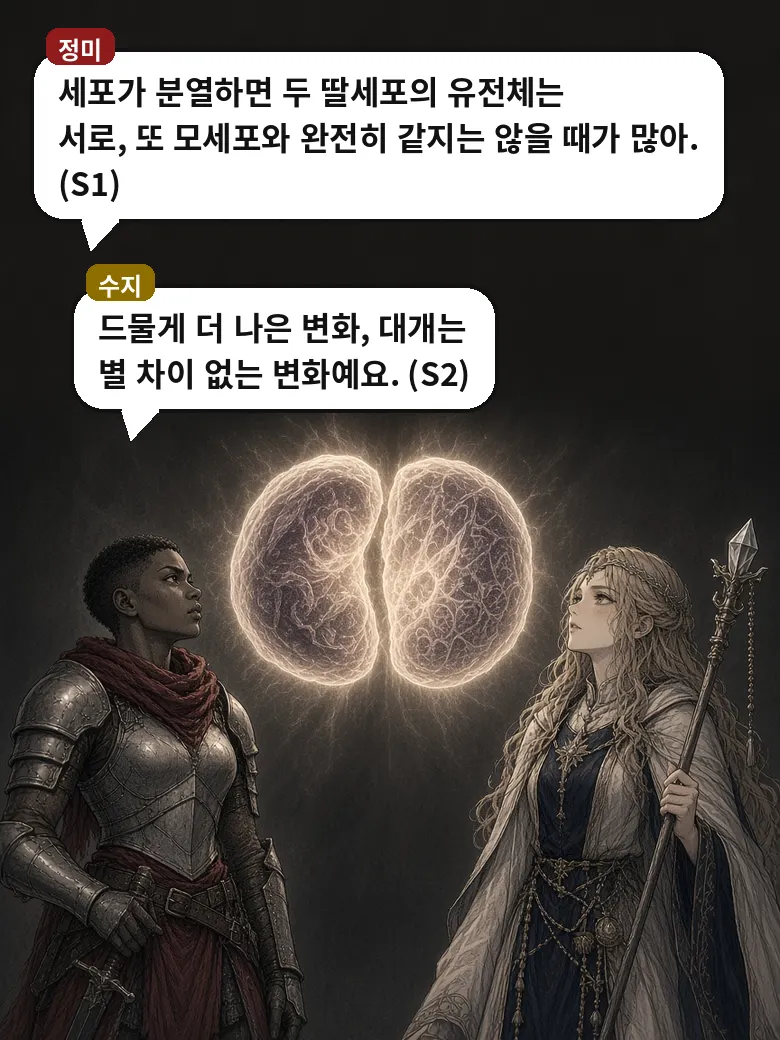
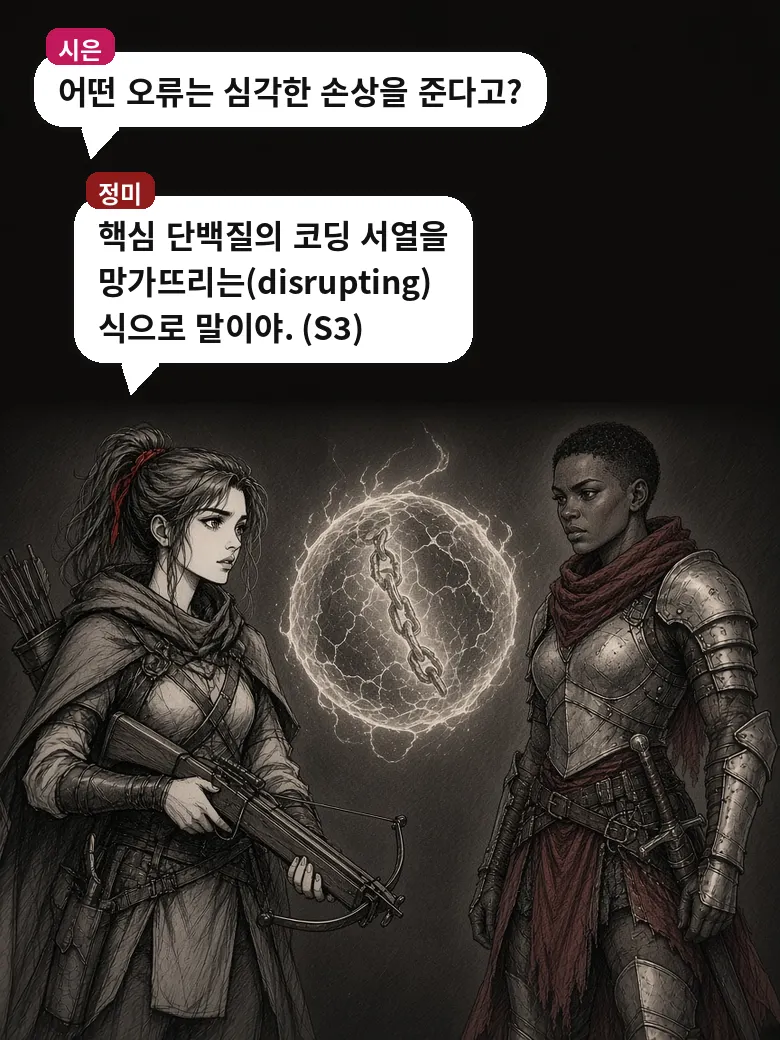
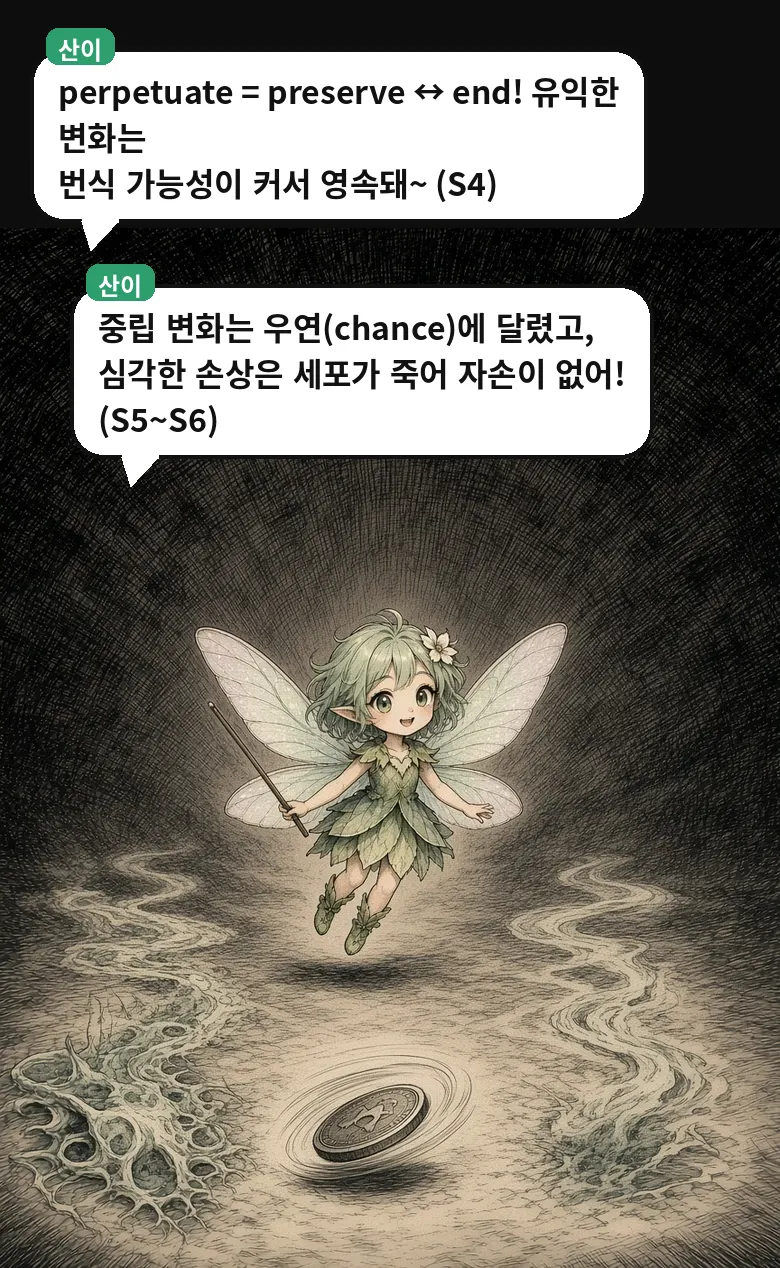
도입: 세포가 분열할 때 딸세포의 유전체가 서로 또는 모세포와 다를 수 있다(오류). (S1) / 전개: 오류 3유형: 유익(드묾)·중립(가장 흔함)·심각한 손상 → 유익한 변화는 번식 가능성↑로 영속 / 중립은 우연 / 손상은 세포가 죽어 자손 없음. (S2~S6) / 결론: 돌연변이와 자연 선택의 끝없는 반복 → 생물 진화: 환경 이용·경쟁에서 생존·번식의 새 방법. (S7)
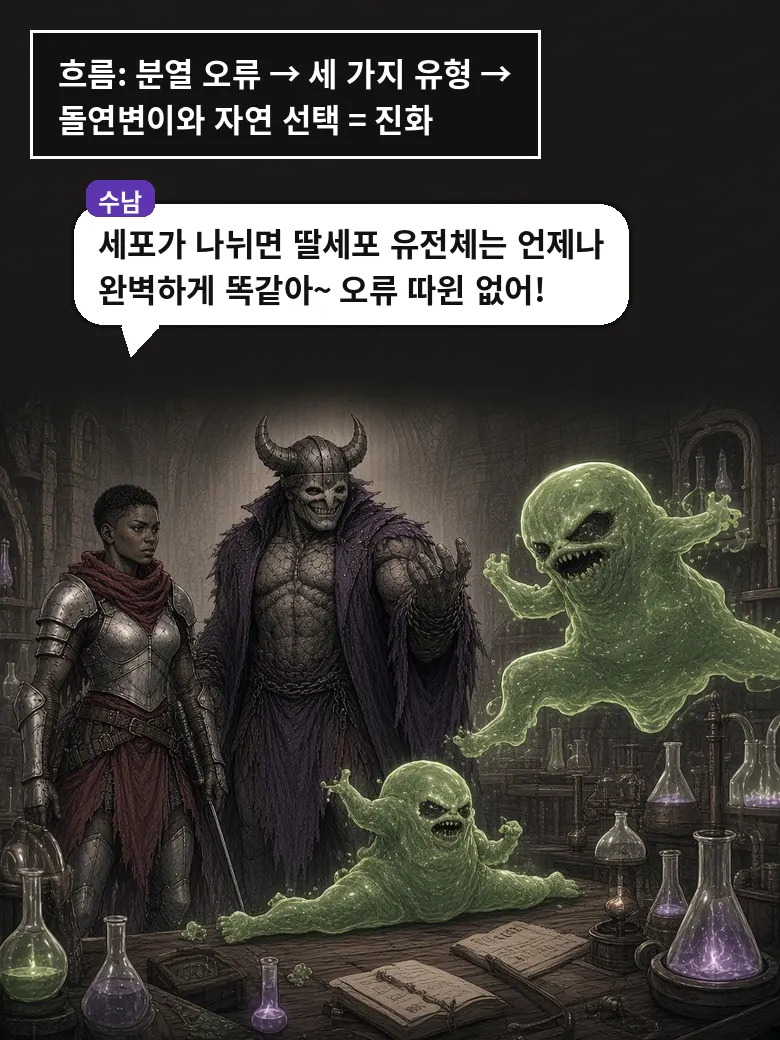
☠ 수남의 하수인: 복제 오류 점액괴물
🧚 산이의 어휘
| 단어 | 뜻 | 동의어 / 반의어 |
|---|---|---|
| genome | 게놈, 유전체 | = genetic material |
| identical | 동일한 | = same ↔ different |
| represent | 나타내다 | = signify |
| significant | 중요한, 의미 있는 | = meaningful ↔ minor |
| prospect | 전망 | = outlook |
| disrupt | 방해하다, 망가뜨리다 | = disturb |
📖 본문 보기
When a cell divides, the genomes of its two daughters are often not quite identical to each other or to that of the parent cell. On rare occasions, the error may represent a change for the better; more probably, it will cause no significant difference in the cell’s prospects. But in some cases, the error will cause serious damage; for example, by disrupting the coding sequence for a key protein. Changes due to mistakes of the first type will tend to be perpetuated, because the altered cell has an increased likelihood of reproducing itself. Changes due to mistakes of the second type — neutral changes — may be perpetuated or not: it is a matter of chance whether the altered cell or its cousins will succeed. But changes that cause serious damage lead nowhere: the cell that suffers them dies, leaving no progeny. Through endless repetition of this cycle of mutation and natural selection organisms evolve: their genetic specifications change, sometimes giving organisms new ways to exploit the environment more effectively, to survive in competition with others, and to reproduce successfully.
🏹 시은의 질문 · “한 문장으로 줄이면?”
Some copying errors in cell division help cells reproduce, and natural selection keeps them, driving evolution.
세포 분열의 복제 오류 중 번식에 유리한 것은 자연 선택으로 남아 진화를 이끈다.
🎯 원래 시험 정답
29. 다음 글의 밑줄 친 부분 중, 어법상 틀린 것은? [3점]
원래 시험 정답: ⑤ give → giving
📝 수지의 문제 풀이 (어법)
다음 글의 밑줄 친 부분 중, 어법상 틀린 것은? [3점]
When a cell divides, the genomes of ①its two daughters are often not quite identical to each other or to that of the parent cell. On rare occasions, the error may represent a change for the better; more probably, it will cause no significant difference in the cell’s prospects. But in some cases, the error will cause serious damage; for example, by ②disrupting the coding sequence for a key protein. Changes due to mistakes of the first type will tend to be perpetuated, because the altered cell has an increased likelihood of reproducing itself. Changes due to mistakes of the second type — neutral changes — may be perpetuated or not: it is a matter of chance ③whether the altered cell or its cousins will succeed. But changes that cause serious damage ④lead nowhere: the cell that suffers them dies, leaving no progeny. Through endless repetition of this cycle of mutation and natural selection organisms evolve: their genetic specifications change, sometimes ⑤give organisms new ways to exploit the environment more effectively, to survive in competition with others, and to reproduce successfully.
- ① its
- ② disrupting
- ③ whether
- ④ lead
- ⑤ give
🗡️ 흑검 ET의 정답 보기
정답 ⑤ give → giving — 원래 시험 29번 정답 ⑤ give → giving! S7 콜론 뒤 their genetic specifications change가 이미 완전한 절. 그 뒤는 결과를 덧붙이는 분사구문이라 giving이어야 해요. ① its ② disrupting ③ whether ④ lead는 맞아요.
⚔️ 강신용의 함정: When a cell divides, its daughters’ genomes are always perfectly identical… 그럴까? always perfectly identical이 함정이다. often not quite identical. (S1)
"When a cell divides, its daughters' genomes are always perfectly identical." → 'are always perfectly identical'는 틀림 → 'are often not quite identical' (S1)